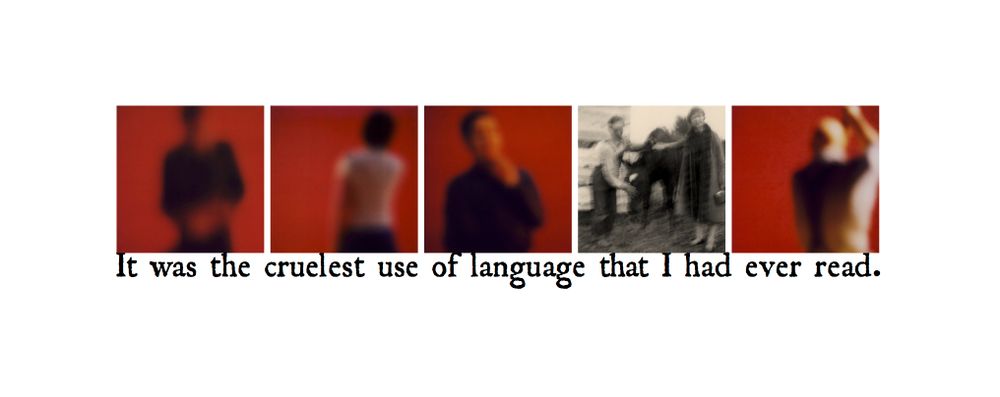
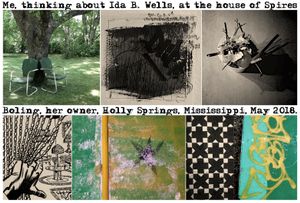
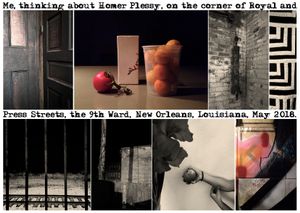
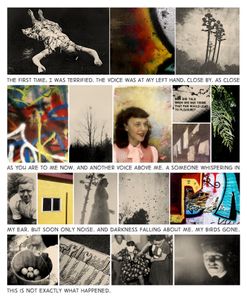
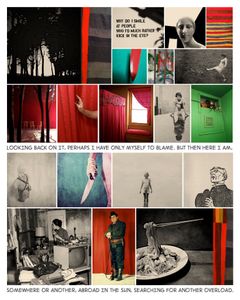
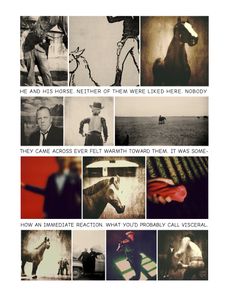
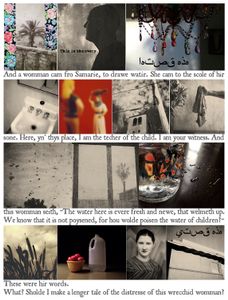
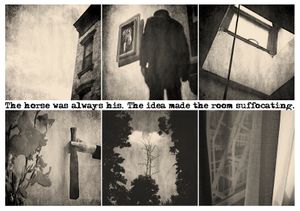
My photo-narratives are hybrid forms, transgressing distinctions between the verbal and the visual: the image as text. They explore invented spaces, alternative histories, and visual fictions, sometimes incorporating altered, appropriated images. Here, as elsewhere in my work, these narratives may be based upon specific historical events or characters: Ida B. Wells, Joan of Arc, Plessy v. Ferguson. Others can be read as murder mysteries. The form of the literary murder mystery lends itself to my work: In the detective novel there are always multiple interpretations (suspects), and the reader/viewer is expected to find meaning before the narrative itself discovers the “truth.” Finally, putting two images (or indeed two sentences) together immediately creates a tension for the viewer that the viewer wants to find/interpret. One doesn’t have to MAKE the viewer do this. And the viewer will find a narrative in the visual and verbal texts that "explains" the narrative of the particular piece. Sometimes this may be a self-referential narrative: The work itself has its own logic — plus the logic that the reader finds there.
I am fascinated by human behavior, by selfless acts of kindness, by extraordinary acts of cruelty, and by human responses to success, failure, surprise, and accident. I am fascinated by the quirks and the earthquakes, the repeated histories of human beings and their relationship to other human beings and to the world about them.
I am curious; I am nosey; I am alert and awake; I have no choice other than to make art out of all this. Through photography and the photo-narrative, there are so many characters, so many stories to document and to invent. I want to delight and entertain the viewer, but I also want, if only in some small way, to remind the viewer of what they might have forgotten, of who we are, and who we might be, for good or ill.