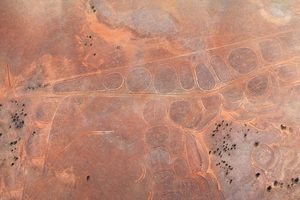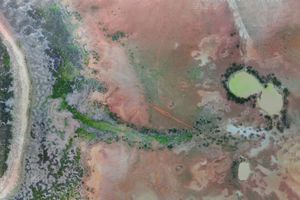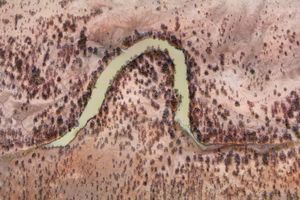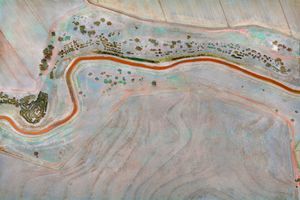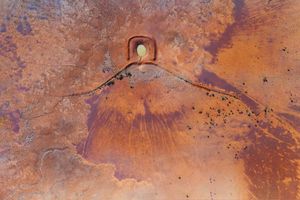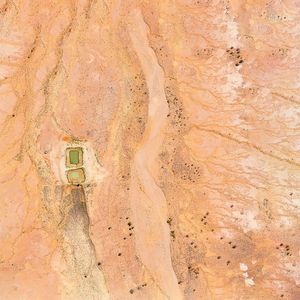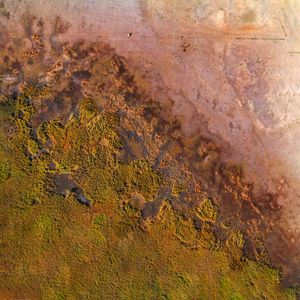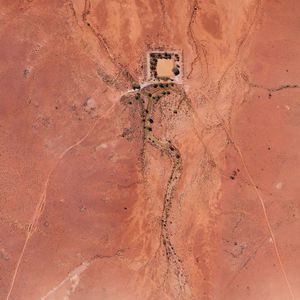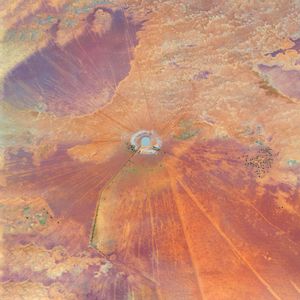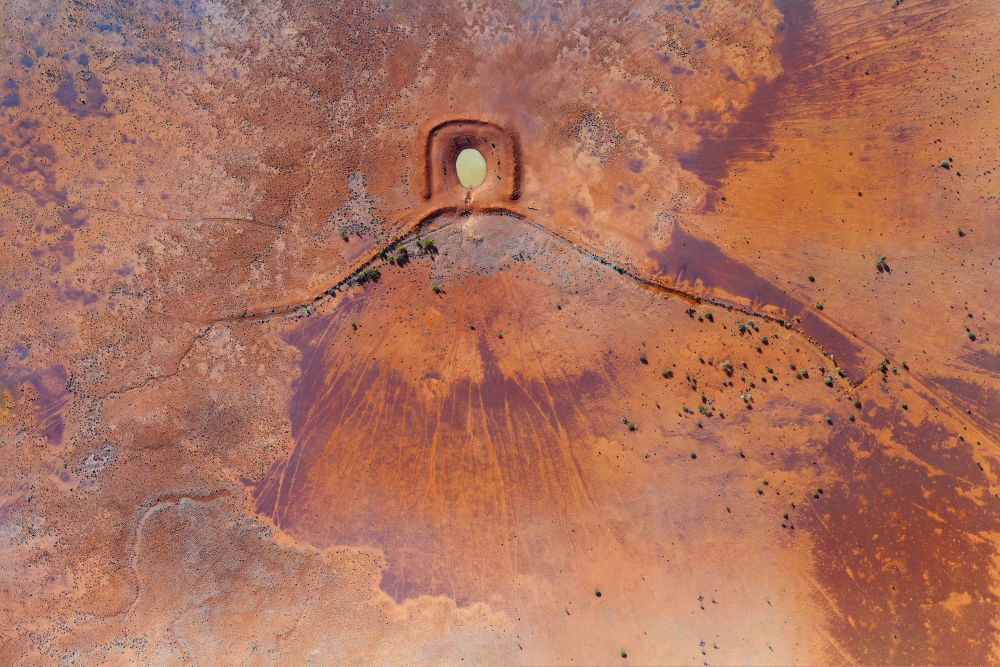
WaterMarks is a series of seemingly abstract Australian landscapes of North Western NSW. Their production has been a journey that has been taken over a year and 4 expeditions into the area to develop and produce.
I was initially attracted to this subject by its strong hues and unexpected beauty, particularly where the drama of water in the landscape was palpable and even more so where the story of humanity’s dependence on it – both First Nations and European settlers – became manifest. It is a timeless story of feast and famine in a visually stunning but drought-prone land that has supported human occupation for over 65,000 years.
Though my aesthetic reaction to the intersection of humanity, water and land piqued my interest I soon realized the tension existing where the aesthetic visible from the air meets the reality on the ground … where a extraordinary beauty hides ugly truths of stolen lands, stolen water, inappropriate land use and environmental degradation.
With First Nations support, these photos were taken along the floodplains of the controversially managed and highly challenged Murray-Darling Basin that were traditionally owned by the Barkandji, Ngemba, Euahlayi and Wayilwan peoples. Under their stewardship there was a healthy river system and a vegetation cover in harmony with the land.
Now, with their knowledge of the land denied in the face of shortsighted, market-driven climate change and the worst drought in 100 years, there are massive and unnatural cotton farms sucking the ancient rivers dry, imported cattle and sheep laying waste the vegetation with overgrazing and a dispossessed people fighting for the country in which their spirituality and identity are so enshrined.
This series documents a severe and majestic beauty created by water and the results of man’s often disastrous attempts to utilize it. I hope the hard truths that underlie these works add something to a current debate about the cultural significance of country, the preciousness of water and the declining health of Australia’s Murray-Darling river systems and landscapes.
Methodology: WaterMarks was shot using an innovative approach to drone photography that allowed an apparent height of 2-3 kilometres while flying within the 120 metre legal limit. Each finished work is stitched together from up to 120 images and designed to be printed at native resolution up to 3 metres wide.