Premise
Romani people are the third-largest minority group in Serbia. Their existence and way of life within the Balkans is longstanding, complex and challenging.
They often live on the margins of society, subject to widespread poverty and discrimination. In 2016 the UN released a statement of concern about their exclusion and inequitable access to education, housing, employment and legal protection.
Serbia, currently in accession talks with the EU, now has an obligation to address integration of their minorities as part of its entry requirements. They are building social housing in a collaborative project with the EU & UN.
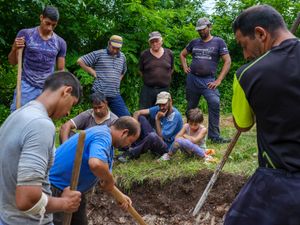
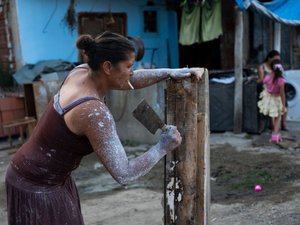
One project, the Dweller Driven Upgrading of Roma Settlements, run by the charity HEKS and their Serbian partners EHO, shows a more holistic approach. It helps Roma families upgrade their existing, substandard domiciles, step by step, by themselves.
From initial application to actual construction, the families are in an active position. Once the application is approved, the municipality must supply deeds to the land and provide access to water, electricity and sanitation.
The project’s innovative and intricate structure has a strong emphasis on individual responsibility. The exchange of help, potentially creating dependency and expectation, is carefully considered and provides real incentive for the different stakeholders – Roma families, the surrounding communities and the municipality – to work together.
My focus
This story opens up many important questions on modern migration and integration.
• Will such a collaboration help create new perspectives on “the other”?
• How much of that barrier, shaped and maintained over generations, can it break down?
• How should we distribute our shared but finite resources and services?
• Who should be entitled to what?
• How much must minorities conform to established social norms for integration to be successful?
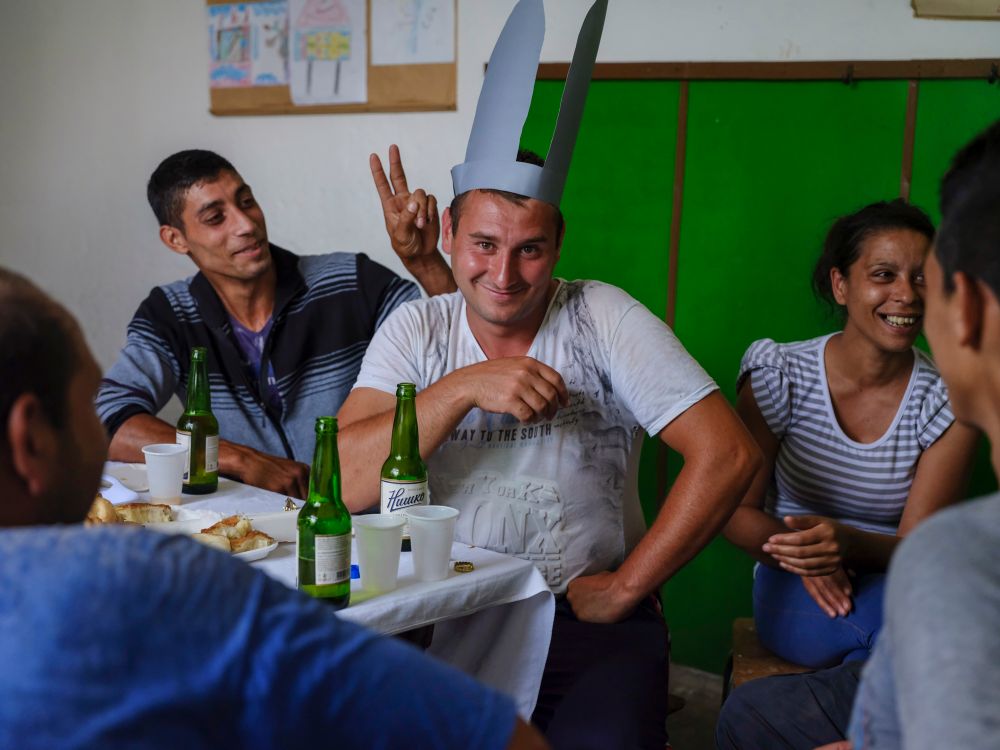
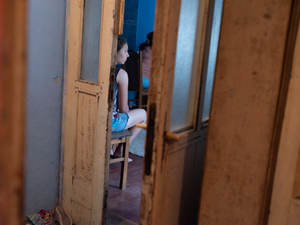
I will create a multimedia piece consisting of photos, video & audio recording in situ, closely following a few families during their construction phase.
Its aim is to highlight issues of inequality, to empathize with the protagonists and hence encourage solutions, which could close this gap.
Thoughts midway through
After two visits and at least one more planned in this ongoing project, I find my attention circling around specific topics.
Longstanding poverty in a monetary-based society is so much more eroding then I have ever understood. Like water on earth, it slowly seeps into every aspect of life, eroding away one option for improvement after another, until the person is rendered truly powerless.
In Western Europe we have successfully controlled our environment to make it as non-invasive and non-aggressive as possible. Now we contemplate its beauty and maybe even mourn the loss of the wild, but it is kept at a manageable distance and we engage with it on our terms.
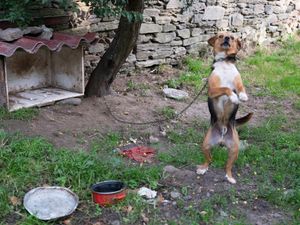
In Serbia that process of controlled environment vs. wild environment is at a different stage, certainly, at least, for people with no means. The environment is still untamed, abundant and invasive. Its beauty and power are obvious and with this uncontrollable force comes also a tangible cruelty, a struggle for survival of the weakest creatures.
This cruelty is mirrored in the lives of the people I have met.
I wonder about how important it is in our society for individuals to exert control over their environment and lives in order to be successful? It seems to be a very important signifier of how well we integrate into mainstream society.
So what does that mean for people who either choose not to? Or who don’t have the ability to dominate their environment?
I would like to explore this facet more in future visits, as I feel this is a crucial aspect in the story of integration and acceptance within our Western society.