SILVER HANDS
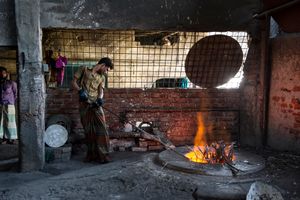
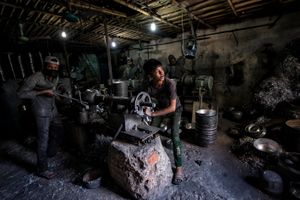
There are many aluminum factories in Bangladesh where different types of pots are made from recycled and melted aluminum. To produce a saucepan, a bowl, or an aluminum kettle, one must first melt this aluminum, turn it into ingots, laminate it, and cut it into discs. Then comes the anodizing, a chemical process to produce a coating that will prevent objects from rusting. The aluminum discs are soaked in sulfuric acid and caustic soda. The discs are then formed manually with rotating machines to obtain kitchen tools. The final touch involves sandpaper polishing, a task that workers undertake by fixing sandpaper on their hands and feet. The workplace is very hazardous and he production of pots in these factories produces a lot of nefarious aluminum dust. Medical studies have shown that extensive exposure to such dusts could cause brain and lung damages, as well as Alzheimer's and bone diseases. Industries like this are a huge source of employment, and hire many children under the age of 15. Most factory owners rather employ children because they are cheaper, and above all, more obedient than adults. They work for more than 10 hours a day for a daily salary of €1.50. The lives of these child laborers are tough, but compared to homeless children on the street, these kids are considered fortunate. Without formal education, these children are trapped in these poorly paid jobs linking them to the vicious circle of poverty, and are likely to work in these factories for the rest of their lives. In 2013, Bangladesh made moderate progress in its efforts to eliminate the worst forms of child labor. According to the Labour Law of 2006, the minimum legal age for employment is 14. However, 93 per cent of child labourers work in the informal sector, trying to make ends meet in small factories, workshops, on the street, in home-based businesses or by working domestically for particulars. The enforcement of labour laws is virtually impossible, with a large number of children still carry out dangerous tasks all around the country.
No categories selected
Photos (10)