
LensCulture Editor Review
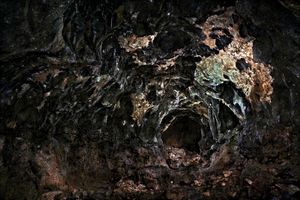
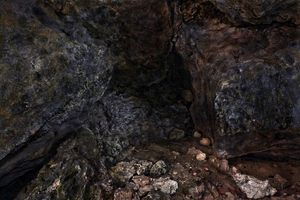
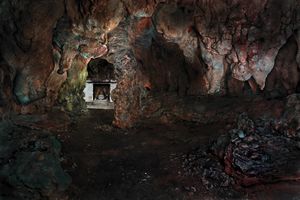
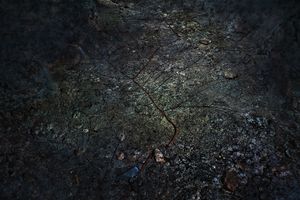
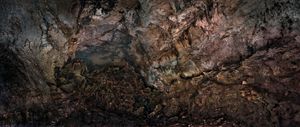
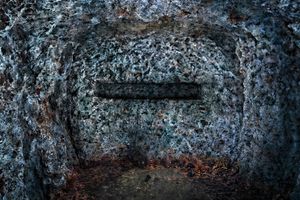
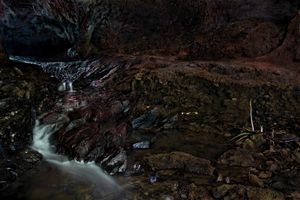
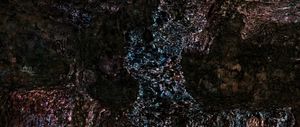
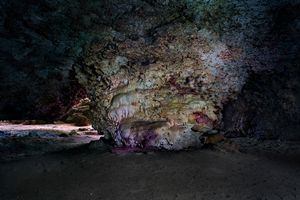
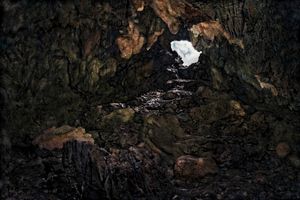
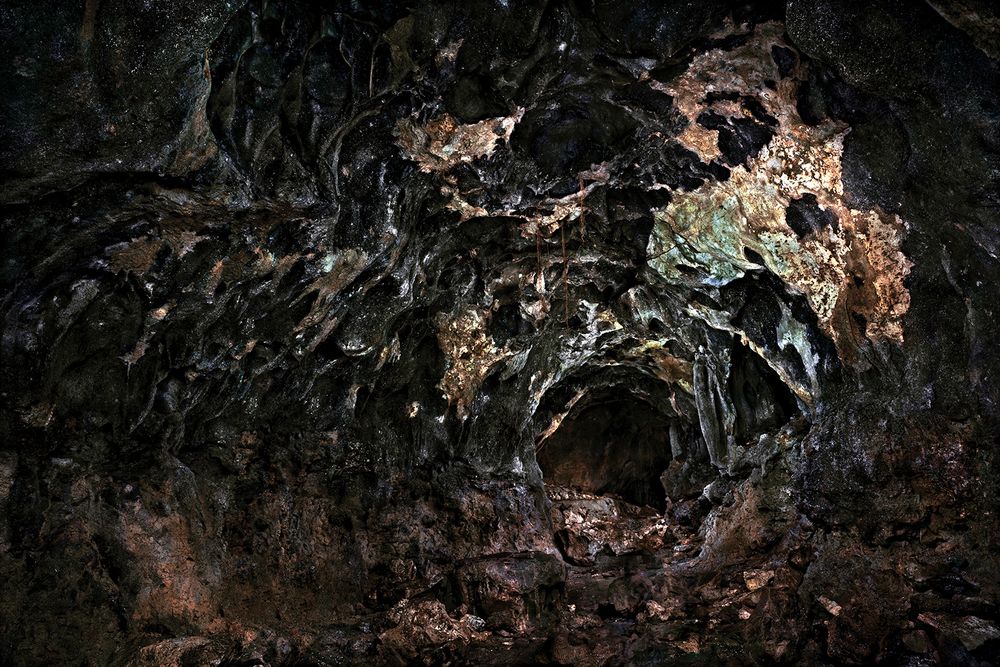
From the banta cliffs of Okinawa, mabui – the spirits of the land, of the deceased – led me into the gama caves below. These caves are the sacred home of Okinawa’s spirits – its ancestors, its history, its memory. I enter hesitantly - through the eeriness of the cave’s dark, heavy air, through the remnants of war scattered on the ground. Enveloped total darkness, what could I possibly see? Yet inside the earth’s womb, deep in this darkness, the conversation continues. With just a flashlight in hand, I search for anything I might find, unable to entirely illuminate my surroundings. The shutter wide open, I enter into the image, my flashlight in hand, floating and conversing with mabui as the cave’s interior slowly seeps into the camera. What am I hearing? What can I express for them? How will these images of darkness speak to others? These questions continue to resonate in my mind as I return from the blackness of the caves to my studio to draw out the spirits of this place. When Nakagawa first visited Okinawa, he was shocked by the gap between the picturesque landscape and its tragic history, which led him to start working on the GAMA cave project. GAMA shows with long exposure the spiritual caves which were used as hospitals, foxholes, and even as the site for suicide during the World War II, US invasion. Nakagawa, whose cultural identity bridges Japan and America, has been pulled back and forth between these two cultures, mirroring the experience of Okinawa. Furthermore, for Nakagawa to come face to face with Okinawa meant confronting with his personal history as his wife is Okinawan. We may see that these works were created not as objective documents, but rather as a personal dialogue between the artist and Okinawa as he strives to make visual the invisibility of memory through the power of imagination.
No categories selected
Photos (10)