
Fatherhood moments
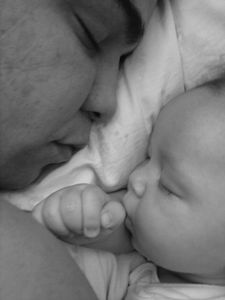
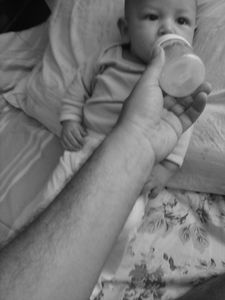
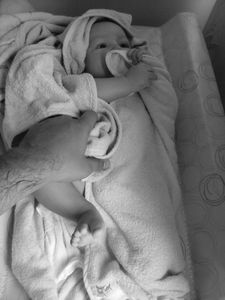
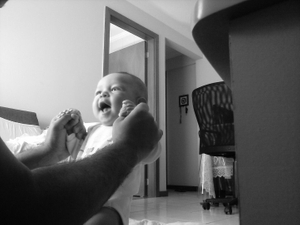
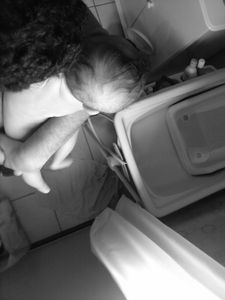
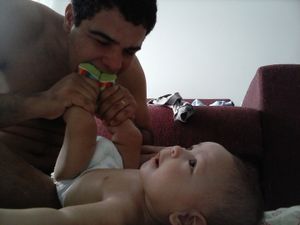
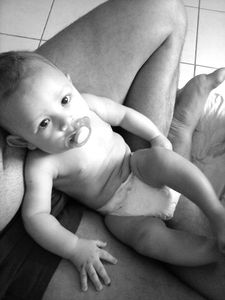
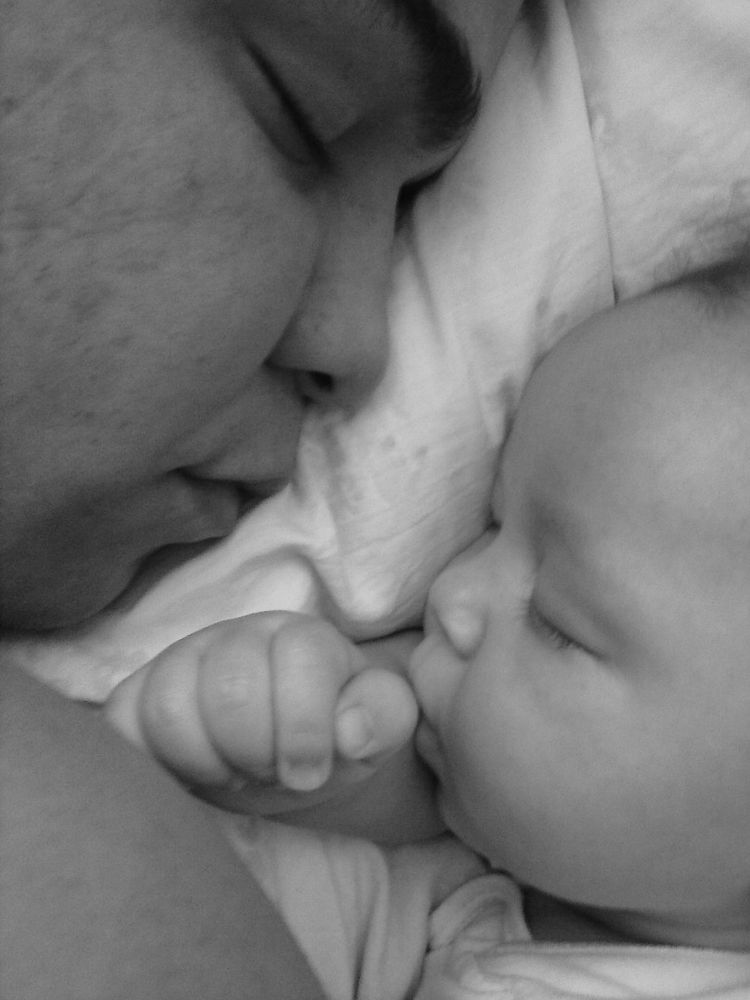
The father's role in raising children is changing in Brazil today. Historically, it was the duty of just women to care for the children, without the assistance of the father. There was a clear division of labor by gender. The girls were taught from childhood about the domestic world - the care of the home, husband and children - through their play with dolls and miniatures of household goods, such as stoves and washing machines, etc. While the boys were forbidden from playing with these toys. This cultural dimension is also still present in the laws and regulations, as well as in the architecture of buildings. Brazilian law allows only five days off work without loss of pay for men when they become a father, while women have four months in the private sector and six months in the public sector. Moreover, in many areas the baby changing rooms are situated within the female toilets. However, some men who were raised exclusively by their mothers decided to act differently from their parents. They are men between 20 and 30 years old who suffered from their father’s absence. These new fathers are ‘fathers of the 21st century’: they do not just give a little help to their wives, but assume equal responsibility for the care and upbringing of the children from the relationship. This is what happened to me. However, unfortunately, this group is still a minority in Brazilian society because many men still reproduce the behavior of the previous generation. Machismo is the main obstacle to overcome. It is not just fatherhood that has changed. Motherhood is also different today: it is more difficult because of a lack of time. In the 70s and 80s most women did not work. At that time, their only responsibilities were raising the children and looking after the house. Today, most women work, as well as taking care of the home and children. It is said that they have three jobs. This overload of tasks makes women covert male participation with an equitable division of tasks. On April 26th, 2013, at 10:01, my son came into this world, and his name is Samuel. I had longed for this moment for the nine months of my wife‘s pregnancy. I fell in love with him the first moment I saw him. That was the happiest day of my life. I could not control my excitement and am not embarrassed to say that I cried with happiness when I carried him in my arms after his birth. I will never forget that moment. I decided to help my wife because I thought it unfair that she had to do it alone. To do this, I reduced my workday, and consequently we had a reduction in wages. It was worth it! It was the best decision we ever make in life. I discovered that there is no difference between caring and living together. My loving relationship with my son grows stronger with each new day. I see him learning new motor, cognitive and speech skills every day. Some of them occur spontaneously, while for others I had the opportunity to stimulate their development. When my son was five months old, I started using my mobile phone’s camera to record our life together. My intention when taking these self-portraits was to immortalize these moments of happiness we share during his childhood. Then a friend of mine called Durval Neto told me that the photos were beautiful. He also said that it was very unusual to find photos of fathers alone with their children in daily life, and the idea for this series of photos was inspired by that comment. This series of photos depicts the beauty of the relationship between a father and his son; and, as the philosopher Confucius said, "a picture is worth a thousand words", I will let the pictures speak for themselves. *Translation by Durval Neto. thank you my dear.
No categories selected
Photos (13)