
Haiku
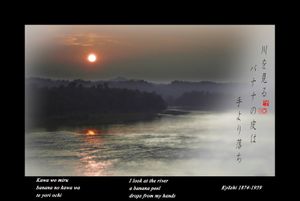
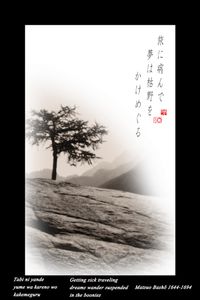
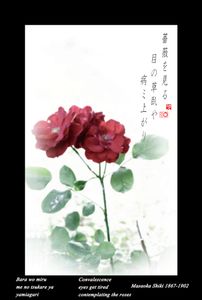
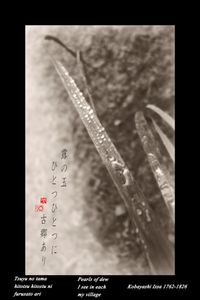
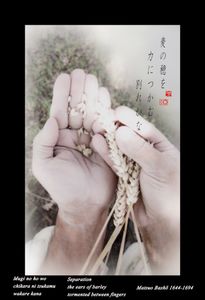
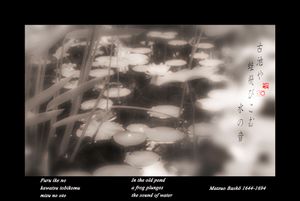
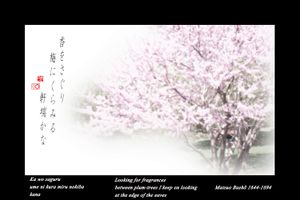
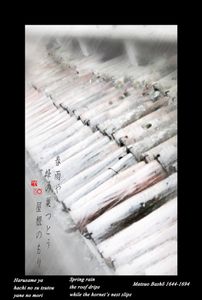
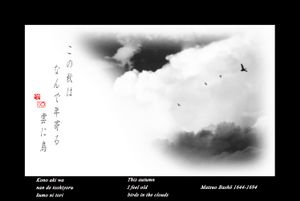
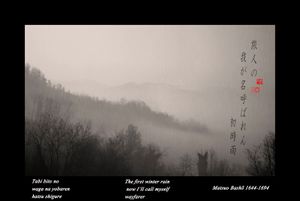
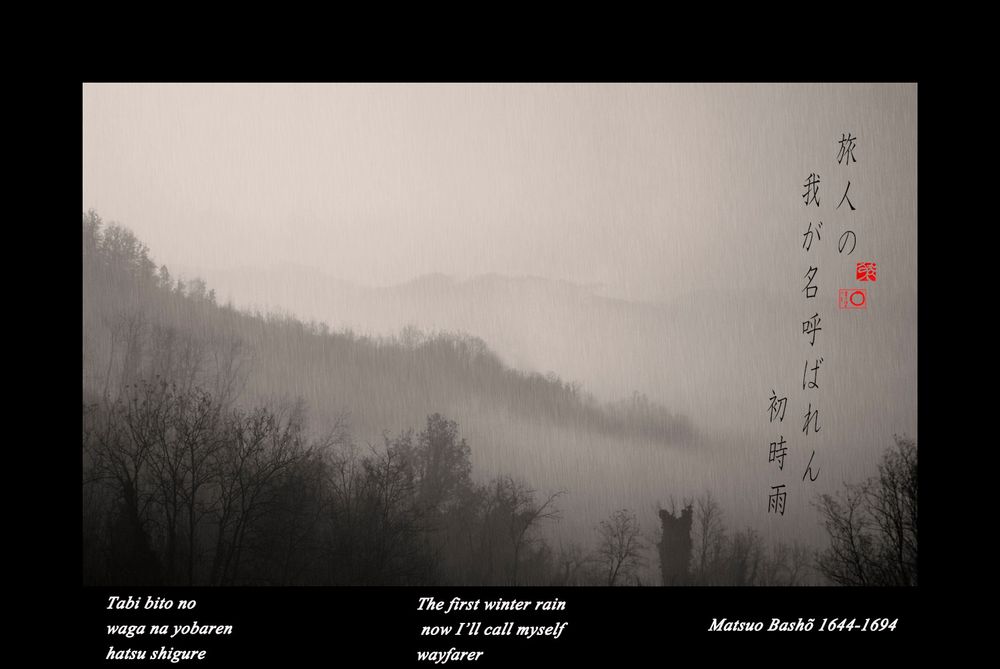
Haiku originated in Japan in the XVII Century beginning with the great master Matsuo Basho (1644-1694). It is a composition in only three verses of altogether 17 syllables that enables concentration. In Japanese literature Haiku represents a very important and characteristic part of the deepest essence of this culture. Zen is, in fact, the basis for this poetic work. Haiku is never a simple realistic description; this means that language is not enough to witness for the objectivity of reality. Haiku is a vision in which everything is vital energy that reveals itself to the mind once this is free from schemes and prejudices, from its habits and rational limits. Each of these short pieces should be meditated…not fleetingly read…thoughts, as flashes that are unique because unrepeatable, reside in them. Haiku is a sensation, a sudden lightning glance on the world; it doesn’t explain nor prove anything; it simply presents reality. In this work I’ve tried to unite Haiku and photographs because I think they are two forms of art much more able to stop time flying, in order to give a representation of it; I’ve tried to visualize what these few verses can evoke, leaving at the same time great space to the imagination of the observer. Images are intentionally not so much defined; on the contrary they are as if haloed and out of focus. They are only suggestions from a hint of reality. I think in fact that Haiku and photographic image are always inadequate in comparison with reality; for this reason the image becomes here “vision”, invitation to give rise to representations that are different from usual; moreover it will take the user to a personal interpretation from the simple states of mind evoked both from photographs and the poetic composition. Roberto Spotti www.robertospotti.it
Photos (10)