
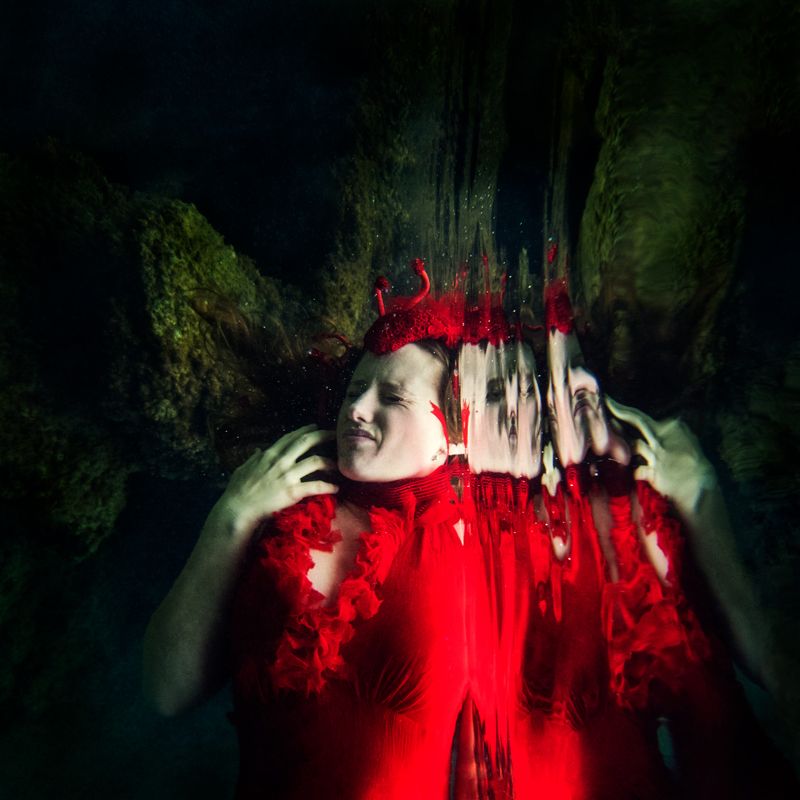

MEDUSA I: TRAUMA and MEMORY
MEDUSA. The heroic transcendence of suffering. The Hero's journey to freedom (First Part) MEDUSA I: TRAUMA and MEMORY “When our experiences are terrifying and overwhelming, the mind may fragment and become disorganized. The very fabric of our internal world begins to unravel, we become disoriented, and we are unable at times to maintain either a clear connection with others or a coherent sense of ourselves. If the past trauma or loss is not resolved, our internal narrative too will break down. If we try to tell our story to others, we may be overcome by feelings or images that have not found a place in the larger narrative of our lives.” Daniel J. Siegel, MD Poseidon, the god of the sea, brutally attacks an adolescent priestess from the temple of the goddess Athena, who then punishes the young Medusa for that attack, Perseus finally kills the already transformed and traumatised Medusa. The project aims to relate an alternative story in which Medusa also undergoes the changes that the trauma deposits in her body and mind, but in this version, she transforms it through conscious awareness, changing her reality and her “destiny” The traumatic horror that the snaked hair and the blood symbolise, will be part of her wardrobe and her journey towards the transcendence of the trauma. In this first part, dissociation, flashbacks and fragmented memories, are presented as the horror that precedes the inner journey, from chaos to mental integration, the awakening of the courage of the hero who, transforming herself, will transform her own life story. The journey of Medusa, like that of the people who live with the trauma, from this perspective, is a heroic journey towards oneself. “The hero’s will is not that of their ancestors or of their society, but his/her own. This is to be oneself, this is heroism.” José Ortega y Gasset The Hero’s Journey ” by Joseph Campbell is taken as a reference in this process towards healing, due to the parallelism with new knowledge in psychology. A few egregious scientists who decided to undertake non-traditional paths within the profession, teach us that trauma, far from being a mental illness, is a transformative life experience (Dr Peter Levine M.D) that can be completely healed (Dr Daniel J .Siegel, Dr Bessel Van Der Kolk, and others). “If we can make sense of our past—if we integrate our narratives—we can free ourselves from what might otherwise be a cross-generational legacy of pain and insecure attachment. (…) taking responsibility for one’s own mind can lead to the liberation of the self, and to the ability to offer nurturance and love to the next generation.” Dr Daniel J. Siegel. “Mindsight.” More info: https://beatrizglezsa.com/medusa-i-trauma-and-memory
No categories selected
Photos (42)


