The Study of Kin
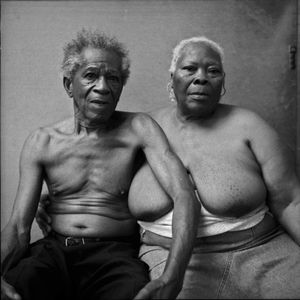
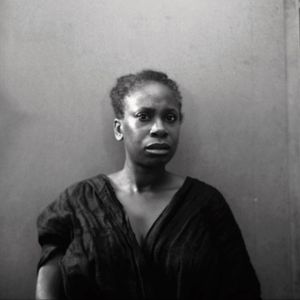
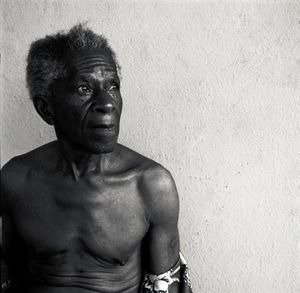
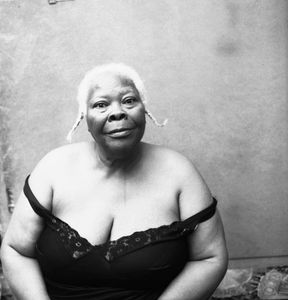
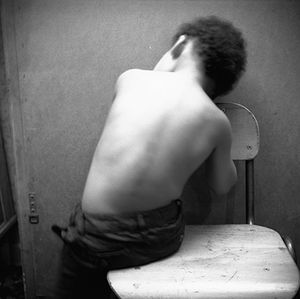
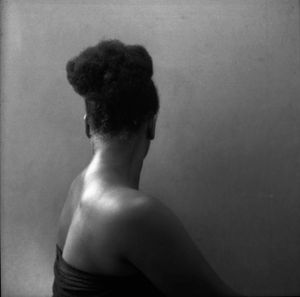
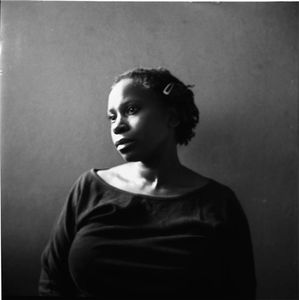
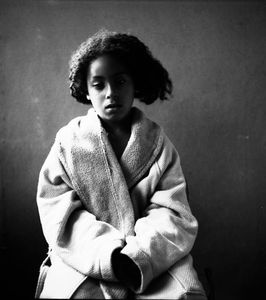
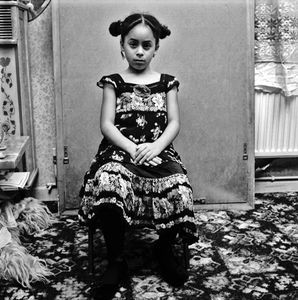
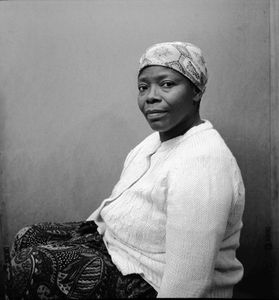
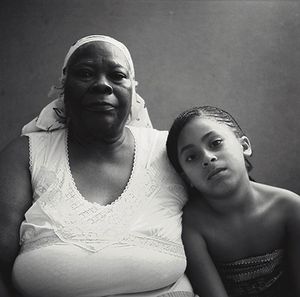
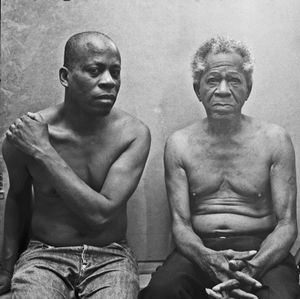
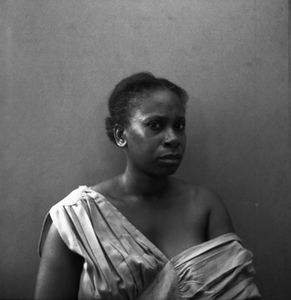
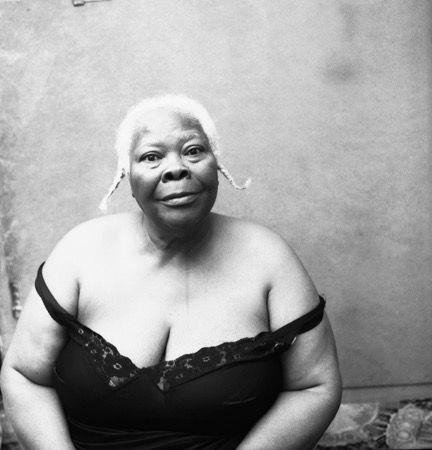
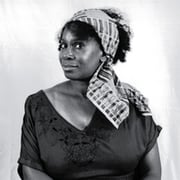
My work explores how the invention of photography prompted and furthered the creation of stereotypical representations of black people in Britain. The work was made as a reaction to finding very few positive, empathetic historical photographs of British black people and families in the national archives. The negative and demeaning photographic and textual representations of black people that I found prompted me to make images of my own family, exploring the idea of hereditary and its relationship to the historical and contemporary concepts of stereotyping, classification and social control. In the 19th century photography was used to classify people. Anthropometric photography, introduced by Bertillion and used by Galton, involved compiling composites of types of people as well as of family likeness, both of which linked-in with theories of race and eugenics. I felt that this viewing and categorizing of the 'other' was not only an oppressive misuse of photography, but could be appreciated as a record of family identity passed on through the generations. This paved the way for me, through my series of small images, to become an ethnographer, looking at myself through my own family. From a contemporary viewpoint, 19th century anthropometric photography has its own beauty, partly due to the qualities of historical photographic and printing techniques. Its analyzing and controlling gaze seems to expose a unique individual subject, rather than a specimen exemplifying type. With my work I hoped to create a valued personal and public record of my family, situated within the historical context of photography as a means of racial stereotyping, social control and exclusion; Exposing the individual beauty of the subject, which cannot be extinguished and is even emphasized by a formal, scientific style of image making; Appropriating the viewpoint and methods of a historically white, male institution, in order to collect and claim ownership of my family and identity.
Photos (19)