Fokion Zissiadis's Projects
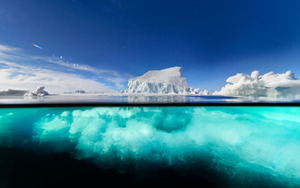
Icebergs flawlessly exemplify a celebration of random wandering and ceaseless transformation. The mysterious, often solitary, journey of theirs into waters recon twofold personality - above and below the sea level, deifying the power of prendre l' eau. Water becomes the ultimate procreator, too in a binary way of being both obvious and obscure. Icebergs suit the case par excellence. The majestic world of their 90% below the water line, yet rebelling at stagnation, forms a solid rock bottom, while their tip manifests a dichotomy between the fragility of a crystalline structure and the prowess of a marble like construction. When captured simultaneously, at an unusual glance, through the lens, the ensemble, above and below the Arctic Ocean Horizontal Line, reveals the awesomeness of its compact physique, adding to the mystery of a perpetual scenery conquered by a drift trajectory and a buoyancy so faithful to Archimedes' principle.
Aggressor-victim has always been the bi-pole of ever-present life, which, within the vastness of glacial Greenland, converts the qualms of its inherent duality to hunter-prey. A semblance of a work-body, still in progress, constitutes a vignette story with a bittersweet edge multiverse of tangible, yet evanescent, ideas of how global warming tangles with the dynamics of bellicosity. Inuit hunters and a representative sample of Arctic fauna at the brink of extinction- polar bears, foxes, muskoxen and dogs - become Fokion Zissiadis’s creative metaphor of a tongait, a “place of spirits” in Inuit tongue, which holds a deep connection to this environment, while reflecting upon thousands of years of hunting rituals and the ebb and flow of any type of migration. It is this very tongait which expresses Fokion's inmost pledge to a fecund use of his lens toward an awakening and the (little) time that has been left.
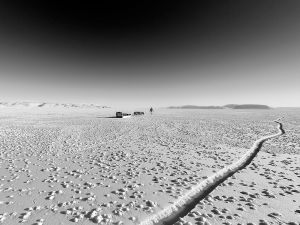
Photographer’s Note This body of work grew out of a passion for photography, the thrill of adventure and the sheer love of off-road driving. I didn’t set out to advertise a brand but instead to tell the story of a journey that only a lucky few ever get to make. The Ford Ranger is an important part of the story because without it this journey would not have been possible. As an adventure traveler, landscape photographer and Ranger owner, I’ve driven my car, which I call “Black Mule” for obvious reasons, across some rough country, including the sand dunes, bogs and marshes of Chalkidiki, where I live. I was eager to put the vehicle, which I had carefully modified and outfitted, to a real endurance test and see if it would stand up to its reputation. So I teamed up with my friend, Anastasios Hatzis, who has the Ford dealership in Thessaloniki and an identical sea grey Ranger, and we took our cars on a truly demanding trip. We drove them along both sides of the border on three separate trips, over abandoned forest trails and snow-capped grasslands, through treacherous gorges and river beds strewn with boulders. We took them up and down steep mud-covered hillsides, deep into a pristine wilderness where bears and eagles had found refuge. Ultimately, both my Black Mule and its sea grey sibling met every challenge this extraordinary itinerary presented. What’s more, they provided us with an unforgettable driving experience—just as we thought they would—and an amazing collection of images, some of which are presented here. Fokion L. Zissiadis
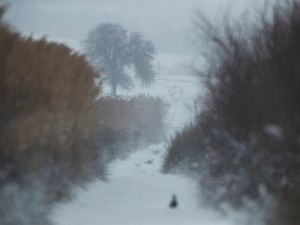
One of the few remaining Mediterranean wetlands and among its most renowned, the Sani Wetlands in Greece were recently struck by an unprecedented snow storm – the worst that the area had experienced since 1968 – that swept across southern Europe. Situated in the northwestern part of Kassandra, Halkidiki, the Sani Wetlands comprise two lakes, one with brackish water and the other with fresh, and includes the Sani Bird Sanctuary, which is home to more than 220 species of birds and protected by the Ramsar Convention. This extraordinary habitat, together with the surrounding pine trees and farmland, mainly cereals, olives, orchards and vineyards, creates an ecosystem typical of the Mediterranean region. As a landscape photographer of the polar regions but also as a resident of Sani, I was privileged to witness a unique phenomenon in my own homeland, a truly arctic coincidence of sub-zero temperatures and prolonged, heavy snowfall. The spectacular transformation of this Mediterranean landscape, dressed in arctic attire, created rare views of frozen coastal wetlands and snow-covered sand dunes. At the same time, however, the freezing cold and lack of food threatened the existence of the wetlands’ wildlife, particularly that of the bird population. I felt truly blessed by nature to have had the chance to live and photograph this once-in-a-lifetime experience. Fokion L. Zissiadis
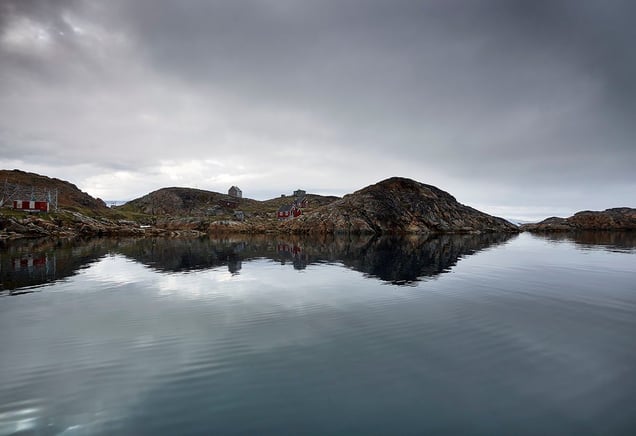
Ikkatteq Sixteen kilometers west of Tasiilaq at East Greenland—a risky sail along a coastline battered by the winds and waves of the Atlantic—stands a settlement of eight houses and a chapel-cum-school, stiller and more silent than the surrounding rock. Established in 1914 as a permanent fishing village, the settlement is perched on a small island at the mouth of the renowned Sermilik Fjord, probably the largest provider of icebergs in all of Greenland. Rumor has it that it was here, from this fjord, that the famous iceberg that struck the Titanic began its fateful course. In 1937, a building housing a chapel and a schoolroom for 11 children was built. The same year a shop opened to cater to the basic needs of the isolated island’s 40 inhabitants. Due to its remote location and difficult access, the population declined until gradually no one was left. According to local lore, the last villagers to leave the island were two brothers. One later murdered the other. The settlement was completely abandoned in 1994. Some of the buildings are now used by hunters or travelers seeking shelter from the harsh weather. As I photographed the interiors of the houses that were open, I had the strongest feeling that they had been hastily abandoned, as if their inhabitants had been under great pressure to leave as fast as they could. Awash in the calm light of the dying sun and set against the backdrop of icebergs flowing down the fjord like models along a catwalk, this undulating landscape of soundless houses and burial grounds felt to me like a place of witness that filled me with a sense of reverence Fokion L. Zissiadis
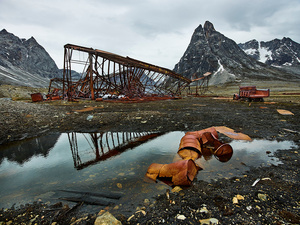
During the World War II the United States took the responsibility for the defense of Greenland. They established a number of bases with the codename Bluie Bluie East 2 was an airfield and weather station near Ikateq on the east cost of Greenland. The Us Air Force started to use the airfield in 1942. Because of close mountains and strong winds it never played an important role. It was mainly used for search and rescue operations. After the war Bluie East 2 lost its strategic importance and the US Air Force left the site in 1947. Most of the equipment was left behind including thousands of fuel drums Today almost 70 years after, it stands unknown to the many as an undeniable reminiscent of a bygone era. The aging site installations and equipment exposed to the ruthless arctic conditions for so long time, have taken the form of a spectacular open air gallery in progress, accessible to the very few This body of pictures is part of a greater photography-art project on Greenland that I am currently developing Fokion L.Zissiadis
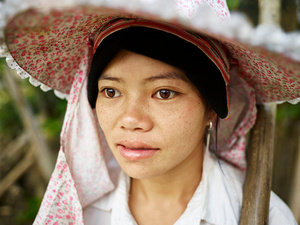
It is almost impossible to shoot landscape photography in Vietnam and ignore the human element. You see them in the terraced fields, mostly women and children, colorful figurines that dot the landscape, reminding you of how humans throughout the centuries have settled here and become an integral part of this spectacular natural beauty. For a Westerner trekking in this land, it is like coming back from the future. As hotel infrastructure in these areas is non-existent, your only choice for accommodations is to lodge with a local family. As the sun sets, this home stay momentarily opens a window into their life. Sharing meals and the intimate space of their home, you are given access to their private lives, and you begin to understand something of their needs and character and philosophy of life. The Vietnamese in the countryside, contrary to what I initially believed, are friendly and whole-hearted. They are happy, despite their harsh, primitive living conditions, which they do not seem willing to change. Thought is a luxury: the exhausting daily struggle for survival leaves little room to imagine a better life. It is as if they have surrendered their destiny and the realization of their deepest most personal needs to a higher power. There may be a sense of timelessness in these photographs but change is afoot. The Vietnamese countryside is gradually being despoiled, and a centuries-old way of life is being challenged with the intrusion of mobile telephones, and wireless networks. A very different and unpredictable future awaits Vietnam’s young generation.
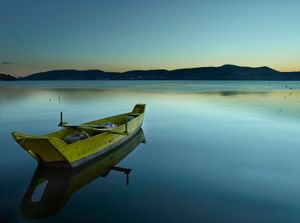
This project features some of my work on the lake boats of northern Greece. These peculiar craft with their vivid colors, left floating tranquilly on the lake waters or half ashore hidden in the reeds, have an intriguing charm that stirred my interest. Although used primarily for fishing, they evoke the tacit promise of a silent passing to the opposite shore – a feature which is almost always present as background in lake compositions of this size. Their confined space and the lack of any human presence amplifies the sense of solitariness, and carries uncomfortable associations. Often when I have observed these boats they have brought to mind the figure of Charon in Greek mythology, the ferryman who transported the souls of the deceased across the Acheron to Hades.
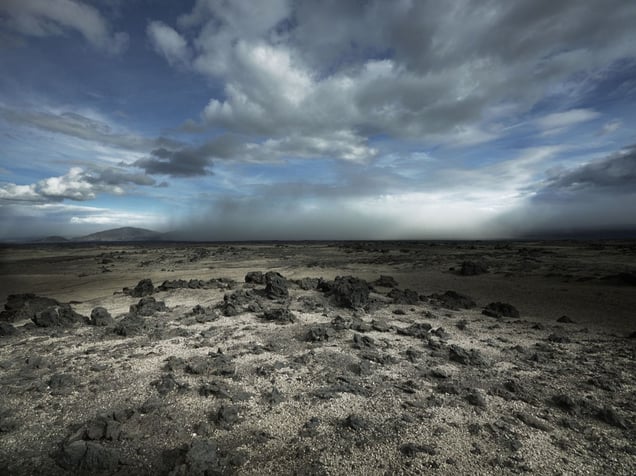
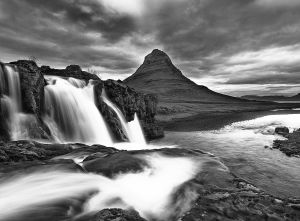
As I studied the photographs taken by Fokion Zissiadis during his ten-day trip to Iceland this summer, it occurred to me, almost without prompting, that the force of these landscapes lies above all in the allegorical metaphors they evoke. In the very real magic of these extreme geophysical phenomena, and the stark contrasts of the Icelandic landscape, Zissiadis finds a mythical interpretation in which: ...velvet concavities form a geography of moulds, clouds take the form of steam from a locomotive, waterfalls flow like the beards of deities, the remains of ships or ‘ships of the air’ are transformed into alien monsters or biblical arks, moored like satellite dishes, earth and sky – solid and fluid – acquire the same material density, while the springs bubbling up from the entrails of the earth flow down into a sea of rocks ... Fokion Zissiadis’ landscapes seem to create their own legends, tales of battles between giants and titans, with what remains of these battles now as hard as stone, as precious stone! Thalea Stefanidou Art Historian and Critic - Curator
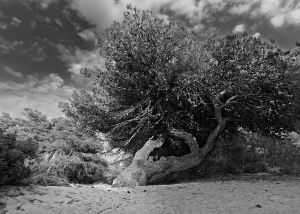
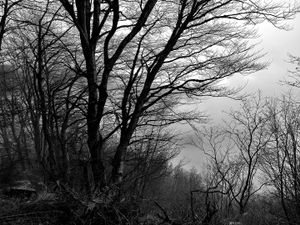
The Sani Sand Forest The Sani sand hills, which lie between the shore of the Thermaic Gulf and the marshy, brackish savannah, have evolved over time into a battlefield where the Aleppo Pine struggles to survive. Their only allies the wild thyme and oregano, and the stubborn schinus, the trees valiantly resist the wild north winds which sweep the coastline, spraying salt everywhere, and form their own unique ecosystem, like a strange colony of extra-terrestrial beings, almost mythological in their inspiration. The sand here has blossomed into a strange, eerie forest, the tree trunks twisted out of shape, or crawling along the ground like reptiles, or mythological invertebrates, growing ever longer and more involved and entangled, but never gaining in height. A monstrous vegetation which, in these monochrome photographs by Fokion Zissiadis, seems to represent in vivid relief the battle for survival between nature and the wild and harsh conditions of the place – not just the barren soil, deprived of fresh water, but above all the implacable, relentless rage of the north wind, particularly in winter. The black and white photographs, taken in the baking heat of a midsummer midday, which almost seems to represent in cross section the shapes of the vegetation, against the background of the white sand, convert the colours, deliberately, into shades of grey. The choreography of the tree trunks, tormented by the implacable winds, the clustering leaves at the end of the branches, like flowering trophies, the epic drama of contrasting forms … all seem to convey the certainty of an eventual victory for the life force, however twisted and distorted a form it must assume, however harsh and hostile the conditions with which it must do battle
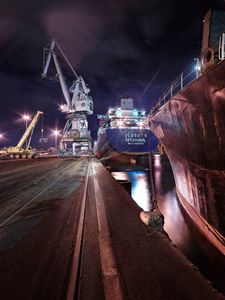
THE PORT … there, to the west of Thessaloniki, at the water’s edge, the city port in the twilight… All the machinery and equipment one would expect at such a location: ships at their moorings, cables and ropes stretched taut, cranes, passages and pathways through the maze, railway wagons on their rails… Not a human figure in sight… everything suspended in absolute immobility. A sense of energy frozen, time ceased, place undefined, which lends an element of drama to the gigantic, elevated equipment, like great beasts waiting a command to spring into action! The scene is bizarre, unfamiliar… a world of cyclopean machines leading their own autonomous existence, unchallenged, supreme rulers, against a background of sea and sky, among the huge and ever-shifting heaps of minerals in transit. The photographer’s eye has transformed these elements into scenes of an unsettling time, ‘metallic’, almost unearthly, clearly expressing a conviction that each photograph is a fantastic narrative, presented as a real scene in some alternative world… Thalea Stephanidou
As I studied the photographs taken by Fokion Zissiadis during his ten-day trip to Iceland this summer, it occurred to me, almost without prompting, that the force of these landscapes lies above all in the allegorical metaphors they evoke. In the very real magic of these extreme geophysical phenomena, and the stark contrasts of the Icelandic landscape, Zissiadis finds a mythical interpretation in which: ...velvet concavities form a geography of moulds, clouds take the form of steam from a locomotive, waterfalls flow like the beards of deities, the remains of ships or ‘ships of the air’ are transformed into alien monsters or biblical arks, moored like satellite dishes, earth and sky – solid and fluid – acquire the same material density, while the springs bubbling up from the entrails of the earth flow down into a sea of rocks ... Fokion Zissiadis’ landscapes seem to create their own legends, tales of battles between giants and titans, with what remains of these battles now as hard as stone, as precious stone! Thalea Stefanidou Art Historian and Critic - Curator