Nathan Verstraete's Projects
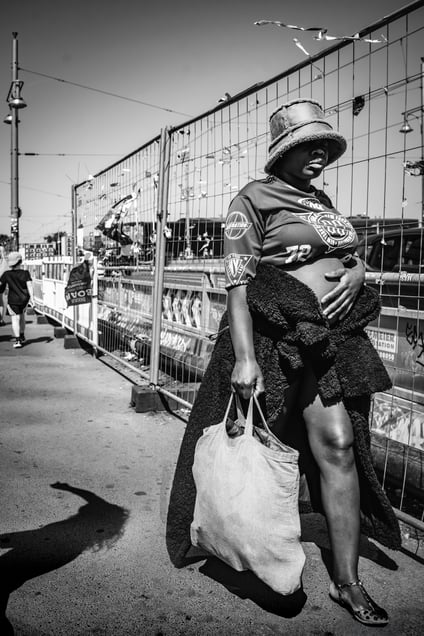
In Berlin, identity is flexible. You can be a Berliner, not a Berliner, or two at once. Even the machines stare back.
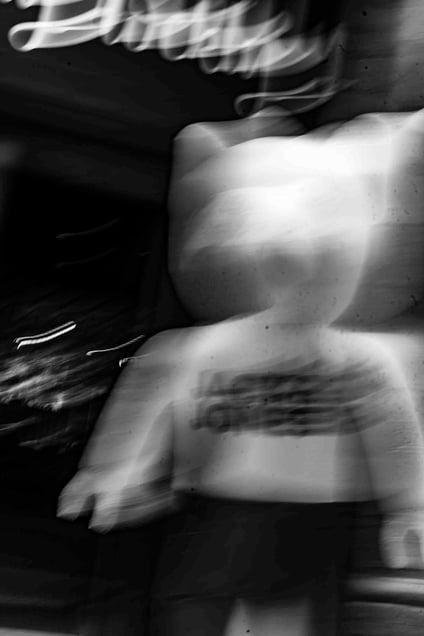
Figures floues, silhouettes effacées, corps absorbés par la ville — ces images saisissent ce que l’œil oublie et que la mémoire recompose. À travers une esthétique du mouvement et de l’ombre, interroger la présence éphémère, le rythme urbain, et les fragments humains qui traversent nos regards sans jamais s’y fixer. Ce n’est rien qu’un passage, mais ce rien laisse une trace. Blurred figures, erased silhouettes, bodies absorbed by the city — these images capture what the eye forgets and memory reconstructs. Through an aesthetic of motion and shadow, exploring fleeting presence, urban rhythm, and the human fragments that cross our gaze without ever fully settling. It's nothing but a passage — and yet that nothing leaves a trace.


The early bird catches the worm : In the quiet of dawn, where mist clings to the earth like a whispered secret, the morning sun breaks through, spilling gold across the horizon. The mist, soft and ethereal, holds the light tenderly, turning the air into a shimmering veil of gold. Each dewdrop glows like a hidden jewel, and the world, still half-dreaming, awakens beneath this delicate light. There’s a magic here—where the sun meets the mist—transforming the ordinary into something rare, as if the morning itself is spun from threads of gold, woven into the fabric of time. Dans le silence de l'aube, où la brume s'accroche à la terre comme un secret murmuré, le soleil du matin perce, répandant de l'or à travers l'horizon. La brume, douce et éthérée, retient la lumière avec tendresse, transformant l'air en un voile scintillant d'or. Chaque goutte de rosée brille comme un joyau caché, et le monde, encore à demi endormi, s'éveille sous cette lumière délicate. Il y a ici une magie—là où le soleil rencontre la brume—qui transforme l'ordinaire en quelque chose de rare, comme si le matin lui-même était tissé de fils d'or, inscrits dans le tissu du temps.
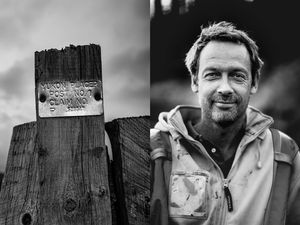
The Klondike Gold Rush was a pivotal event in the late 19th and early 20th centuries that saw a massive influx of prospectors and fortune seekers into the Yukon Territory of Canada. This gold rush, which began in the late 1890s, was one of the last great gold rushes of the 19th century and had a profound impact on the region and the people who participated in it. The prospectors came from various parts of the world, including the United States, Canada, and other countries, all with the hope of striking it rich by finding gold. Placer mining was the primary method of gold extraction during the Klondike Gold Rush. Placer mining involves sifting through riverbed gravel and sand to separate gold flakes and nuggets from the surrounding material. This method was well-suited to the Yukon's terrain because it didn't require extensive equipment or deep mining operations. Placer mining in the Yukon continues to be a significant part of the territory's mining industry, albeit on a smaller scale than during the historic Klondike Gold Rush. While large-scale industrial mining operations are also prevalent in the region, modern-day placer mining still plays a role in Yukon's economy.


Les criquets gazouillent Les grenouilles coassent Sa fleur ailée est claire La lune brille Le rossignol chante Le pilon toujours prêt

ZWART-WIT FOTOGRAFIE IS TIJDLOOS EN HEEFT ONTEGENSPREKELIJK EEN EIGEN KARAKTER. OF HET NU LANDSCHAPPEN ZIJN, OF PORTRETTEN. WIJ GINGEN OP ZOEK NAAR JONGE BELGISCHE TALENTEN, MAAR EVEN- ZEER GEVESTIGDE WAARDEN.

L'amour vole partout Prisonnier du désir. Jouvenceaux, jouvencelles, S'unissent comme il se doit. Si une fille est sans ami, Toute joie lui fait défaut, Elle tient une nuit profonde cachée dans son cœur C'est une chose bien amère. Carl Orff https://nl.blurb.com/bookstore/invited/9443796/6bcab3bd9e161483e334448cd00583806be68e71

In the shadows, lies the allure of multipurpose: a blade that both protects and harms, a mask that conceals and reveals. Such duality whispers of hidden intentions, weaving a web of intrigue and mystery. In the dance of light and darkness, beware the allure of the versatile, for within its depths, lies the potential for both salvation and ruin.

Veertig jaar lang gulpte beton uit de enorme silo's van de betoncentrale van Inter-Beton aan het Handelsdok in Gent, maar begin 2009 stuurde Inter-Beton de fabriek op pensioen. Krakers palmden de gebouwen in 2010 in. "Dit is gekraakt terrein, respecteer onze privacy. Dus blijf uit onze tuin. Voor foto's of graffiti eerst vragen aan bewoners. Ga weg!", zo klonk de verwelkoming aan de poort van Interbeton. Blijkbaar klopte ook graffitikunstenaar Roa er aan, want op de hele site ligt een indrukwekkende laag dierengraffiti. De betoncentrale zag wellicht na de Tweede Wereldoorlog het levenslicht, schrijft de website Architectuur in Gent. Begin 2021 is de iconische betoncentrale volledig met de grond gelijk gemaakt om plaats te ruimen voor een park. ****************************************************************************************************************** Pendant 40 ans, le béton a jailli des énormes silos de la centrale à béton Inter-Beton du Handelsdok à Gand, mais au début de 2009, Inter-Beton a renvoyé l'usine à la retraite. Des squatters ont repris les bâtiments en 2010. "C'est un terrain squatté, respectez notre intimité. Alors restez en dehors de notre jardin. Pour les photos ou les graffitis, demandez d'abord aux habitants. Allez-vous-en!", A-t-on retenti à la porte d'Interbeton. Apparemment, le graffeur Roa a également frappé dessus, car il y a une couche impressionnante de graffitis d'animaux sur tout le site. La centrale à béton a probablement vu le jour après la Seconde Guerre mondiale, écrit le site Internet Architecture à Gand. Début 2021, l'emblématique centrale à béton a été entièrement rasée pour faire place à un parc.

Het leven op zee, op een vissersboot... Hard labeur, maar een job die gedaan wordt met passie en bewondering voor de natuur en wat ze voort brengt. Vissers die vertrekken met een missie om daarna hun versgevangen vis aan land te brengen en te verkopen. Klanten en chefs die op hun beurt hun vis bij vissers halen, want verser en puurder vind je ze niet. De korte keten tussen vangst en bereiding is nergens zo klein.

The beautiful historical framework of the Mallien family's fur manufacture is the setting for bold and innovative projects today. Balthasar Brussels offers a platform of exciting talent. Art, design, fashion, lifestyle, gastronomy and travel take a new dimension. We are not a concept, we are a lifestyle! https://www.balthasarbrussels.com/nl#intro

Everything is a railway junction where past and future are sliding over one another, not touching. Railway termini are our gates to the glorious and the unknown. Through them we pass out into adventure and sunshine, to them we return! Tout est un chemin de fer où passé et futur se glissent l'un sur l'autre, sans se toucher. Les terminus de fer sont nos portes vers le glorieux et l'inconnu. A travers eux, nous passons à l'aventure et au soleil, vers eux nous revenons!


France's fourth biggest city, Lille, is often overlooked as a place to settle in France. But with an influx of hipsters, fantastic access to three European hubs, and impressive culture scene to boot - there's a lot more to Lille than meets the eye. The city is nestled close to the Belgium border and is the main city in France's Nord-Pas-de-Calais region, which like Lille does not really have a reputation for pulling in the tourists, despite being home to two Unesco World Heritage sites. Lille also suffers for being in one of France's poorest regions surrounded by some of the country's most hard-up towns that have suffered due to the decline of the country's industry. Lille is very colourful, welcoming and dynamic, extremely suitable for some black and white low dynamic range analog images.

Le 10 mai 1940, la Belgique était envahie par les troupes nazies. Cette invasion des territoires belges, hollandais et luxembourgeois a lancé sur les routes des dizaines de milliers de malheureux, quittant leur maison, leur village, pour un effroyable exode. Une de ces familles, les Pirlot a connu l'hospitalité de Toulonjac à la ferme du famille Rossignol à La Borie-Basse où ils sont restés jusqu'à la fin de la guerre. La Vierge de Banneux, la statue dite de Banneux à été offerte à la famille Rossignol à La Borie-Basse (Toulonjac) par les parents Pirlot, réfugiés, en guise de remerciement pour l'hébergement lors de la débâcle de mai 1940. Il faut savoir que le père Denis Rossignol, aux mains expertes, a érigé une petite chapelle au sein de sa ferme où trône la Vierge de Banneux. Après avoir fait carrière en Belgique, ce couple Pirlot s'est installé à Saujac. Saujac est une commune de l'ouest Aveyron et est en bordure de département. Elle est entourée par les communes de Salvagnac-Cajarc, Ols-et-Rinhodes, Ambeyrac et Montsalès. Le Bourg de Saujac se situe dans la vallée dans une boucle formée par un méandre du Lot qui fait office ici de frontière entre les départements de l'Aveyron et du Lot. Lors de son installation définitive, il a amené une croix de pierre réalisée en Belgique. Cette «croix des Belges» a été implantée sur le rocher de Langle (causse de Saujac). à partir du croisement renseignant le Saut-de-la-Mounine. In de vroege ochtend van vrijdag 10 mei staken de Duitse troepen massaal de grens met België, Nederland, Luxemburg en Frankrijk over. De Tweede Wereldoorlog was ook voor deze landen begonnen. Er waren hevige bombardementen op strategische plaatsen. De Duitsers hadden slechts achttien dagen nodig om België op de knieën te dwingen. Naar schatting 12.000 Belgen overleefden de veldtocht niet, de helft onder hen waren burgers, die vaak onderweg of thuis slachtoffers werden van Duitse bombardementen. Op 28 mei bood koning Leopold III de capitulatie aan, terwijl een deel van de regering daarmee niet akkoord ging. Zij zouden de strijd verder zetten in ballingschap in Engeland. Tijdens die meidagen vluchtten ook duizenden Belgische gezinnen naar Frankrijk. Naar schatting vier miljoen Belgen maakten de eerste oorlogsdagen als vluchteling mee. De helft daarvan kon de Franse grens oversteken. Onder hen ook de famillie Pirlot uit Banneux, die na een lange niet ongevaarlijke trektocht uiteindelijk een onderdak vond in een boerderij te Toulonjac bij de familie Rossignol. Gedurende de oorlogsjaren leefden en werkten zij mee op de boerderij. De 7 jarige Renaud Pirlot en de evenoude Rossignol smeedden er hun vriendschap voor het leven. Na het einde van de oorlog keerden de famillie Pirlot terug naar hun geboorteplaats Banneux vanwaar zij als dank een Heilige Maagd schonken aan de famillie Rossignol. De Maagd Maria kreeg haar onderkomen in een voor haar opgetrokken kapelletje op het erf van de boerderij te Toulonjac. Eénmaal met pensioen keert het koppel Renaud Pirlot-Michel terug naar de streek en vestigt zich defintief te Saujac, een arduinen kruis gemaakt in Belgie wordt ter nagedachtenis van de exodus geplaatst op de Rocher de Langle te bereiken via het kruispunt komend van de Saut-de-la Mounine. In the early morning of Friday 10 May, German troops crossed the border with Belgium, the Netherlands, Luxembourg and France. The Second World War had also begun for these countries. There were heavy bombing in strategic places. The Germans only needed eighteen days to force Belgium on their knees. An estimated 12,000 Belgians did not survive the campaign, half of them were civilians, who were often victims of German bombing on their way or home. On 28 May King Leopold III offered the capitulation, while a part of the government did not agree with it. They would continue the fight in exile in England. During those days, thousands of Belgian families also fled to France. An estimated four million Belgians took part in the first war days as refugees. Half of them could cross the French border. Among them also the Pirlot family from Banneux, who eventually found shelter in a farm in Toulonjac with the Rossignol family after a long, non-hazardous trek. During the war years they lived and worked on the farm. The 7 year old Renaud Pirlot and the old Rossignol created their friendship for life. After the end of the war, the Pirlot family returned to their birthplace Banneux, from where they gave thanks to a Blessed Virgin to the Rossignol family. The Virgin Mary got her shelter in a chapel in front of her in the yard of the farm at Toulonjac. Once retired, the couple Renaud Pirlot-Michel returns to the area and settles definitively to Saujac, a bluestone cross made in Belgium in memory of the exodus placed on the Rocher de Langle to reach via the crossroads of the Saut-de -la Mounine. Dixit Lensculture : It is a pleasure to review your images. The quality of the photographs in this series is impressive. I think it works well in black and white, and you've made stylistic choices that fit the part of the story you are trying to tell. For instance, the visible movement in image 6 with the running deer suits the topic of refugees moving quickly to safety. The illustrative aspect of the images works well. While the images are cohesive and follow the storyline, I wish there were more figures in the work. The portrait of Mr. Pirlot is compelling, and I recognize this as his story. While he may not be able to be portrayed in many of the images, I think finding a model or stand-in to serve as a unifying element, and also a reminder that this is the story of a real person and a survivor, would be powerful. I don't think every single image needs a human figure in it, but I think images 5, 7, or 8 would be good candidates. Choosing one or two of the images to reshoot with a figure, part of a figure, suggestion of a human, etc. would work well. It's just a thought. In general, I think this is a highly resolved series. I'm especially drawn to images 1-4 and image 6. They are beautifully rendered and have a bit of mystery to hold my interest. From a technical perspective, your images tick all the boxes in terms of formal elements, composition, tonality, focus, etc. I enjoy the thorough project statement you've included with the project. One part of the story was a little unclear in the English translation. I'm confused about the Virgin Mary section of the story, and I wonder if this is a result of the translation, or if that section of the story could be detailed or explained a little more clearly. That said, I want to compliment you on how well you tell the full story of this survivor's journey during World War 2. The detail of the story is impressive, given the amount of time that has passed, and again, the images do a great job of illustrating that journey. The titles and captions you've include are short, sweet, and descriptive. Nicely done. If you cannot tell, I like your work very much. I think you should look for opportunities to exhibit and publish this work. I'll include some links below that are meant to help and inspire. Thank you again for your submission--the story is compelling and important. http://www.blurb.com/bookstore/invited/7780397/b164196df5d01526f2f757831fdb75c222def6c2

En marge de la fête : les cirques de la vie, le rituel ne meurt jamais...fête vos jeux book / livre complèt : http://www.blurb.com/bookstore/invited/6885379/6c67e642c649a0f598565546b221ae8494da5f92

Het oorspronkelijk kasteel Ten Ryen werd gebouwd op een zandduin aan de Durme. De Familie Van Doorslaere de Ten Ryen sloopte en verbouwde het oude kasteel in 1805 tot een fraai kasteel met zicht op de Durme omgeven door hovenierswoning en andere gebouwen, vijvers, bos met wandeldreven, meersen, weiden en grasland. Einde 1800 werd het kasteel door de familie Van Doorslaere de Ten Ryen verlaten en verviel het langzaam tot ruïne, toen in de volksmond “het rattenkasteel” genoemd. Tijdens WOII werd het kasteel door de Duitse bezetter in 1941 volledig gesloopt, het puin door opgeïste Waasmunsterse boeren met paard en kar afgevoerd om gebruikt te worden als fundering bij de aanleg van het vliegveld van Waasmunster. Ondertussen is de Heerlijkheid Ten Ryen vervangen door een nieuwe “heerlijkheid” de autosnelweg E17 aangelegd in 1958-72 toen E3 genaamd, doorkruist het gebied en regelmatig vormen er zich grote kilometerslange rijen, l’histoire se répète. Het Sigmaplan dat tot doel heeft het Scheldebekken veiliger en natuurlijker te maken en meer te beschermen tegen overstromingen, dit door dijkverhoging en het bijkomend aanleggen van gecontroleerde overstromingsgebieden. De heerlijkheid Ten Ryen krijgt hierdoor de invulling van wetland met plaats voor bloemrijke graaslanden, moerasbossen, open water en rietgebieden net zoals het aanpalende natuurreservaat Molsbroek te Lokeren. Terre de brume / The Land of Haze Somewhere in the middle of Belgium there is the land of haze. On the territory once was a castle named "Ten Ryen". Adorable families lived there until it was abandoned and taken over by rats. During the world war II, it was demolished by the German occupier and the rubble used for the construction of an airport. Now only remains meadows, forest, swamps and the haze. Dixit Lensculture : "This is a really interesting series you’ve got going, and it seems that you have a clear vision for your work and the visual skill that brings that vision to life in a strong way. I do think that there is a strong sense of mood that comes through in all these. Your very dark handling of the tonal qualities gives the series a foreboding and haunting quality. I like the consistent motifs that occur throughout the work. The fences that create physical and psychological separations between one place and the next. Sharp origins of light that punch violently through the dark. Naked, barren trees, animals that seem to embody the spirit of this mysterious place. There is a lot to like here. In terms of the story, you hint at it in your statement. I think you offer just enough information to guide the viewer into the work without giving everything away. The idea of an abandoned castle that was overtaken by rats, the history of WWII and the ghosts that occupy this landscape, I think these notions characterize the work very well, and I think there is even room to expand on the text, and to elaborate a little more on the narrative. Not to explain it specifically, but offer more ideas and reference points for audiences to think about when viewing these pictures. So overall, I’d just say keep up the great work. This seems like a project that can be very expansive. I don’t know how many pictures you’ve made for this series, but I think that if you extended it to 40, 60, even 100 great images there is a strong and ambitious project here that could make for a great photobook. There is room to expand and incorporate more themes, more intertwining between them." http://www.blurb.com/bookstore/invited/7605509/86386f2360db6477b0e810869946f13cdf52b5dc

All over the world, old cars can be found littering the otherwise lovely landscapes. Some rusty and crusty cars were once classic automobiles that have been taken over by nature. What story would these vehicles tell if they could talk? Places where abandoned cars slowly decay, show both the staying power of these classic cruisers and the strength of the nature around it, engulfing the machines and returning them back to the earth. Book : http://www.blurb.com/bookstore/invited/6352336/f9742e665b15454f9610df1d7ffd8c5d452133a8

La tuilerie du Quercy a été installée en 1877 sur l’emplacement de la tuilerie à main de Puy- Blanc, qui datait de 1773. Une expérience de près d’un siècle et demi prouve l’excellente qualité de l’argile que j’emploie. La contrée où est située mon usine n’est pas très froide mais elle est limitrophe du Limousin et du Cantal. Sur les montagnes de ces pays élevés sévissent des hivers rigoureux, qui ont été meurtriers pour la plupart des tuiles de diverses provenances qui y ont été employées ; aussi la tuile mécanique y a-t-elle une réputation détestable, qui y en rend la vente très difficile. Cependant, dans ces contrées, je n’hésite pas à garantir, sur demande, ma tuile résistante aux gelées. Après sa fermeture en 1986 et sa reprise par la société Delagnes, le projet de relance d’une industrie de la terre cuite est vite tombé à l’eau. Vidé de ses machines et de ses installations encore commercialisables, le bâtiment, non entretenu, a commencé à prendre l’eau par le toit. En une vingtaine d’années, la pluie, la neige et le vent sont venus à bout de cet ensemble qui témoignait encore de la vie vie ouvrière grouillante du siècle dernier.
