Paula Rae Gibson's Projects
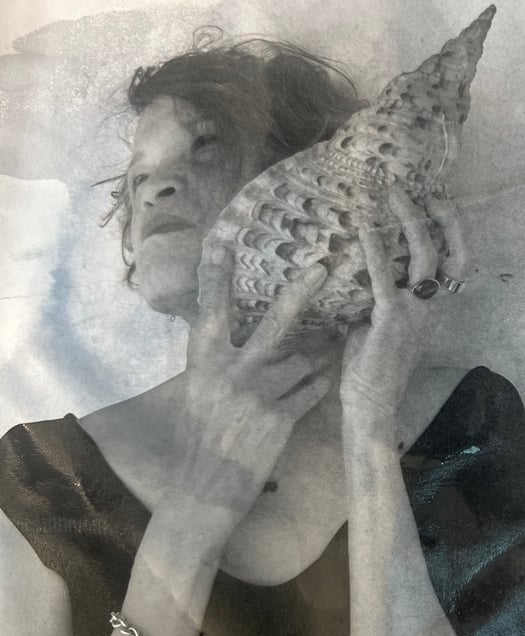
When a loved one dies, we often say that we are ‘lost for words’. We do not know what to say, or even how to find the words to express what we feel. It might also mean that the words we once shared with the one we have lost can now no longer be found. It is not only the person’s body, but the beauty of dialogue that is gone, and we are left as a lone witness. No matter how prepared, or unprepared, we are for the death of a friend, there is always a wave of disbelief followed by the overwhelming desire to wind back time. Bereft, we clutch at memories, visual impressions and sensory recollections. Holding that person in our thoughts and emotions, we enter the slow processes of grief through all its stages. There are diversions, but there are no shortcuts. Yet, as we sift through sorrow, we sometimes discover a gift. This is a final offering, sent from another world, which can manifest in the present by a loving act of creative transformation. Paula Rae Gibson’s artworks enact these kinds of transformations. Her chosen medium, analogue photography, and her parallel work in music and film, combine to give her an inspiring range of expression. She is perhaps best known for her series of heartrending self-portraits, made in the aftermath of her husband’s death, that hurtled her into single parenthood and a reassessment of personal identity. These works, made some twenty years ago, reveal a cathartic journey, through trauma towards fearless wisdom. Her photographs, both then and now, are unique and raw, emotionally and physically empathetic and starkly honest. Printed in the darkroom by hand, they are coaxed into life through light, time, chemistry and the artist’s attention. They embrace a physical surface imperfection – of blur, stains and tears – breaking bonds of conventional representation to try and express intangible truths. Or, more precisely, to ask unanswerable questions. The images in this book are the most recent continuation of themes that have been at the centre of Gibson’s enquiry throughout her creative life. They are also a heartfelt tribute to the life of her friend, Sue, and to the intimate, mutually supportive dialogue that they shared. Gibson’s photographs are a tender visual exploration of Sue’s body and spirit, the contrasts of her vulnerability and sensuality, her weariness and vitality. They marvel at the familiarity yet strangeness of the human body as it fades into and out of existence. Gibson achieves this through multiple angles and repeated gestures that create a rhythm. The flowers and shells; the clothes that reveal, conceal and shroud; the naked breast, are all symbols of the cycle of life. Photography is such an apt medium for questioning time and loss. In Gibson’s hands, the chemical breakup and fluidity of the image on the paper surface echoes the ebb and flow of the body. Softened forms and subtle colours bleed and blend. As the sequence of images unfolds, wave-like and tidal, it becomes a dreamlike procession of pictures, falling and floating. This is the permeable hinterland between death, sleep and dream. As time moves, and the sequence builds, there is a lengthening of shadows. At its close is an empty dress, fixed to a tree, left as if waving farewell in the wind. These images combine as if to say, that despite the illusory permanence of our bodies and our being, traces of it lie in the ephemeral: in fabric and paper, water and earth, air and light. And not least, in the echoes of love that we leave in those still living. Gibson’s artworks speak of these resonant ripples of love, loss, desire, regret and yearning. And of the particular empathy and intimacy of women. These photographs are literally and figuratively acts of exposure and illumination, a reckoning with pain and grief. Moreover, they are a heartfelt confessional – Remember When I Told You Everything. This book now memorialises those mutually affirming confessions. It is a litany, not of grief but of gratitude. As Gibson writes: Thank you for the love Thank you for the authenticity Thank you for the truth Thank you for your belief Thank you for the care Gibson’s words are simple, direct and honest. But this book is at its heart a visual ode. Like its poetic counterpart, this ode is a lyric offering, addressed to a cherished subject. In grief, we will be ‘lost for words’. And words can seem inadequate in expressing unbounded feelings. But pictures and thoughts – and a celebration of a life and friendship such as this – gift us solace with their beauty. Martin Barnes Senior Curator of Photography, Victoria and Albert Museum, London. https://vimeo.com/1122421786?share=copy&fl=sv&fe=ci
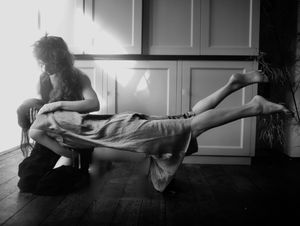
best friends, dancers Elisa and Stella, from Italy ,living in London we worked to music, we worked to real conversation , we improvised, we went to the space between thoughts , we became spirit.
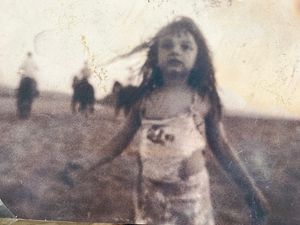
Return Like the Sun: Unique Photographs by Paula Rae Gibson Creativity, in any artform as in life, is a profoundly transformative act. The artist is the messenger of creativity, forging intangible impulses and ideas – abstracted thoughts and untamed feelings – into objects, words, sounds, movements or images. Some artists’ works demonstrate primarily a technical skill, illustrate a conceptual theory, propound a political philosophy, function as a commercial product, or combine these and other positions. Perhaps most frequently though, an artwork emerges from deeper within, from a desire to express personal identity and confirm selfhood. It is a heartfelt compulsion for visibility and connection. At its most fundamental, it is a statement of raw existence. An assertion, against oblivion, of the amazing fact of our human presence, with all of its power, complexity and fragility. While Paula Rae Gibson’s creative flair seem to have been always present, the facts of her biography play an important part in her distinctive formulation as an artist. Born in London in 1968, she grew up outside of the city in the countryside. Sometime during the late 1980s, she began experimenting with a 35mm camera, teaching herself the basics of black and white photography and becoming intoxicated by the alchemy of the darkroom. As a young woman with a spirit of discovery, she travelled extensively, visiting Japan and South America. In Ecuador, at the age of 21, a serious car accident resulted in surgery and the loss of her spleen. This early catastrophe seems to have made her acutely conscious of the shocking proximity of death alongside the fragile beauty of life. Tragically, this realization was soon to be tested further. After a period of recovery from the car accident, at the age of 27, she met the eminent film and television director Brian Gibson. Their connection was full of intense synergy and shared creativity. They married and conceived a daughter. But soon after she was born, when the child was just 20 weeks old, Brian was diagnosed with bone cancer. There followed his agonizing demise, 850 days Paula counted, and he died in 2004. Immediately, she was thrust simultaneously into dual roles of widowhood and single parenthood. It took all her reserves and coping mechanisms to field the ensuing and inevitable pain, confusion, upheaval and responsibility. For her, during this turbulent time, contact with others was freighted with difficulties and a strange feeling of embarrassment. Instead, she often turned to photography as her mirror and confidant. During this time, Gibson entered into what might be described as ‘full catastrophe living’. This is the title of a book, written in 1990, by Jon Kabat-Zinn. The book’s subtitle is, Using the Wisdom of Your Body and Mind to Face Stress, Pain, and Illness. For Gibson, photography became her wisdom in the midst of trauma. It was not simply a coping mechanism, but an immersive, cathartic and therapeutic artistic practice. Here, she could explore and express not just the grief and fear, but also a range of other emotions that flooded her being. The resulting group of images, made over several subsequent years, render an elegiac spectrum of personal experience. Long before the digital selfie became embedded in contemporary culture, Gibson was obsessively constructing a similar kind of visual diary. Yet hers was not a light wearing of semi-fictionalized identities, learned postures and performative attitudes. Her images are redolent with yearning to document and perform her own grief, longing and uncertainties, casting herself as the main protagonist in an all-too-real, real-life drama. However, they are not portraits, as Gibson stresses, ‘they are not pictures of me, but pictures of how I was feeling.’ In the wake of physical loss, they picture a complex, partly eroticized need for touch, an assertion of bodily and cognitive visibility, of presence. They are literally and figuratively acts of exposure and illumination, an antidote to the feeling of disappearance and loss of identity, a process of recovery and protection. Threaded through the series, other characters aside from herself appear: her husband’s face haunts her work; and her daughter transforms from a cradled infant into a visceral young girl. Here, photography performs its most well-known but always astonishing magic: collapsing time, shadows and fragments with melancholy beauty. As emotive as they are, it is not simply the autobiographical aspects of Gibsons’s photographs that makes them arresting and unique. Each of her images carries a distinctive pictorial hallmark, a handmade presence that aligns her choice of process and technique with a nuanced expression of emotions. Her visual signature is created specifically by the use of analogue darkroom printing and later manipulations of the paper print. These include toning, staining, bleaching, ripping, burning, the evidential rings of coffee cups and handwriting on the surface. There are some images that use painted splatters or washes of photographic chemistry. These result in selective parts of the image being revealed or developed. Others collage one print on top of another, concealing fragments of an image beneath. Gibson also found that prints from the same negative could look and feel vastly different when cropped or manipulated in varied ways. As the photographer and master printer Ansel Adams famously noted, ‘the negative is the equivalent of the composer’s score, and the print the performance’. Gibson typically used black and white paper, torn from a long roll, to create uneven shapes in contrast with the pristine rectangular and square formats of conventional photographic prints. The interventions that each of Gibson’s photographs has undergone imbues them with an improvisational quality. Her prints have tangible patina to their surface. They are like the wounds of time and experience that can be read on the human body. The effect is unbounded and contingent. She wanted, she says, ‘to make pictures that are not visible in the viewfinder’. Hers are not the composed, standardized, precision results of an optical and chemical technology. They are more like a breathing product of human nature. It is an unconventional, experimental approach fit for attempting to harness immeasurable feelings. While Gibson’s practice is largely self-taught, there are some visual touchstones that resonate with her work and help position it within the history of photography. Foremost among these is the great Victorian pioneer, Julia Margaret Cameron, in particular, her intimate portrayal of her friends and family captured in close-up and deliberate soft focus. Cameron’s photographs are replete with swirls and smudges, characteristic of her hand-produced collodion-on-glass negatives, printed on albumen papers in tones of purplish umber. Gibson’s imagery harks back to Cameron’s era, long before the age of mass-produced and digital photography. It also links with the works of the ‘pictorialist’ movement. Pictorialist images were crafted by select groups of photographers – among them Edward Steichen, Alfred Stieglitz and Annie Brigman – who counteracted photography’s commercial industrialization at the turn of the 19th century. Like Cameron, they used blur and visual symbolism as a signal of poetic intent. Approaches that also resonate with Gibson’s can be traced later into the 20th century: for example, in Francesca Woodman’s exploration of her own figure in an interior world of seemingly timeless condensed experience; in Czech ‘outsider artist’ Miroslav Tichý’s voyeuristic yet lyrical fascination for the female body, coupled with his rough-hewn printing; or in Sally Mann’s disquieting images dealing with the beauty of familial relationships, and cultural taboos of childhood, sexuality, and death. Like Gibson, each of these photographers convey an emotional inner life and a mysterious intensity through a deliberate harnessing of experimental craft and technique. Many of Gibson’s prints have an added poetry in the form of her handwritten fragments and phrases, like her thoughts circling on their surface. The words flow freely, often following the shapes of the images or the edges of the torn paper, defying fixed orientation. Her written aphorisms do not turn the photographs into illustrations; rather they meld with them to enhance the mood of an intimate internal existence. When asked about her use of text over imagery, she says, ‘writing puts oxygen on it’. The text on one print emotes: Will I ever feel that again? Another asserts: To love is to believe. One neatly encapsulates the passages of light and darkness allied with constantly shifting sentiments: the faith and the fears return like the sun. In the years since their making, these early photographs of Gibson’s have become an historical record of a period of turmoil and the therapeutic processes of creativity in her life. She now recognizes the life it explores as ‘a me that lives in memory’. In more recent years, she has worked in a similar vein, but collaborating instead with dancers, performers and other individuals. In them, she continues to question the nature of relationships, and the fertile bonds between interior impulses and outward gestures. In retrospect, the weight of her substantial body of work is less of a memento mori than a headlong dive into the cyclical energies of life and death. Channelling one’s innermost struggles, desires, uncertainties and revelations into an artwork often feels like a psychological and bodily necessity for the artist. The act of creativity is a dreamlike release and a catalyst. And the artwork is a trace of the artist’s core existence. When artists reveal the kernel of a specific personal experience we feel its accuracy. And when they do this, we trust and believe them. For what they relate to us feels right and true, even if it is something that is not part of our own personal experience. If we are receptive, their works open a pathway to a wider sense of human connection and empathy. On this process of outpouring – of the delicate act of converting private life into a readable artwork – the poet W.B. Yeats cautioned: ‘I have spread my dreams under your feet; Tread softly because you tread on my dreams’. Not all of the productions of the artist are of course equal or need to be shared to be a valid part of their imaginative process. The skill of more accomplished artists lies in their ability to consider their audience – to know that, once released, their work becomes a cultural offering that extends beyond themselves. Paula Rae Gibson is just such an artist. To reflect on, reassess, refine, edit and present the results to others, takes further intellectual energy, stamina, belief, collaboration and bravery. Throughout her vividly creative life, Gibson has openly transformed the strength of her experience into her art. And in so doing, she has fashioned unique expressions of herself, and those she cares for, that nevertheless stir others with their authenticity and instinctual force. Martin Barnes Senior Curator, Photography Victoria and Albert Museum to be exhibited at the Fitzrovia Chapel, October 1-7 2024
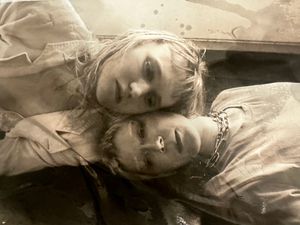
I have been working with Anders for over five years, struck by their ethereal beauty and deep talent [ they are a dancer ] I met Jules, trans male ,at the end of last year , who also identifies as they, and photographed the meeting of the two of them. Here they are together and alone, by themselves.
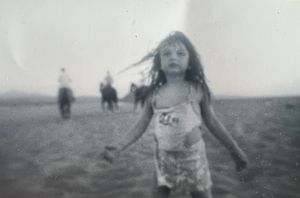
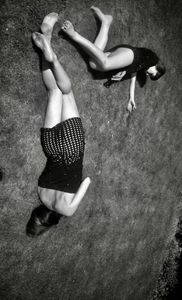
I take photographs out of necessity you might say. It puts balance into my life, teaches me things about people, about life , about myself, I might not have known before i pressed click. I'm very close emotionally to my subjects , I think this intimacy, authenticity, is very important to life. Though we all need beauty don't we? I mean in the deep sense of the word.It can elevate us. It can bring the best out of us. i can hear it in your spirit. Though as Debussy understood-a work of art ,or an effort to create beauty can often be regarded by some people as a personal attack.
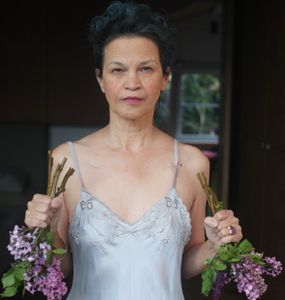
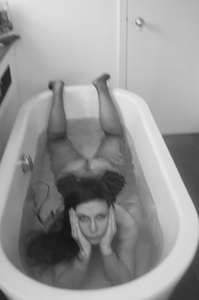
Jo is the great, great ,great granddaughter of the great, great ,great Juliet Margaret Cameron. By chance I met Jo, two years ago and without knowing of her connection to JMC I felt drawn by her free, lively spirit and sensual way of looking at life. We spent an afternoon together. I learnt how loss and suffering had made JMC need to create, as if to fill the hole that death had created .I was saddened that she was thought less of by her family, though it's so often the case for anyone who goes their own way and doesn't fit into what the family seems to stand for. In Jo’s words…. Julia Margaret's only daughter Julia died in childbirth - a portrait of the child that killed her,, hangs on my sitting room wall. Her husband Charles Norman, who greatly resembles my handsome brother Charles, was desolated by her loss. It was clearly a love match. Pictures taken of Julia and Charles, by JMC, winding herself around her husband like a little sensual cat, were most unusual for the mid 19th-century. But then JMC never did what anyone expected of her. She was lucky enough to have a loving tolerant husband. My great grandfather Archie, JMC's grandson, married a snobbish woman called Mildred Wake. Anything even slightly out of the most proper, philistine, upper class propriety was stamped on hard, and I think this is why following generations were almost ashamed of JMC and she was treated as an object of fun. This made me feel very cross as I found out more about her. I felt intense admiration for her - not just for her photography, but for her great kindness and generosity towards orphaned Anglo-Indian children and other waifs and strays. She adored beauty, and that trait was passed down. JMC was business minded as well as everything else. She didn't allow social propriety or her gender to get in the way of her life as a working artist. What she did was no genteel hobby but a source of revenue as well as satisfaction. She was also scientific, corresponding even as a very young woman with Sir John Herschel, who invented and named photography. She travelled without any sense of boundaries, in a way that I long to now. If I can just produce one creative thing that people really like, I will feel I have lived up to her, but my medium is words. I love her energy. The fact that she was middle aged and had to get child stuff out of the way to get going. I think that is very common for creative women. Having and bringing up children is, or should be, a supreme act of creation. It needs to lessen as an overwhelming passion to allow other creativity to emerge.

This work was just shown in PH21 gallery Budapest, August 31- September 19th 2017. I wanted to question couplehood.

This selfie culture unnerves me. Not with teens ,that's a whole different thing, but everytime a friend posts a selfie of herself, i think, oh dear,she's at crisis point,she needs to keep seeing her image, know she exists, she feels her life is nothing,that she is fading away. When my husband was diagnosed with death,our daughter was 20 weeks old. I was the last person on the planet equipped to be a single parent, let alone exist without him, and i started to take photos of myself obsessively.It was an excuse to get dressed ,an excuse not to get dressed, it was proof I hadn't disappeared.... been buried with him.