
Photomuse: A woman’s body (re)written in light
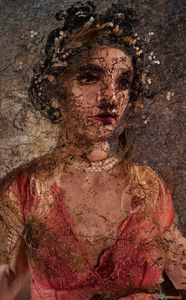
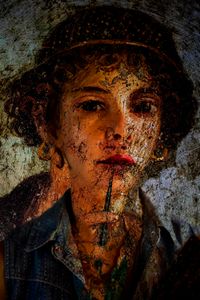
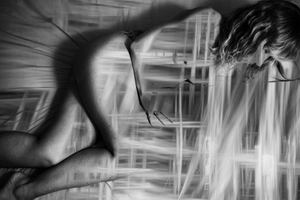
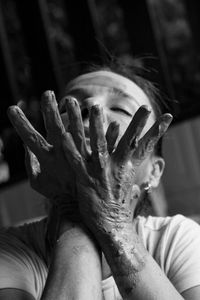
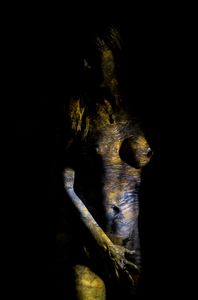
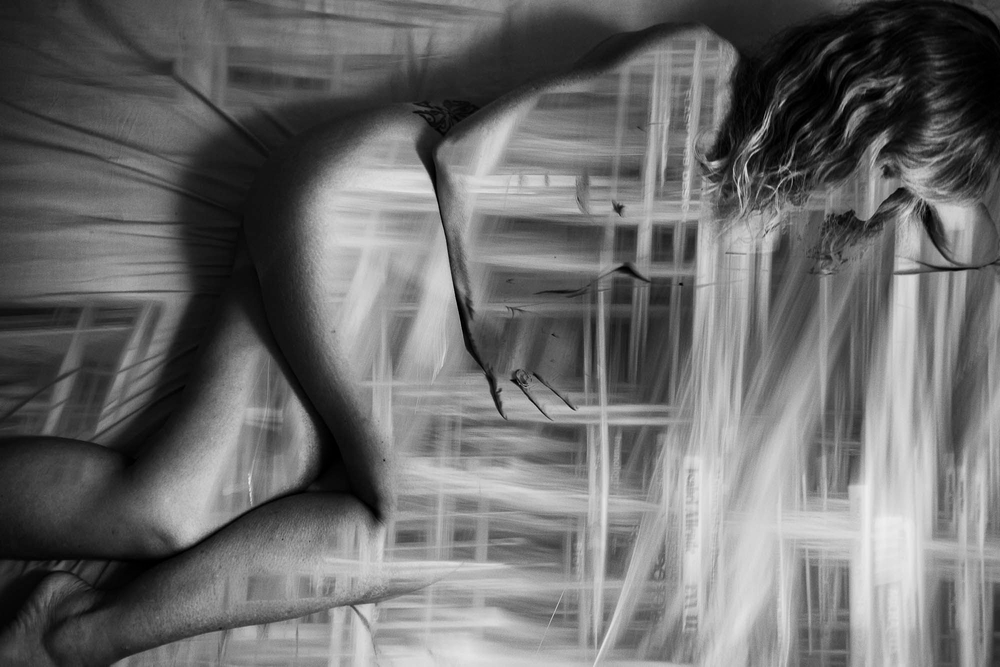
A woman’s polyhedral portraiture. Her very poetical fabulation in a photographic compendium. A love letter written in light. The very materialization of the photographer’s Μοῦσαι (Muses) fused into one incandescence fractured into glimpses of the loved woman’s body incarnate. A body whose effects on the photographer’s gaze are such as to turn this body into the very motif and synonym of his oeuvre’s experimentation. The photographs featured herein question the binary mimetics of the Western figurative reason, for they lie at the very centre of a series of pictures which came to light in different moments of a photographic journey spanning a ten year spectrum and which propose instead the monism of an artistic poiesis, whose etymology is akin to the actual proposition, the actual creation of a world: a self-contained world bred by photography. In Photmuse, the title chosen for this photographic compilation, this body is the result of an ocular invention. It does not exist outside the boundaries of the images which recreate it poetically. Its existence is that which is framed by the image, its nature is therefore purely photographic. Thus, one is forced to ponder on the objectivity so frequently associated with photography and understand it as a window to the world rather than a mirror, unless one comprehends the inherently treacherous nature of the mirror. A mirror reminiscent of Lewis Carroll’s Alice through the Looking Glass: a mirror which is rather the devolution of a fractured subjectivity: the body of the loved woman is the oneiric body photography is capable of producing. The photographic genres of portraiture as well as the frontiers photography has historically shunned or shared with painting are herein thrown into turmoil. In the first of them, Cathedral’s Portrait (2010), a black & white image invested with pathos and drama, the gestures of the hands evoke the shape of Oscar Niemeyer’s iconic cathedral in Brasília, the utopic architectural creation in the centre of Brazil is also the locus of these architectural forms which copulate with a photographic and photographed body. In Woman Between Books (2018), the centrality of language in human experience equally encompasses the body. Language in the form of writing is inscribed on the body, truly converts it into a scriptural canvass which incessantly redefines its contours. A body which is both surface and a writing tool, a body bathed and trespassed by luminous beams of light woven by triple photographic exposure. The vaporous, gaseous visible solidity of invented photographic light. In Incarnate Water (2017), the artist’s insistence on gravitating around the crisis and reflections associated with figurativism reaffirm the proximity sought herein with pictorialness and its manifold arborescent ramifications. Photography, once deemed the privileged space of figurative faithfulness to a given reality, is here nothing but the stage of the watery intentional dissolution of figurative solidity into masses of painterly inspiration. The body is thus as liquid and fluid as pigment and can therefore be permanently repainted, re-photographed. In Leliane and Sapho and Grace (2019), the artist revisits the antique frescoes of Pompeii, Italy, by fashioning double exposure photography fused with his muse’s face. The result is distorted, twisted and one may even argue warped. This disfigured image, however, is the result of a laborious photographic fabulation. The past of Western Art, its very pictorial origin and repertoire are submitted to the same convulsion mnemonic vestiges are. The origin of memory, as many would have it, resides in an image. One is left with nothing but the remains of what becomes a collection of impressions which cloud one’s perception. Once History is clearly dependent on memory, the past is a structure in progress, a compilation of images turned into luminous, watery, cloudy impressions. The past reconstructed, rewritten is thus akin to artistic poiesis. It partakes of the rhetorical strategies inherent in fictio. It is not, it could never be, pure imitation. The distance in time precludes this delusional clarity and exactness. In Photomuse, this woman’s body is also the result of a poetical fabrication in photography. Its objectivity is a logical impossibility these pictures are an illustration of. A body which only exists in the images it inhabits. An impossible body. A body drenched in light beams. The only possible body photographic writing is destined to create. The body a lover conceives as a love letter, written in light, to his muse. Poetical, photographed body. Marco Antônio Ramos Vieira curator
No categories selected
Photos (5)