
Ghost Waltz, Volume II: Illumination
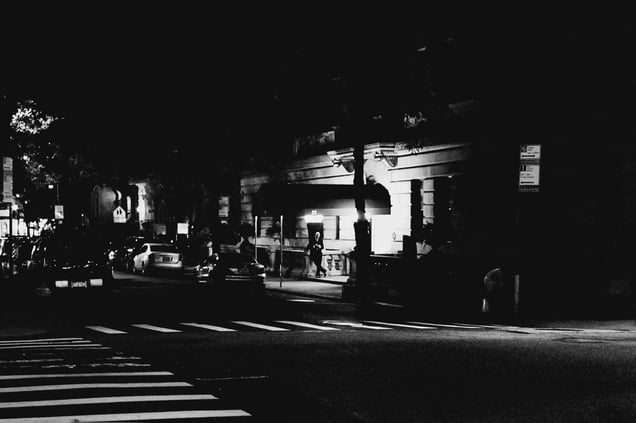
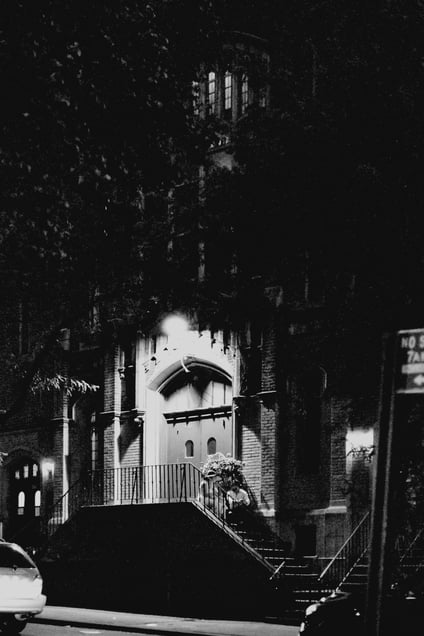
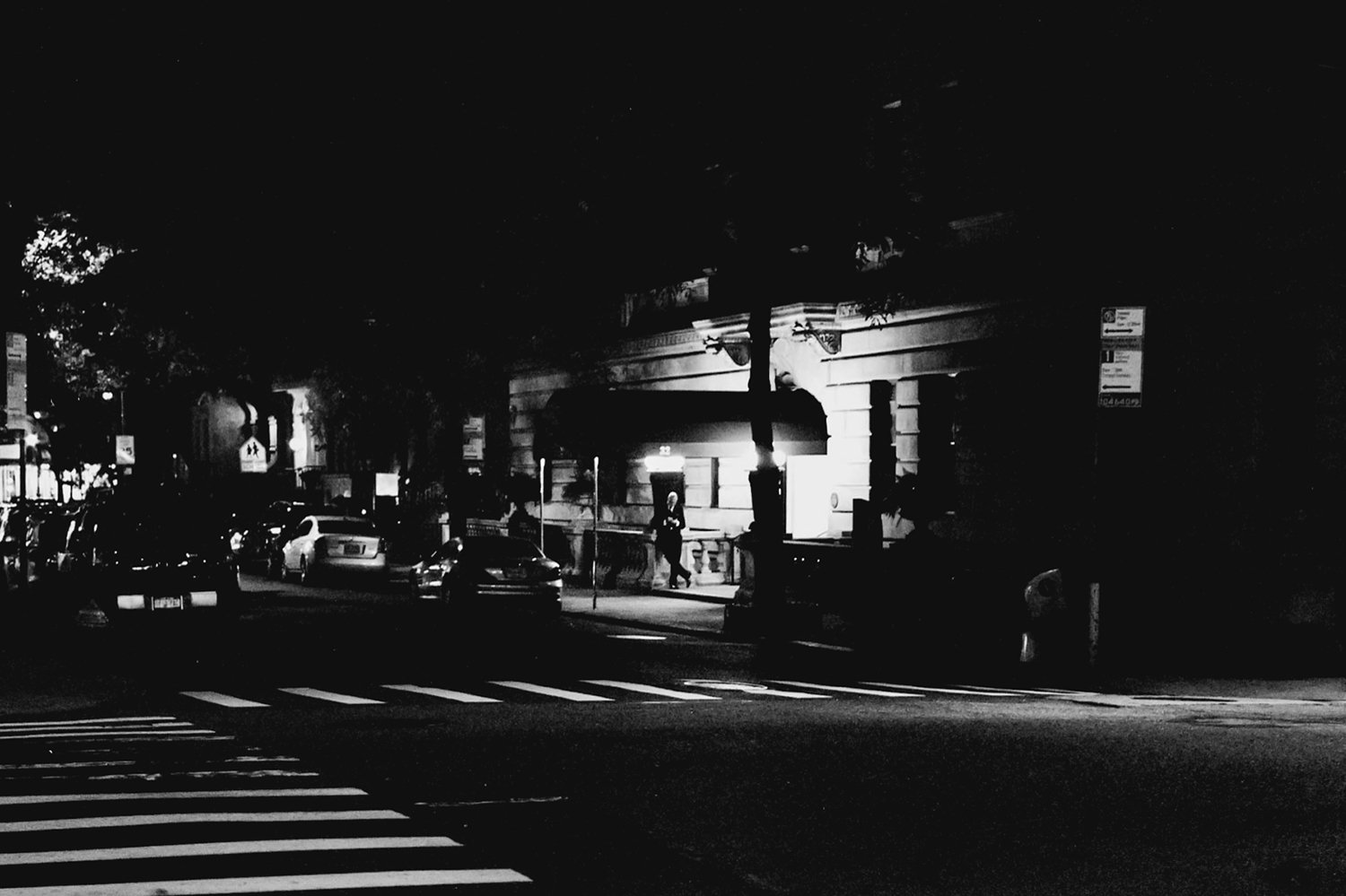
“What would be the significance of the candlelight, if there were no darkness? What would be the power of the stars over our minds, if there were no night?” — C. JoyBell C. Within my photography work, two of my main drivers are feelings of discovery and retrospection. New York City's architecture is full of layers of history. Rabid development continues to destroy historical buildings at an unprecedented rate. My current urban photography series Ghost Waltz was born from searching for New York City's past eras before they vanish. With influences such as photographers Brassaï, David Vestal, silent films and spirituality, I shoot the city in a manner that recalls modernist, early 20th-century photography and examines the overwhelming psychic effect of being inside “the belly of the beast”. Ghost Waltz, Volume II: Illumination focuses on the light within the darkness. The city often renders us anonymous to each other, and with Volume II, I look to identify individual figures as they step into the light, making their features (and thus their personas) visible. Shot on 35mm monochrome film, the increased contrast when shooting at night gives a view into an atmospheric world full of contradistinction. The city around them, with its windows and open doors acting as spotlights, magnifies human beings heavy with the weight of contemplation. The darkness surrounding them “shuts off the light”, sort-to-speak, whereas the lighted windows illuminate their presence, giving testimony to their very real lives and identities. The tense interplay of light and shadow is reflected in the faces of the burdened, both calm yet heavy with thought. We are all pushing to head somewhere, within the city or in our lives, but the question remains—do we know where it is we are going? The dynamics of stark light and dark lend the imagery a natural sort of dramatic tension that gives a poetic interpretation of the existential crisis inherent within city life. Existentialism can be described as “A sense of disorientation, confusion, or dread in the face of an apparently meaningless or absurd world.” (Robert C. Solomon, Existentialism, pp. 1–2). Within these buildings one feels dislocated, bewildered, and isolated. We live both individually and anonymously, constricted by an environment that threatens to swallow us whole. These feelings are illustrated within the chosen stanzas of George Oppen’s 1968 poetic opus Of Being Numerous: Sections 1-4, 10-11, 22: 1 There are things We live among ‘and to see them Is to know ourselves’. Occurrence, a part Of an infinite series, The sad marvels; Of this was told A tale of our wickedness. It is not our wickedness. ‘You remember that old town we went to, and we sat in the ruined window, and we tried to imagine that we belonged to those times—It is dead and it is not dead, and you cannot imagine either its life or its death; the earth speaks and the salamander speaks, the Spring comes and only obscures it—’ 2 So spoke of the existence of things, An unmanageable pantheon Absolute, but they say Arid. A city of the corporations Glassed In dreams And images— And the pure joy Of the mineral fact Tho it is impenetrable As the world, if it is matter, Is impenetrable. 3 The emotions are engaged Entering the city As entering any city. We are not coeval With a locality But we imagine others are, We encounter them. Actually A populace flows Thru the city. This is a language, therefore, of New York 4 For the people of that flow Are new, the old New to age as the young To youth And to their dwelling For which the tarred roofs And the stoops and doors— A world of stoops— Are petty alibi and satirical wit Will not serve. 10 Or, in that light, New arts! Dithyrambic, audience-as-artists! But I will listen to a man, I will listen to a man, and when I speak I will speak, tho he will fail and I will fail. But I will listen to him speak. The shuffling of a crowd is nothing—well, nothing but the many that we are, but nothing. Urban art, art of the cities, art of the young in the cities—The isolated man is dead, his world around him exhausted And he fails! He fails, that meditative man! And indeed they cannot ‘bear’ it. 11 it is that light Seeps anywhere, a light for the times In which the buildings Stand on low ground, their pediments Just above the harbor Absolutely immobile, Hollow, available, you could enter any building, You could look from any window One might wave to himself From the top of the Empire State Building— Speak If you can Speak Phyllis—not neo-classic, The girl’s name is Phyllis— Coming home from her first job On the bus in the bare civic interior Among those people, the small doors Opening on the night at the curb Her heart, she told me, suddenly tight with happiness— So small a picture, A spot of light on the curb, it cannot demean us I too am in love down there with the streets And the square slabs of pavement— To talk of the house and the neighborhood and the docks And it is not ‘art’ 22 Clarity In the sense of transparence, I don’t mean that much can be explained Clarity in the sense of silence.
Photos (7)