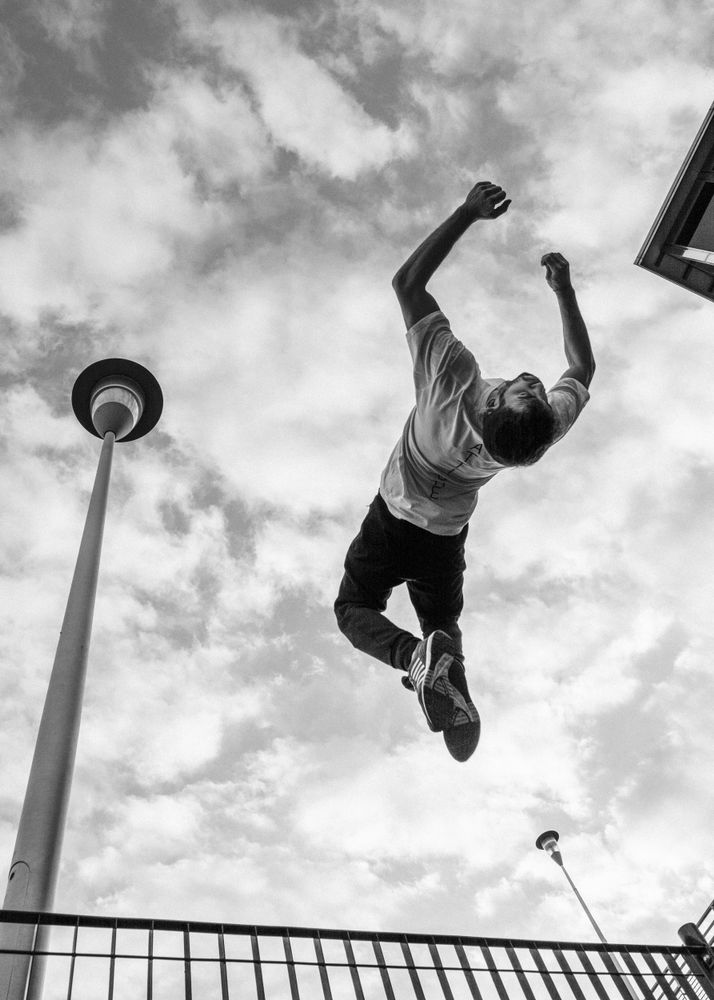
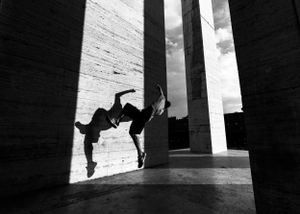
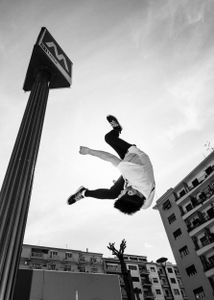
The Parisian banlieues of the second half of the 1900s were confining spaces, inhabited mostly by the working class and by immigrants from the French colonies or their descendants. Being born in a banlieue in those years meant growing in an poor environment, with little social, cultural and work opportunities. The French state has kept the banlieue population in a state of marginalization, often strengthened through the architecture of these neighborhoods.
Parkour was born there thanks to nine kids who, in the late 80's, changed forever the way they live their neighborhood. Running, jumping, climbing became the tools to transform architectural barriers into their playground. Obstacles as an opportunity to express themselves through the body. There was no longer a need to change neighborhoods or move. The solution simply became to change the way they see their neighborhood.
Thirty years after its birth, Parkour is practiced everywhere in the world, still representing the same desire for freedom and re-appropriation of urban spaces.
I am convinced Parkour represents a reference to our animal instinct, a breach in the system and an alternative vision of urban reality; exploration and freedom are the keywords: explore to know, know to be free.
Covid-19 has deprived us of our freedom and today more than ever we need to return to live our cities.