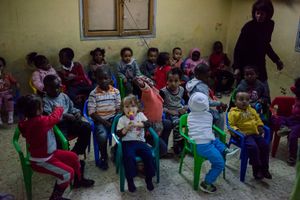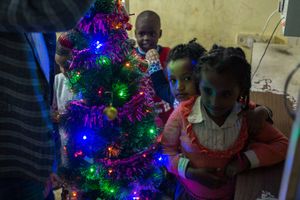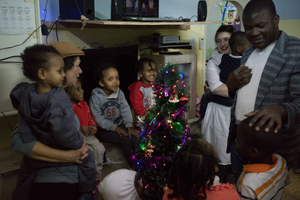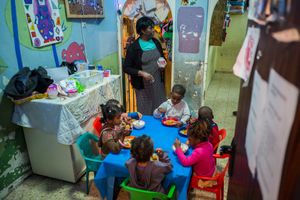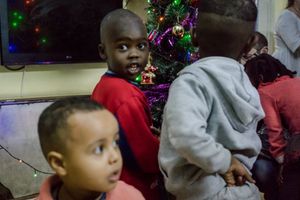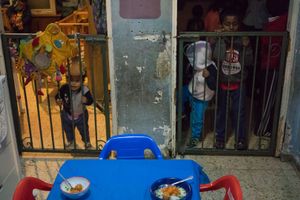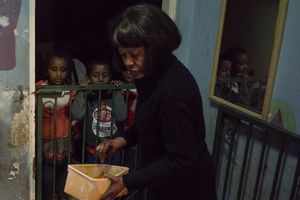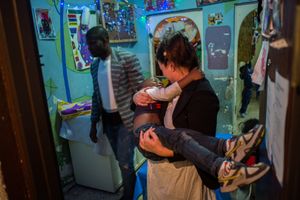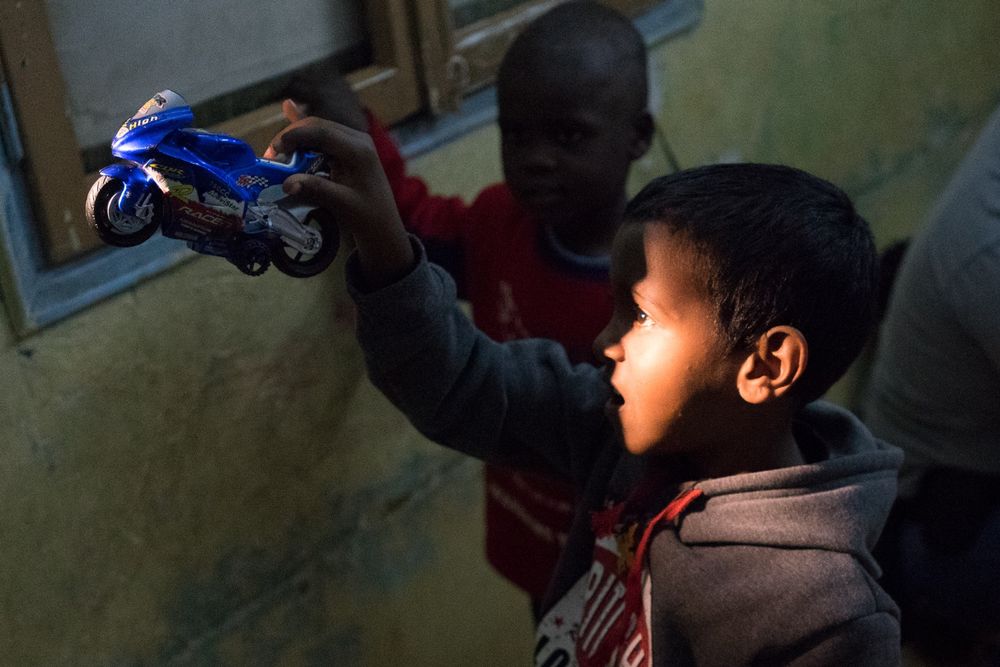
Christmas at Blessing’s Kindergarten
A refugee is a person who is outside their home country because they have suffered (or feared) persecution on account of race, religion, nationality, or political opinion; because they are a member of a persecuted social category of persons; or because they are fleeing a war. Such a person may be called an "asylum seeker" until recognized by the state where they make a claim. The Refugee Situation in Israel The majority of the estimated 55,000 asylum seekers in Israel are from Eritrea and Sudan, while other communities come from the Democratic Republic of Congo, Ethiopia and the Ivory Coast. More than 90 percent of this population have arrived since 2007. Fifteen percent are women. Detention Most refugees cross the border on foot from Egypt. From the moment that they enter into Israel, they are detained for an indefinite period of time in overcrowded conditions. Automatic detention of arriving asylum seekers has become the default course of action in Israel since 2007. At the beginning of 2012, the government signed an amendment to the Prevention of Infiltration Law, which would detain asylum seekers for three years without trial, or indefinitely if they came from “enemy” countries like Sudan. The government has also built mass detention centers such as Saharonim in the Negev desert. Thousands of refugees remain imprisoned in places like this until their status is determined. In September 2013 the Supreme Court revoked the Ant-Infiltration law stating it as a violation of human rights. Lack of rights A significant majority of the asylum seekers in Israel today hold a “conditional release”, or S2A5: a temporary visa that since November 2010 does not grant the bearer permission to work. As the visa neither explicitly denies nor permits asylum seekers to work, however, confusion prevails among refugees and employers alike. As a result, asylum seekers not only find it hard to secure work; they are also especially vulnerable to the exploitation and dangerous working
No categories selected
Photos (9)