Photos (20)
Cover
File:
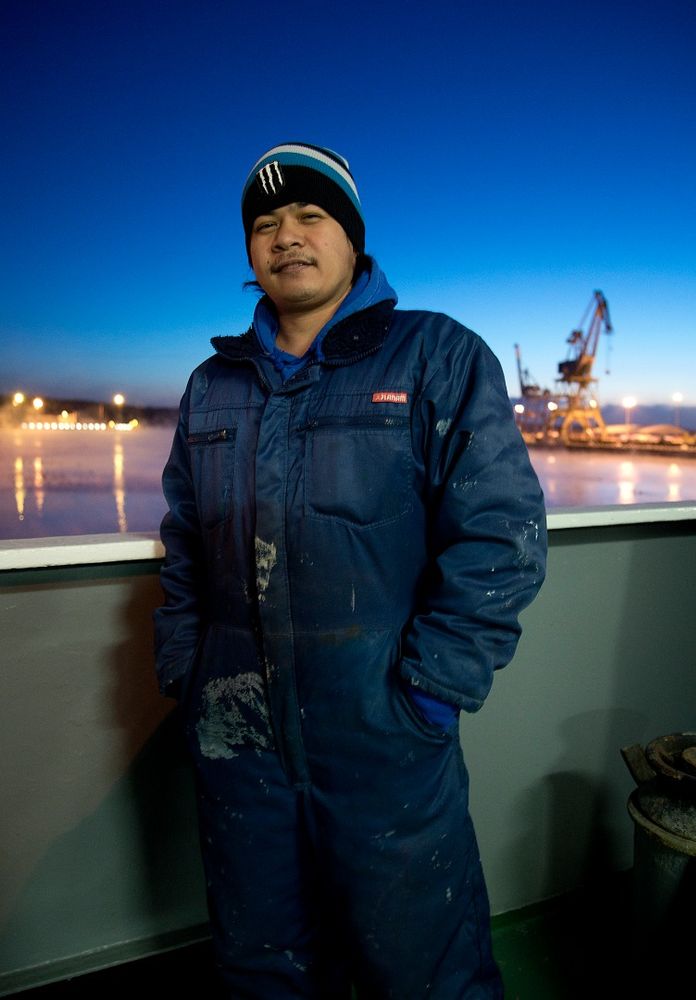
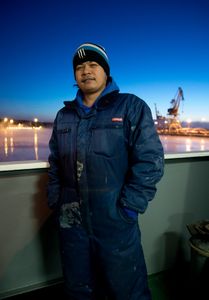
Second_Mate__Turku_Harbour._He_has_worked_his_way_through_the_ranks_on_the_Thule._This_was_his_first_voyage_as_an_officer.jpg

File:
Able-Seaman_coiling_electrical_cord__preparing_to_leave_Turku.jpg
File:
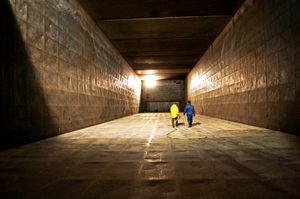
Inside_Thule_hold.jpg

File:
thule_captain_at_chart_table.jpg
File:
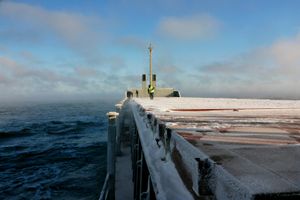
scraping_ice.jpg

File:
's_a_family_man_with_two_daughters_in_college__has_been_on_the_Thule_for_10_years_and_said_he_rarely_goes_back_to_the_Philippines_more_than_every_18_months.jpg
File:
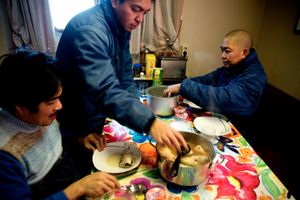
The_cook_accomodated_two_completely_different_diets._the_Chief_Engineer_joked_that_the_most_important_member_of_the_crew_is_the_cook.jpg

File:
Thule_approaching_Kokkola_Harbour__spotlighting_ice-flows.jpg

File:
Thule_winches_in_snow.jpg
File:
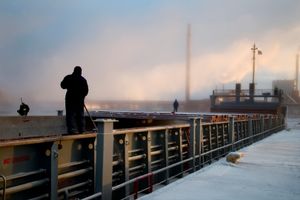
Deck_crew_scraping_the_ice_off_of_the_hold_lid_tracks.jpg
File:
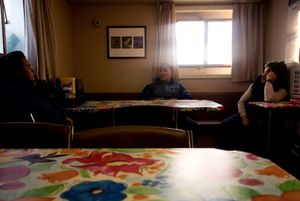
Deck_crew_and_2nd_Officer_taking_a_weel-needed_break_in_the_mess_hall.jpg

File:
Loading_potash_for_fertilizer__in_Kokkola_Harbour..jpg
File:
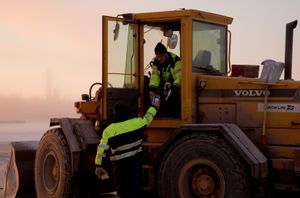
First_Officer_tipping_Dock_Supervisor_in_Kokkola._.jpg
File:
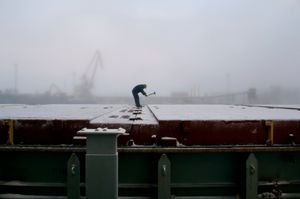
hammering_pegs.jpg
File:
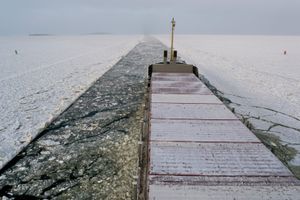
ice_channel.jpg

File:
Thule_Jan_16_pm_201.jpg

File:
Captain_out_on_the_bridge_wing__smoking._When_asked_when_the_last_time_he_worked_with_an_all_German_crew_he_inadvertently_gave_a_brief_history_of_Globalisation.jpg
File:
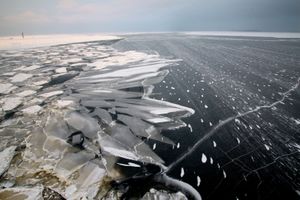
Thule_Jan_16_pm_135.jpg

File:
Thule_Jan_16_pm_166.jpg
File:
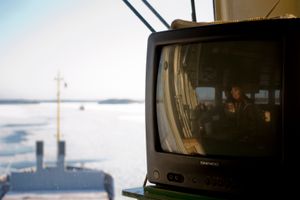
Pilot_and_Captain_navigating_through_the_archipelago_outside_of_Uusikaupunki.jpg
Add To Collection
No photos
Collaborated