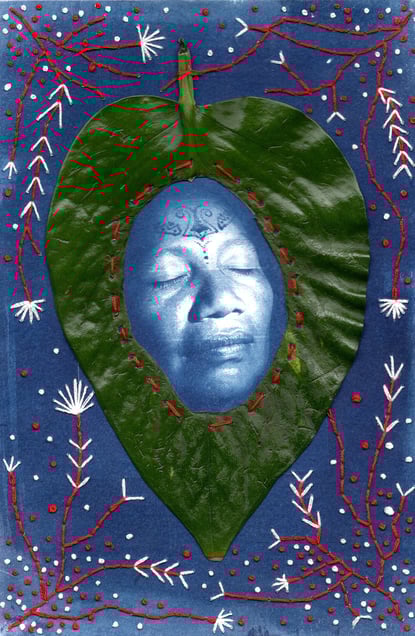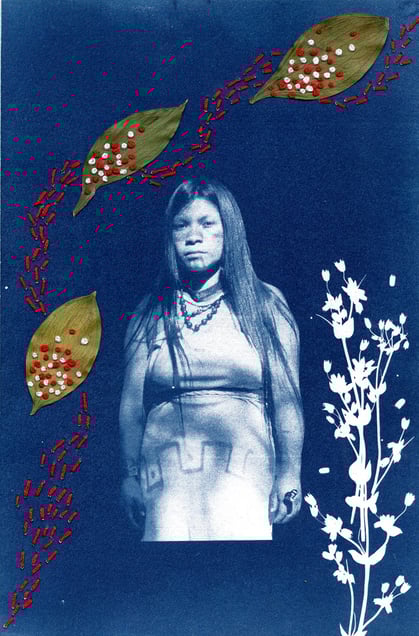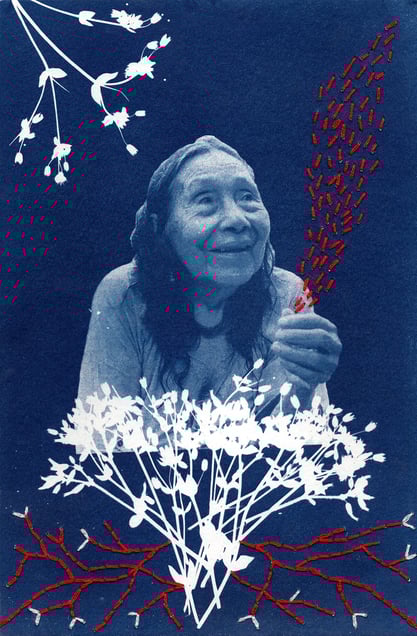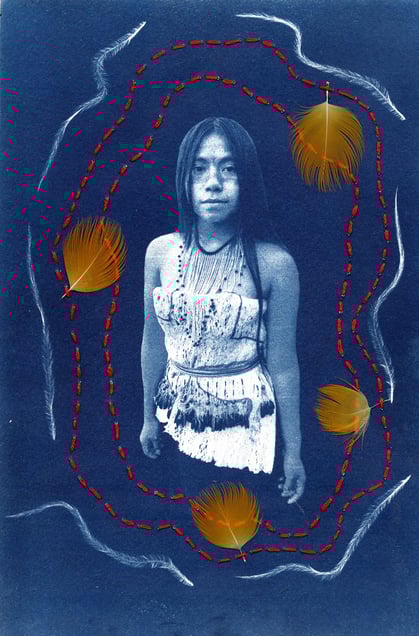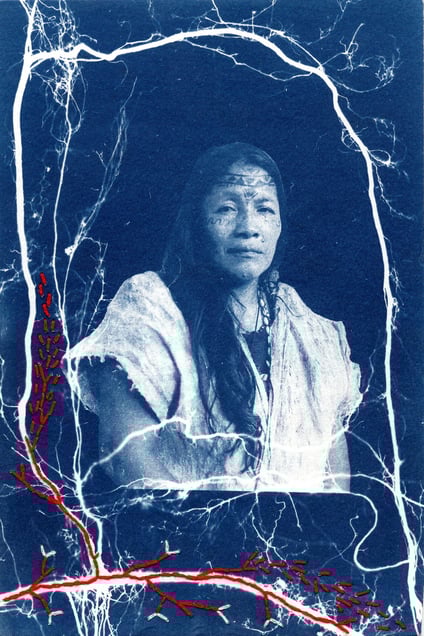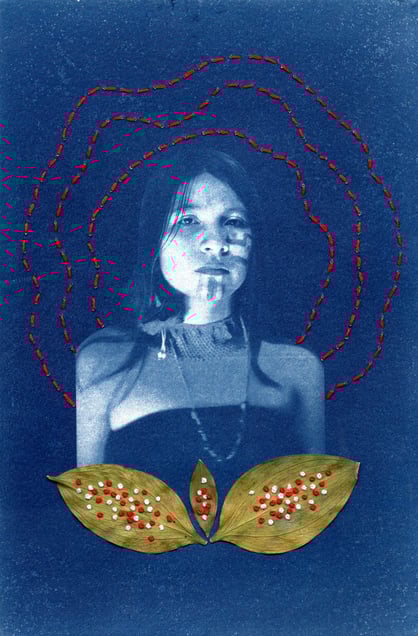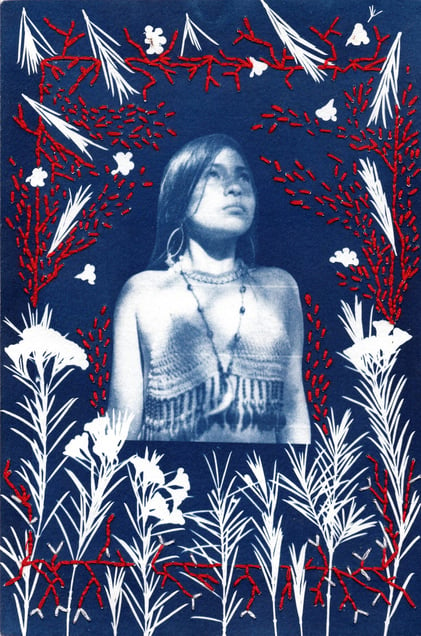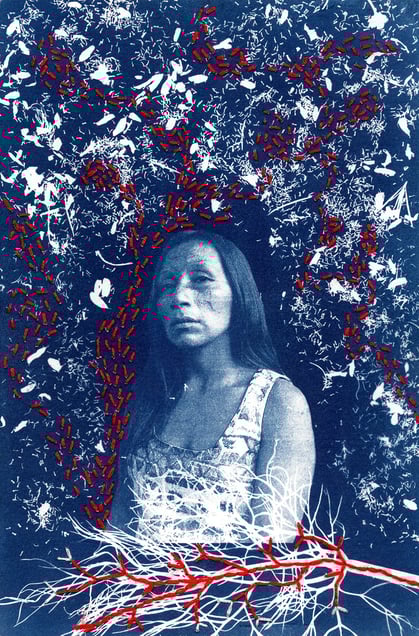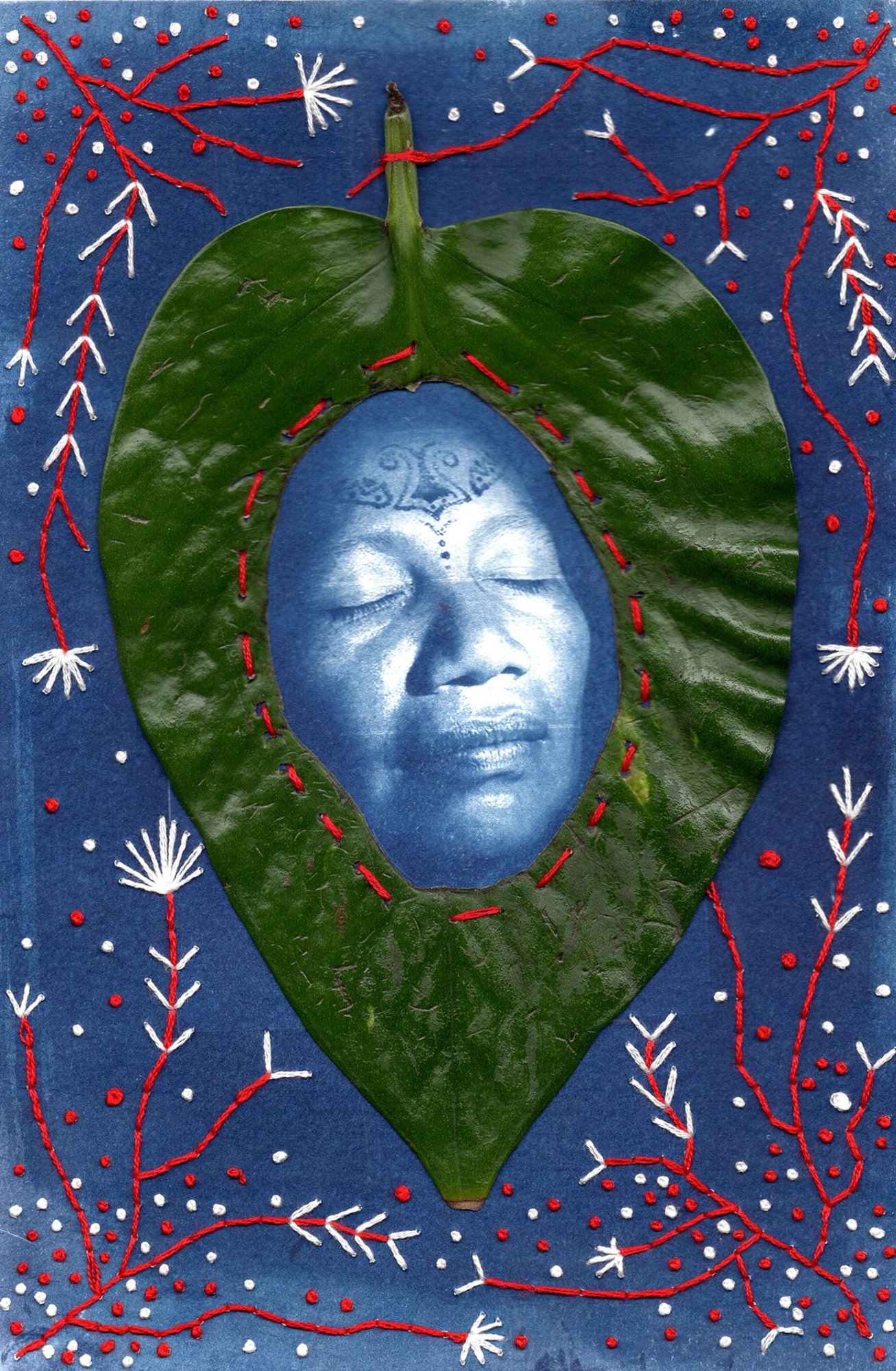

In Between Dreams the Forest Echos the Song of the Burning Anaconda
According to Sapara women, witsa ikichanu (good living) means protecting the energy of the river, the forest, and the wind by maintaining an open connection to the spirit world through dreams. Historically, Sapara people’s struggles have roots in the extensive attempts of illegal extraction of fossil fuels. Sapara women fear their ancestral knowledge disappears due to the problematic idea that concedes human identity as “outside” of nature. These cyanotypes were the result of my initial ethnographic research conducted with Sapara women in the Ecuadorian Amazon, and are part of a long-term project that explores body-territory relations. The work poses a reflection on connectedness, destruction, and trans-corporeality. It is said that when we stop to think about how individual bodies become implicated with other bodies of water, we start to move beyond objectification and towards new modes of living and engaging the land. The blue color represents the bodily waters. The red string highlights the ancestral lineage. Through embroidery, the photographer reconstructs her own narratives as a way to untie the norms of oppression. Each stitch is seen as a metaphor for liberation.
No categories selected
Photos (8)