
Calcification
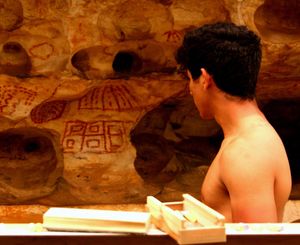
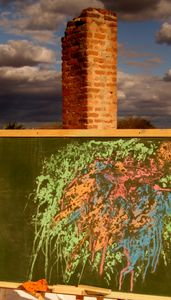
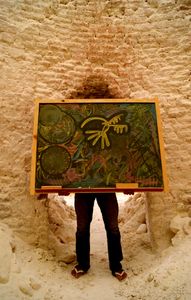
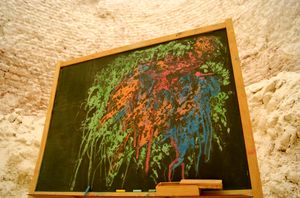
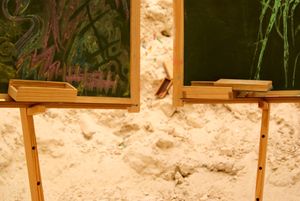
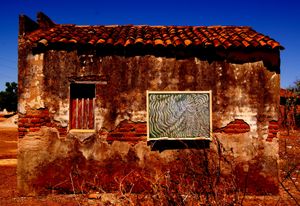
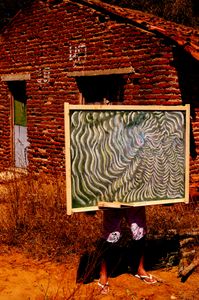
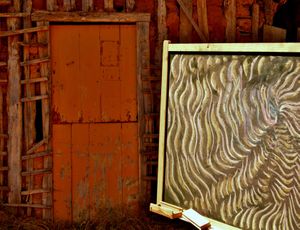
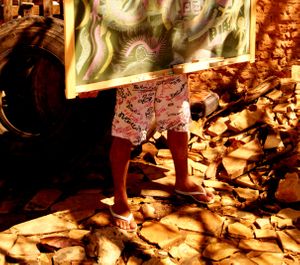
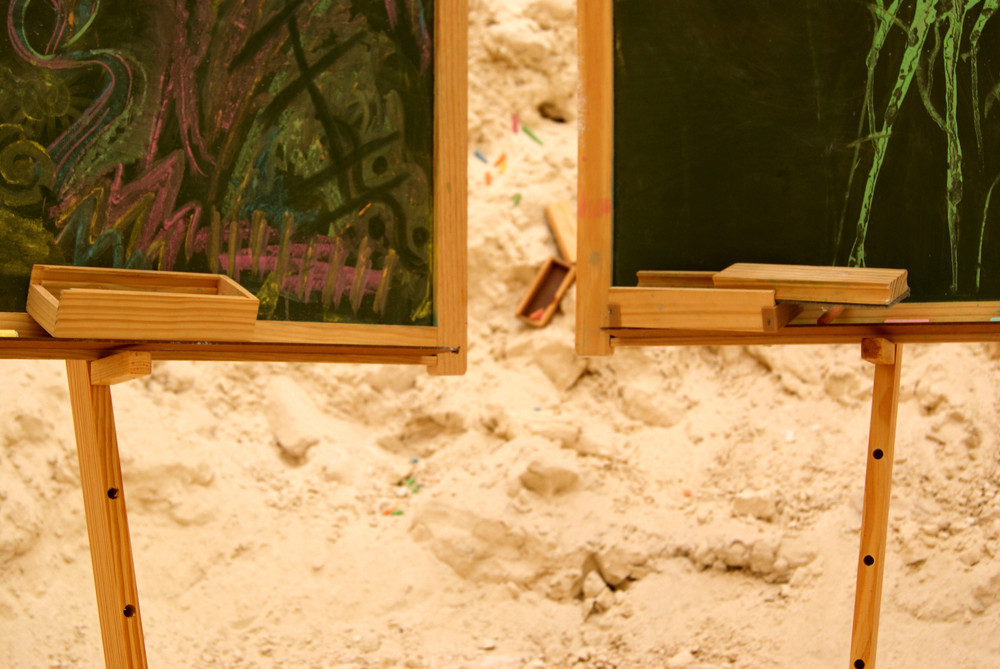
The actions that endure as photographs started from the cave paintings on limestones in Apodi, Brazil. The predatory exploitation of the stones in the region was a problem affecting the paintings, as the area of limestone formations where they had been for millennia became a source of raw material for the cheap production of lime. So we started from this material (the lime) and from a product made with it (the school chalk) to execute the project. We distributed in the streets around the archaeological site blackboards with images made of chalk inspired by the cave paintings, even imagining the ones that may have disappeared by exploitation. As if, metaphorically, in the material and educational potency of the lime chalk, the paintings were somehow trying to resurface. Thus, poetically, we exposed and provoked a look at the fragility of these paintings, like the fragility of a drawing on the blackboard. Furthermore, the school symbols (blackboard and chalk) are linked to the metaphor of the Apodi paintings as a book of the world, since several layers of paintings were millennial being superimposed on the stones, as a long record of human experience. Lime mining fulfils the exploitative sense established since colonisation. Thus, we could reflect on these pseudo-processes of development (which need lime to build their walls) that threaten our memory. Enticing us, we are co-opted to be agents of erasure of our own ancestry. But art says no.
No categories selected
Photos (9)