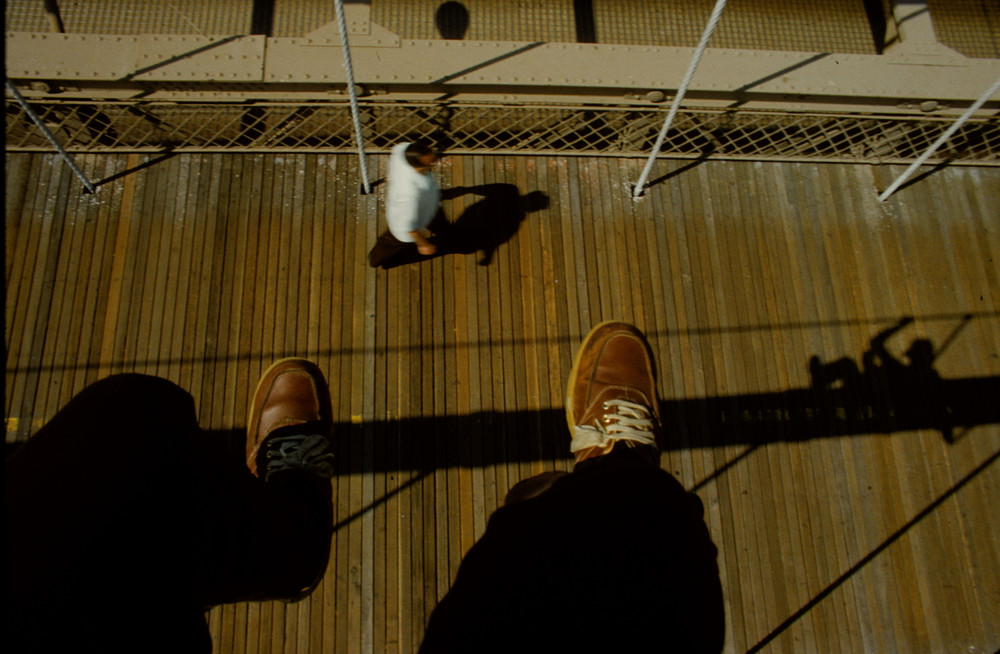
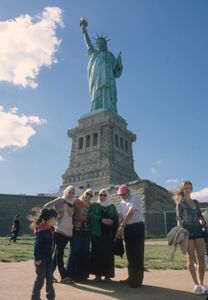
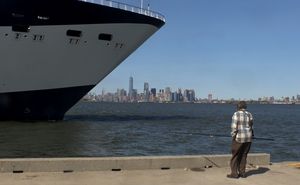
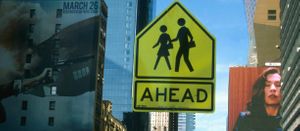
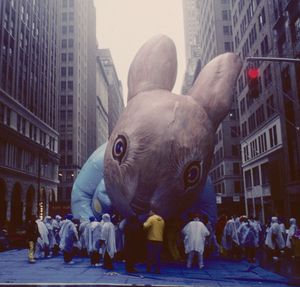
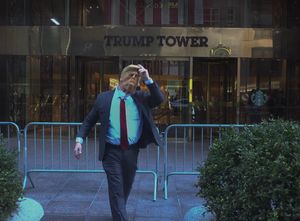
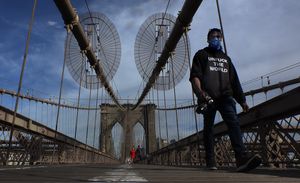
I think that it is no exaggeration to declare that the New York street is the epicenter of random interpersonal human contact among diverse population groups in the United States … and maybe even the world. The New York street is a meeting place; it is a theatrical stage; it is forum for political protest; it is a marketplace; it is a social laboratory; it is an emergency room; it is home. For all of these reasons the New York street is a bubbling cauldron of potential images for anyone with a camera.
A compelling New York street photograph often contains a seemingly spontaneous yet rigorous combination of static and kinetic elements that, of course, will never again precisely recur. At its best, New York street photography is an odd mélange of the familiar and the bizarre, of sunshine and shadow, of the prosaic and the painterly. And because of New York’s unique heterogeneity, the New York street photograph is a particularly rich source of social commentary.
The New York street’s cauldron of potential images enables the photographer to choose among the street “metaphors” of human diversity and tolerance (on the one hand) or fear, alienation and despair (on the other hand). For the photographer, the choice of metaphor is often a matter of waiting a few extra seconds. Or the metaphors may be presented side-by-side, a composition for which the New York street is particularly well-suited.
I have no single approach to taking a “street” photograph. If any form of picture-m