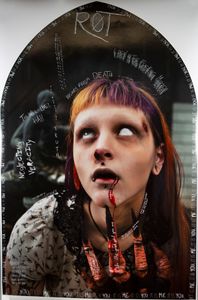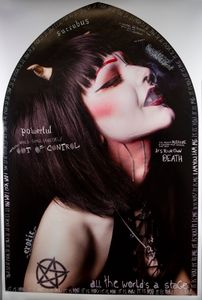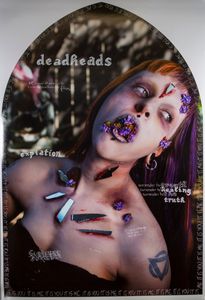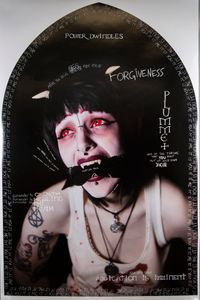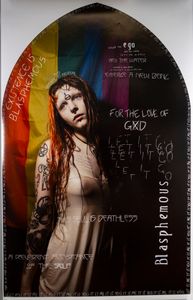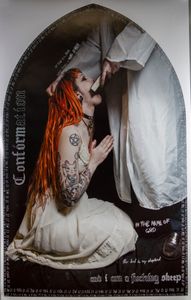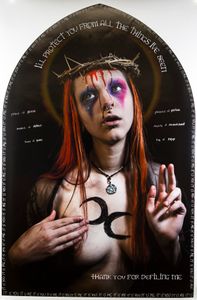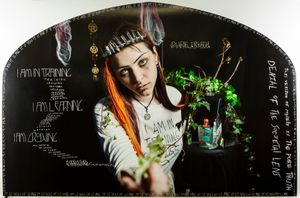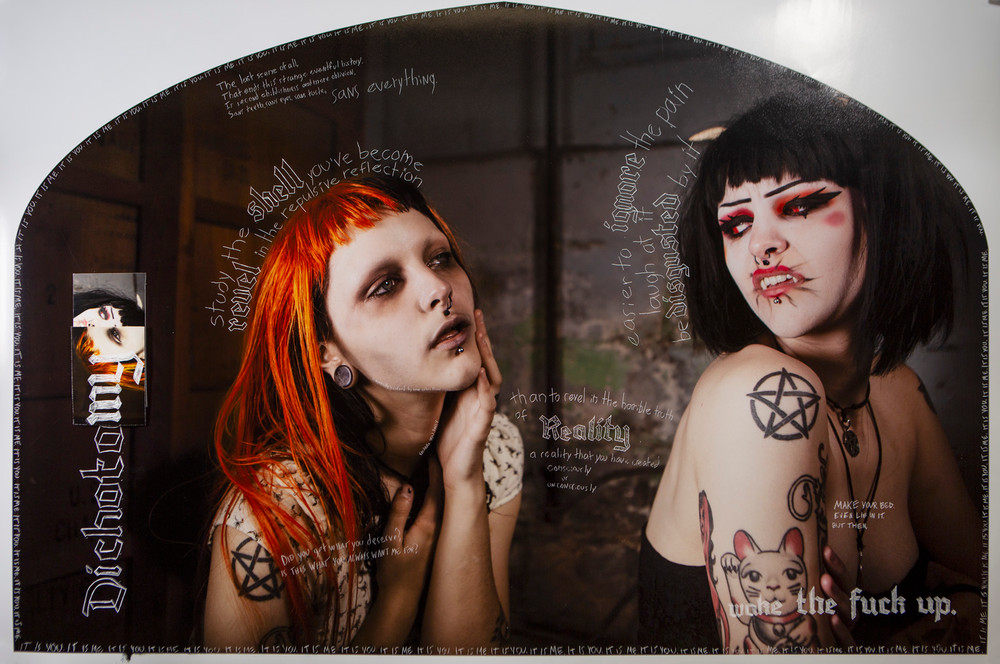
This work displays the “religious” experience of suffering through self portraiture, depicting characters who represent the various aspects of human psyche interacting. References to Western Christian imagery are seen through the content, expressions, compositions and subject matter of the imagery, in order to reclaim aspects of the queer experience. These characters are specific to this work, yet they represent humanity in a similar way to how aspects of human condition are attributed to Shakespearean characters. Large scale prints, shaped like church windows, and hand manipulations elevate human suffering to the status of a sacred object. Reminiscent of the way works are displayed in Christian worship spaces, this narrative of suffering and healing is on a stage for viewing. This work in and of itself are sacred objects that cannot exist the same twice due to being manipulated by hand. The prominent duality of elements within the work delineates the range of human experience in different forms. Oppression and empowerment are prevalent; identifying that on a path of healing there is a spectrum of good and bad, i.e. Durkheim’s theory of the sacred and profane.