露れ araware
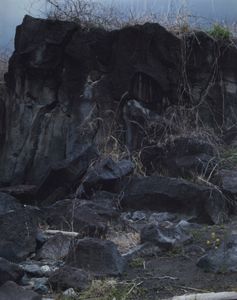
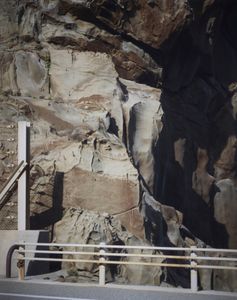
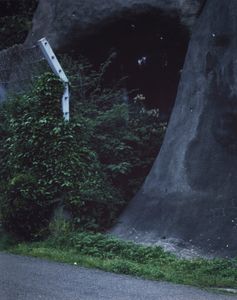
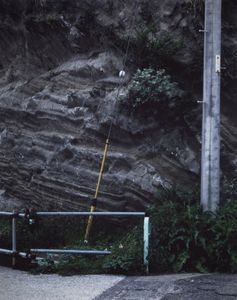
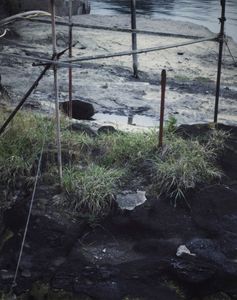
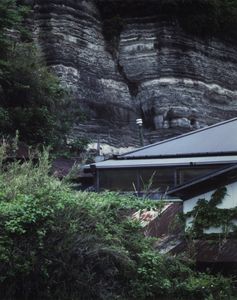
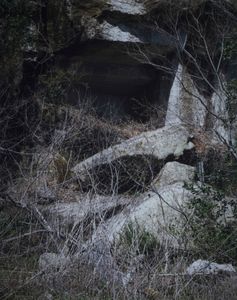
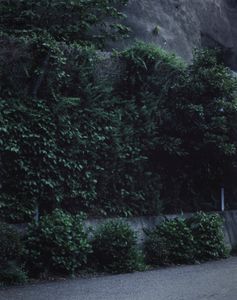
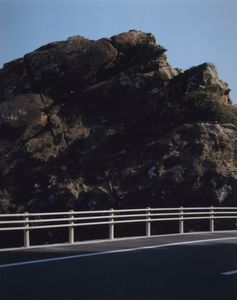
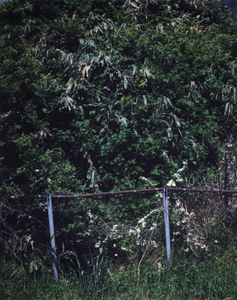
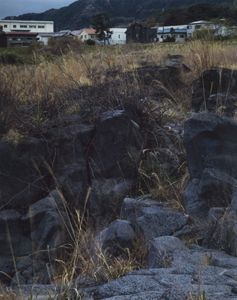
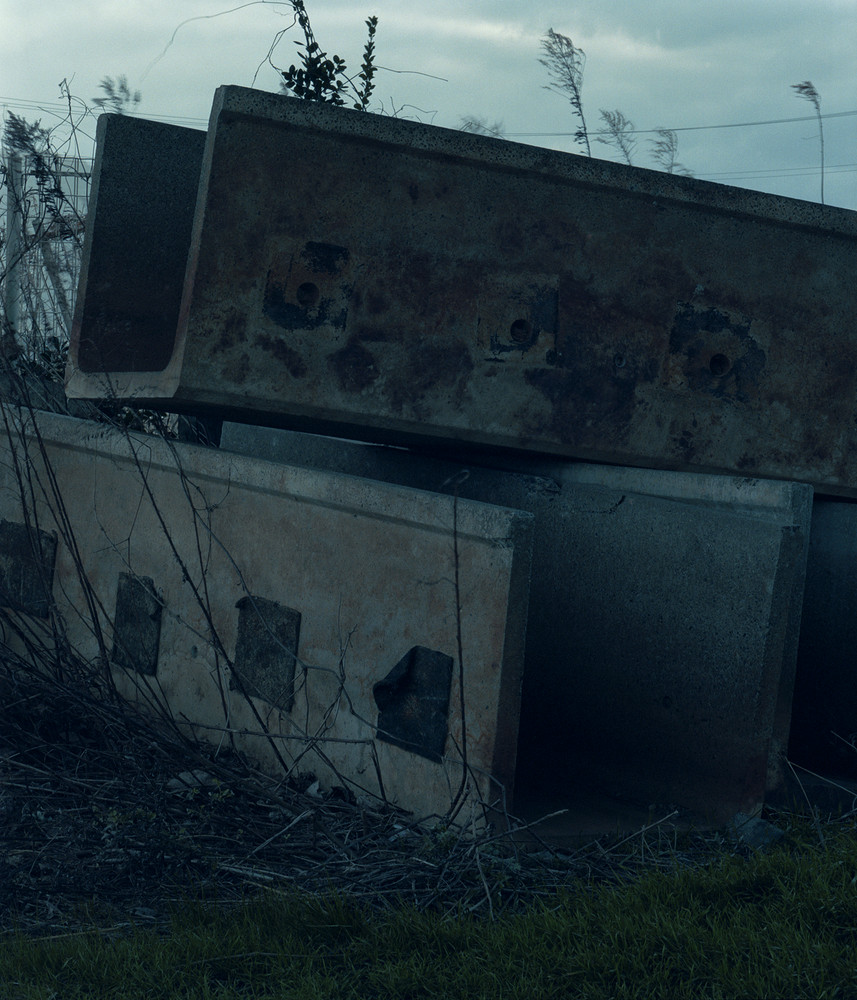
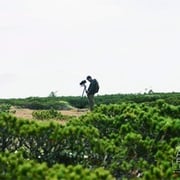
When I learned that places where strata and rocks are exposed naturally or artificially are called outcrops in the field of geology, I became interested in the fact that things that should be invisible to the eye are exposed as visible objects for some reason. When I went to a place where I could actually see an outcrop, I found it in a deserted mountainous area off a national highway. When I went closer and looked up, I saw that the different-colored strata were next to each other, separated by a certain line. There was a mass of time so eternal that the roar of the river flowing just below could no longer be heard. When I visited Iceland in 2018, I was overwhelmed by the vast expanse of land and monumental strange rocks, and my attention was drawn to the condensation of long years. I also learned that Iceland has a continental plate boundary called Gyao, and that the plates that erupted from there are subducting in Japan on the other side of the globe, which led me to incorporate a geological perspective into the creation of my work. In the process, I began to question the objectification of "nature," which seems to have become detached from people, as my attention was drawn only to the grandeur of nature. However, during a residency I participated in in 2022 at a mountain lodge in the Northern Alps of Japan, I realized that no matter how magnificent "nature" may be in a place that takes two full days to reach from my home, it is still connected to my everyday life by going there on my own feet. The word "露頭(Outcrop) " is a Japanese word derived from the state in which a person's head is exposed with out a headdress, and thus anthropomorphism is applied to events in the natural environment. I find it interesting that when people are confronted with something they can only imagine in nature, they try to find some kind of compromise. This may be the history of the attitude of how people have been dealing with nature. What has brought the two together, or what have people relied on to feel that way? In this work, by tracing the etymology of the word "露頭(Outcrop)" and its Japanese interpretation, modern artifacts are also captured and photographed as such. When the traces of nature and human activity, such as the raised rocks and stacked blocks along the road I photographed, appeared on the photographic paper in the darkroom, they seemed to overlap with outcrops in the mountains that had been hidden from the public. Outcrops are geological clues that provide us with some kind of information. It is not difficult to imagine that the events that took place on the land where we stand are connected to our daily lives, but the information is fragmentary in the sense that it is only limited to a certain area. Photographs are also only fragments and part of something, but there is no doubt that they are also exposed, and I feel there is a commonality with the outcrops. This work itself aims to be outcrops between human beings and nature.
No categories selected
Photos (11)