
The Body of the City: Memory, Resistance, Oblivion
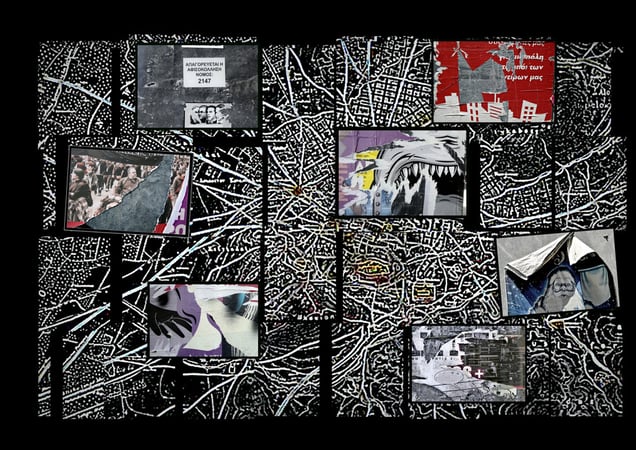
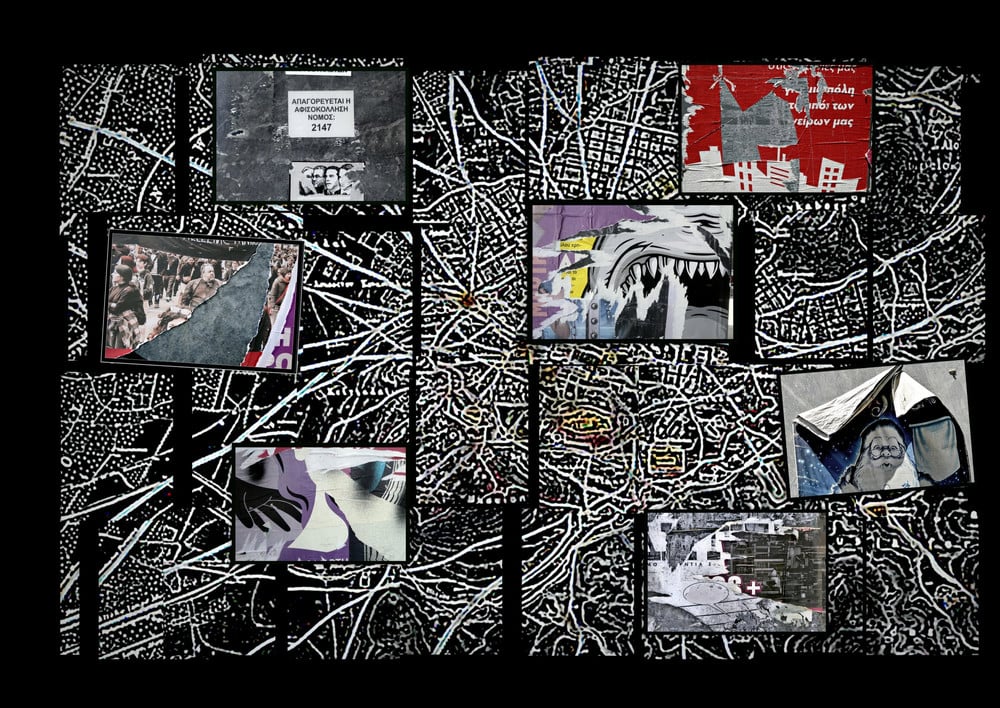
Title: The Body of the City: Memory, Resistance, Oblivion This work emerged from my research on Public History and, more specifically, the relationship between memory and space. Here, photography is not a tool for documentation but an instrument of excavation — a search for the traces history leaves on the body of the city. The walls of the city carry collective memory, not as a linear narrative but as a field of constant struggle. Torn posters, fragmented words, political figures, and worn-out images reflect the tension between memory, resistance, and oblivion. The images I select focus not on clarity but on decay. They capture not what once was but what remains — the traces of history as transformed by time. The relationship between memory and space is conveyed through the creation of a labyrinthine map. This map is not a geographic representation; it is a mechanism for reading the city as a living body bearing its scars. The tilted, fragmented images and their asymmetry invite the viewer to see the city as a site of conflict and resistance, where power (political figures, institutional narratives) meets the people's voice (slogans, protests) and, ultimately, the silence of oblivion. This work offers no answers. It does not aim to explain but to construct a political artistic memory. The worn posters do not "speak"; they resist oblivion. Through their composition into a new map, the relationship between memory and space is redefined, urging us to perceive the city not merely as geography but as a living body that carries history and resistance on its very skin.
No categories selected
Photos (1)