
Madonna with Lost Child
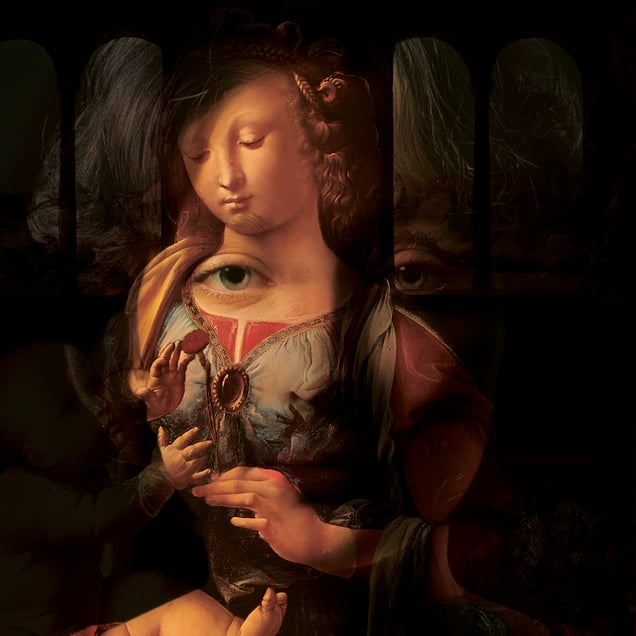
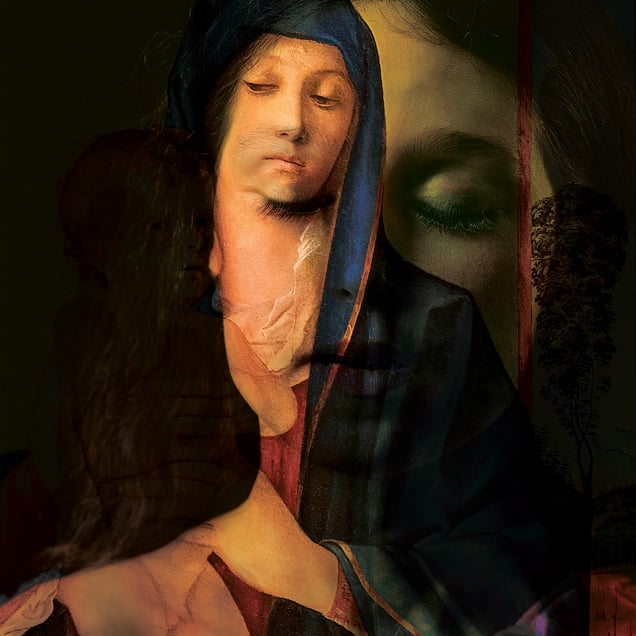
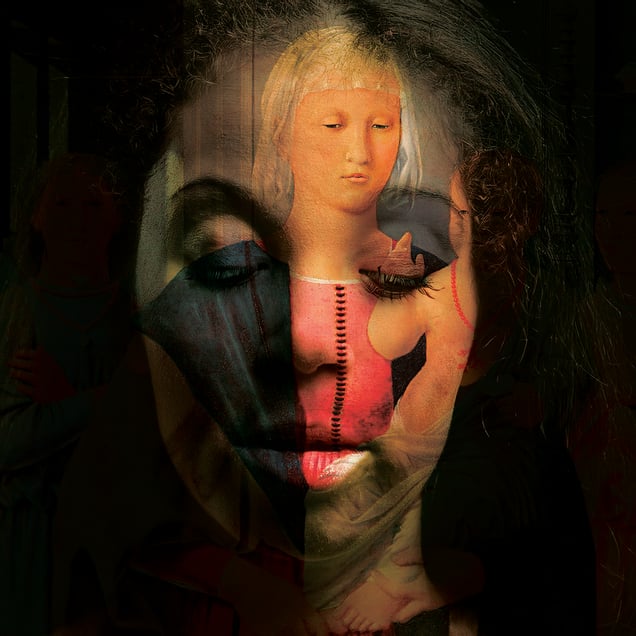
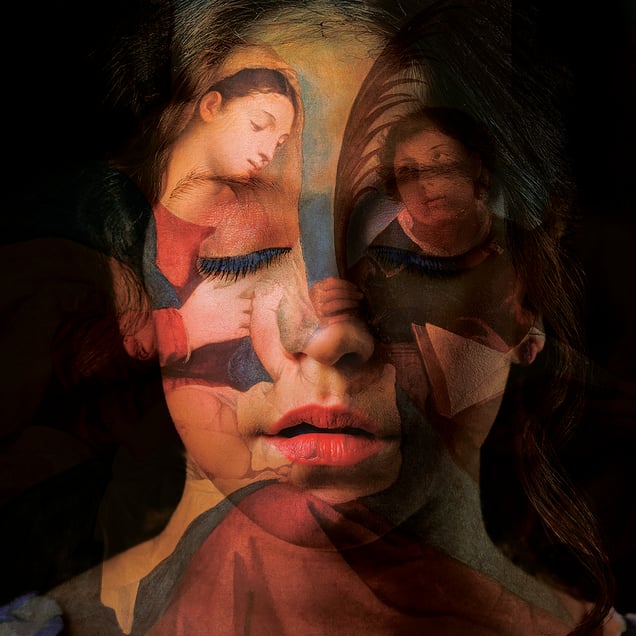
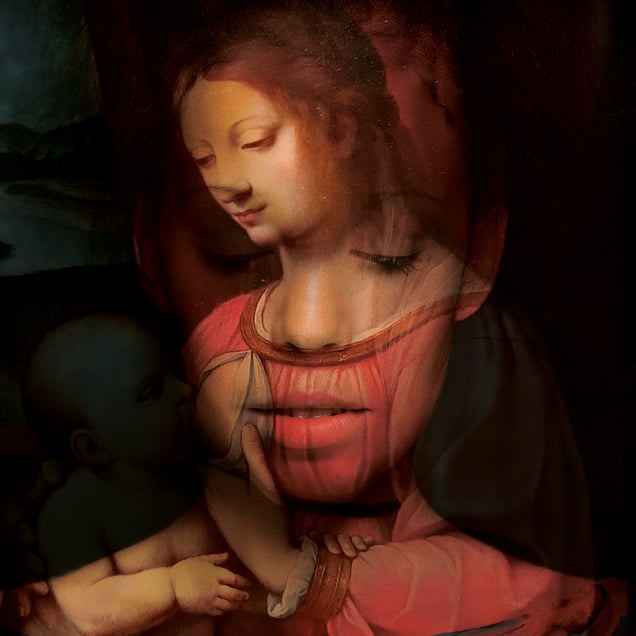
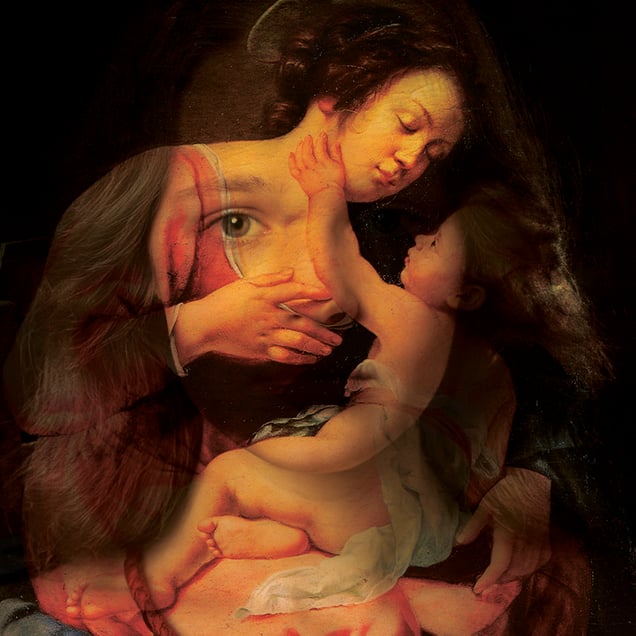
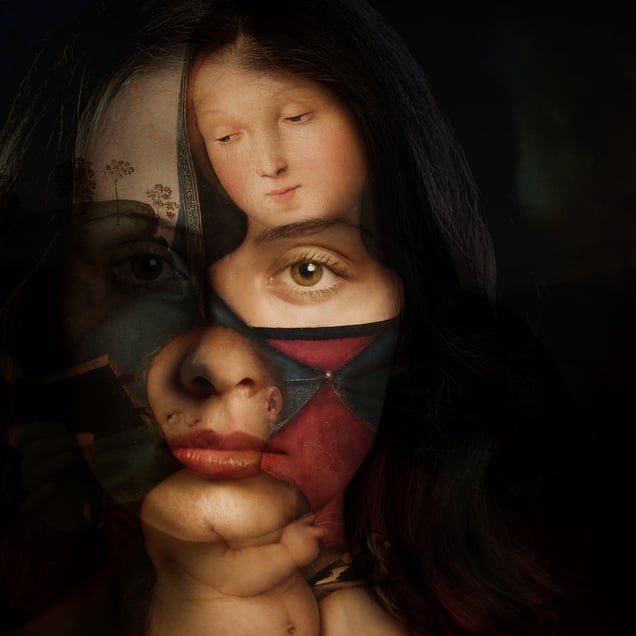
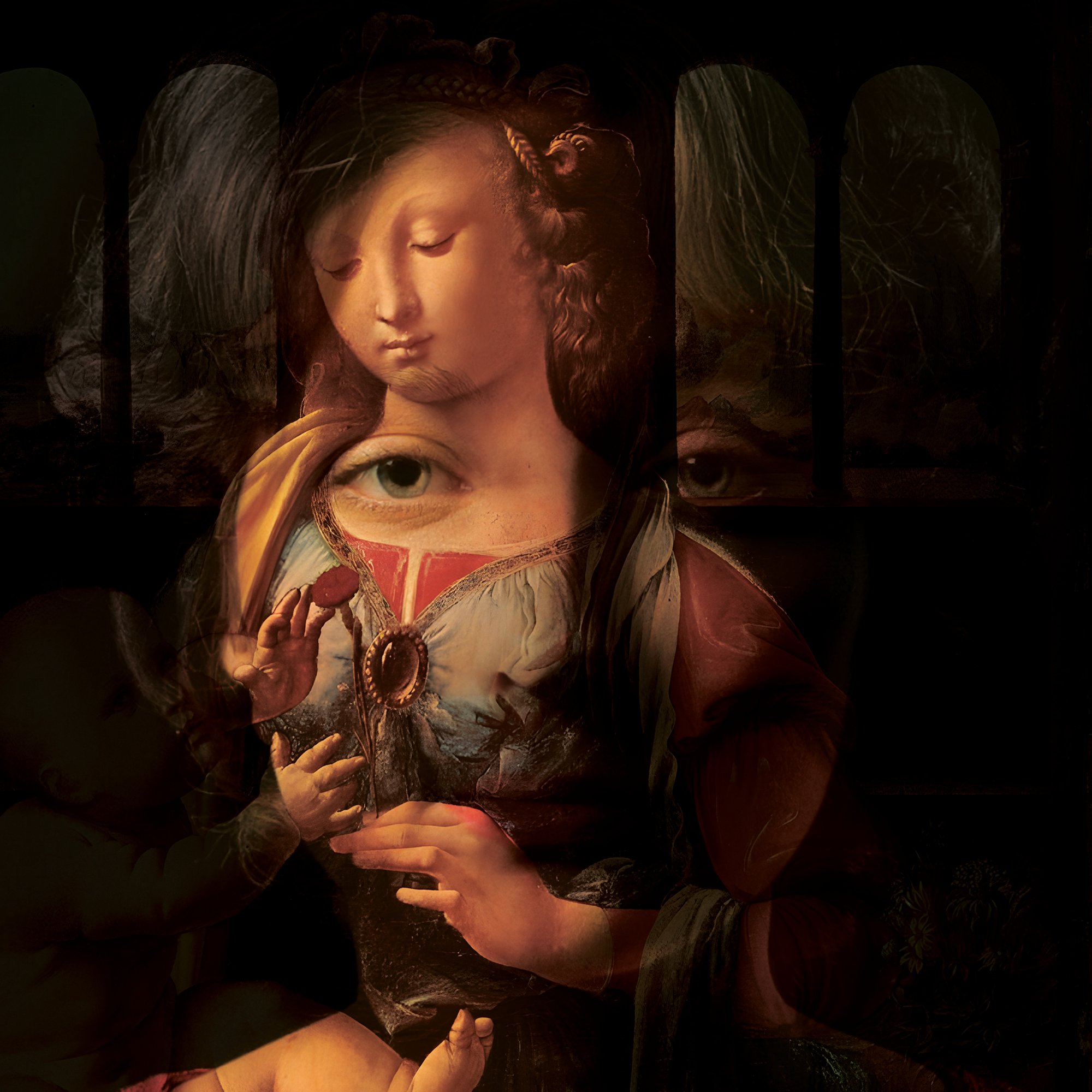
There is a suspended light on the face of Madonna with Lost Child. It is not the divine glow of Renaissance altarpieces, but a restless luminosity radiating from an undefined elsewhere. Her skin is touched by warm tones dissolving into deep shadows, as if time itself had laid upon her a patina of memory. With this project, I cross two centuries of Italian painting dedicated to the Madonna – from the fifteenth century to the dawn of the seventeenth – when the Virgin Mary was the beating heart of art, a vehicle of devotion, a theological symbol, and an aesthetic ideal. In the Renaissance, Botticelli clothed her in suspended grace, Piero della Francesca set her within perfect geometries, Leonardo and Raphael gave her a human sweetness that embraced the eternal. Giovanni Bellini wrapped her in intimate light, while Titian infused her face with colour and sensuality, blending sacredness and earthly beauty. In the Mannerism of Pontormo, Rosso Fiorentino, and Parmigianino, the Madonna moves into more daring poses, ignited by intense emotions and drama. In the early decades of the seventeenth century, Caravaggio heightened emotional realism with powerful cuts of light, while Artemisia Gentileschi returned to Marian motherhood an unparalleled feminine strength, capable to convey both tenderness and suffering. Madonna with Lost Child is born from this stratified iconographic heritage, but it no longer belongs to a single faith: she is a global mother, a universal icon of protection and fragility, able to renew herself over time and reflect the tensions and hopes of every era. In my work, the child is almost entirely absent: faded, disappeared. He is no longer in the mother’s gaze nor in her hands. The void that remains is deafening and becomes a metaphor for loss, abandonment, a profound fracture saturated with the loss of values, protection, care, ideals, and humanity. In this shadow zone reside the lost children of our era: interrupted lives, bodies sold, stories pushed to the margins. Fragile generations, exposed to a mother-society that too often turns away, wounding instead of protecting. An unnatural detachment from so many invisible children: exploited, abused, rejected, deprived of childhood and every possible future. Children who find neither arms to embrace them nor voices to tell their stories. In the faces of my Madonna, this wound becomes painting: a composite mosaic of layers and fragments entwining ancient devotion with the cracks of the present. I do not reconstruct the past—I listen to it. I let its voice filter through pigments and pixels, between the warmth of welcoming tones and the silent darkness that disturbs. Light and shadow chase each other like memory and desire, breathing the spirit of centuries-old painting onto the living matter of our time. In the melancholic sweetness of my Madonna’s face, a glimmer remains. That suspended light is my form of hope—the same that helps a mother survive the loss of a child: a primordial impulse that drives her to search, to protect the memory, to still believe in a possible return. For without the Child, even the Mother is emptied of meaning, like a Nativity slowly dissolving into darkness, taking with it the very meaning of the life it generates. My silent, but stubborn invitation, is to find again that lost child, to restore the broken link between giver and receiver of life, to rebuild tenderness as an act of resistance. Perhaps salvation is found here: in caring for one another, to restore meaning to the Mother and life to her children.
No categories selected
Photos (7)