
The Shape of Belonging
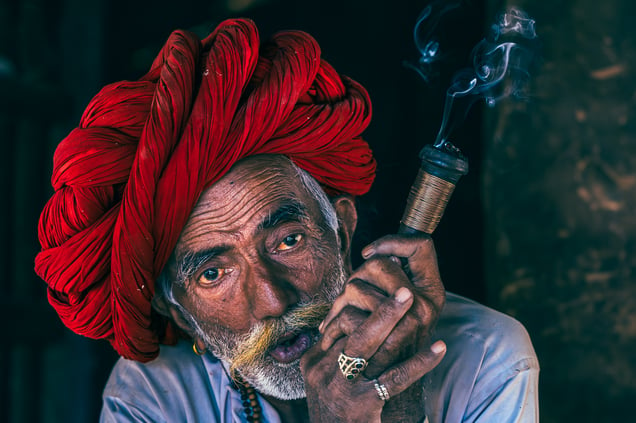
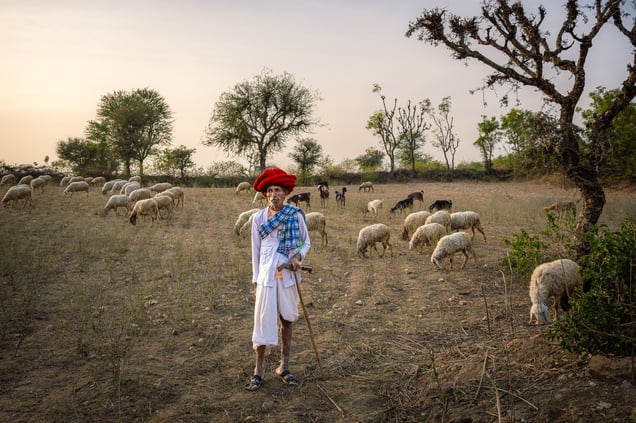
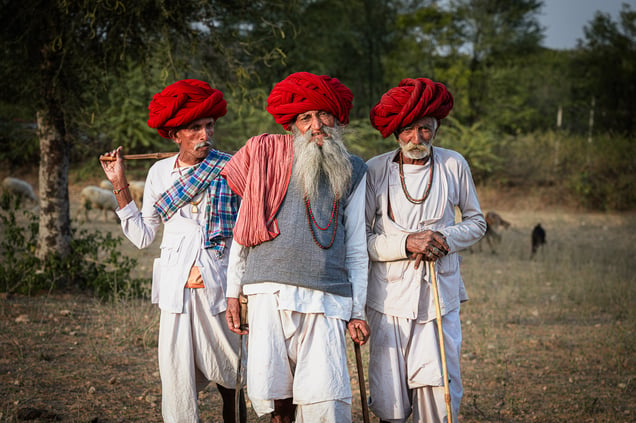
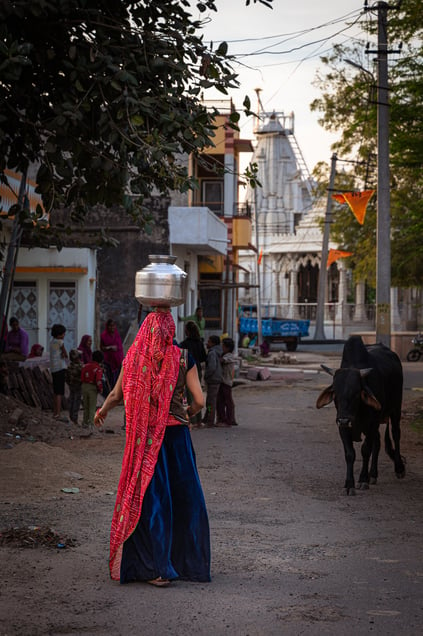
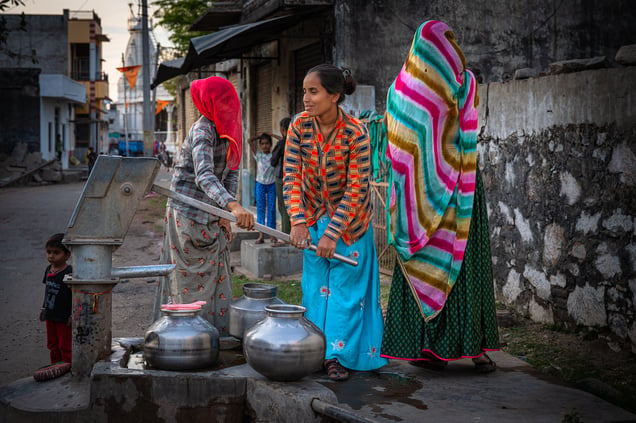
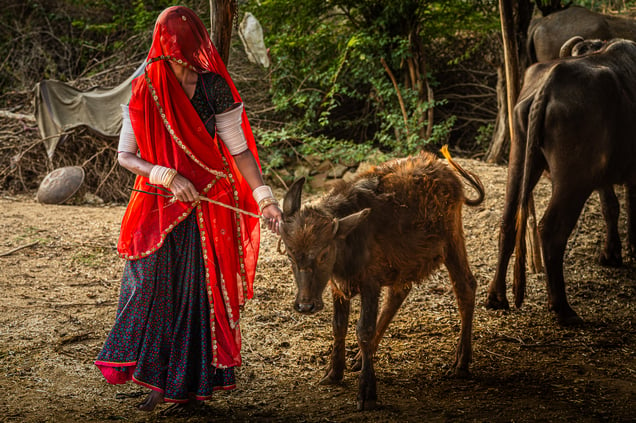
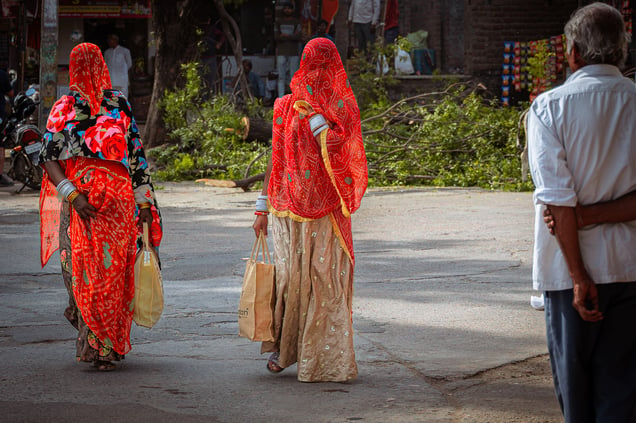
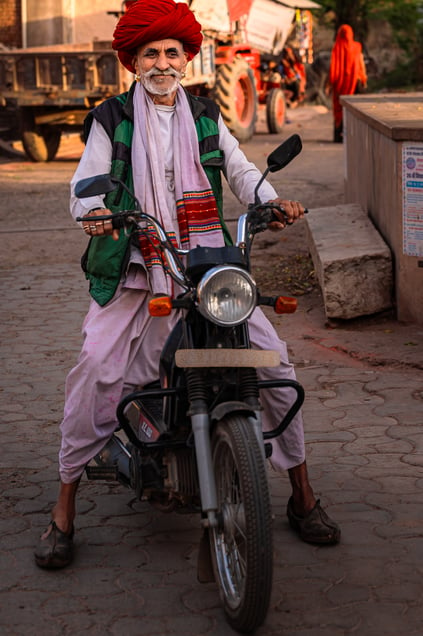
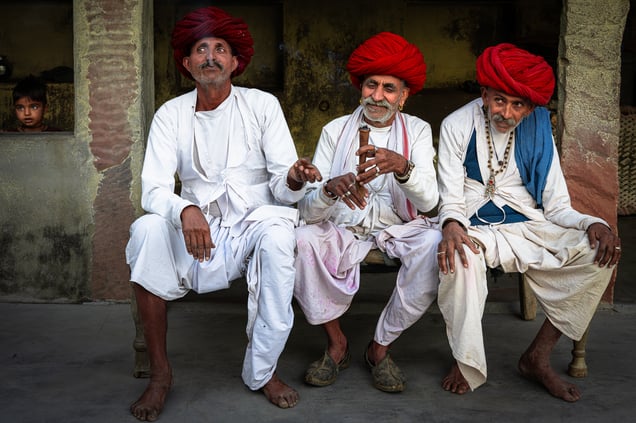
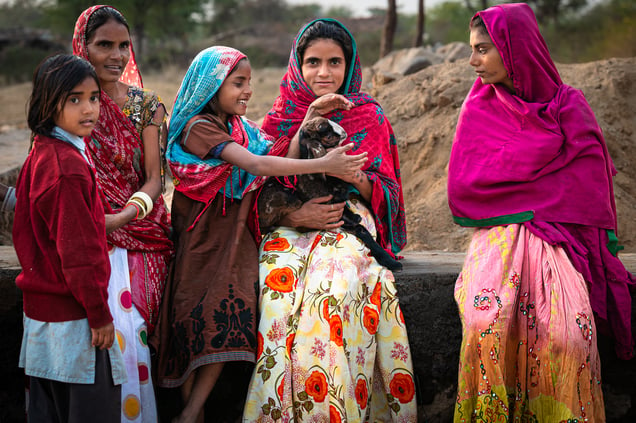
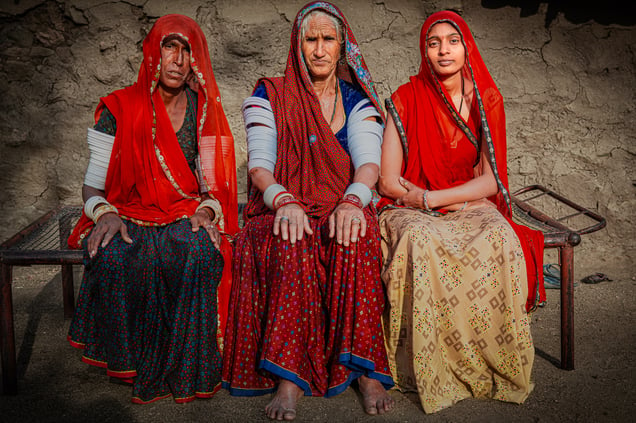
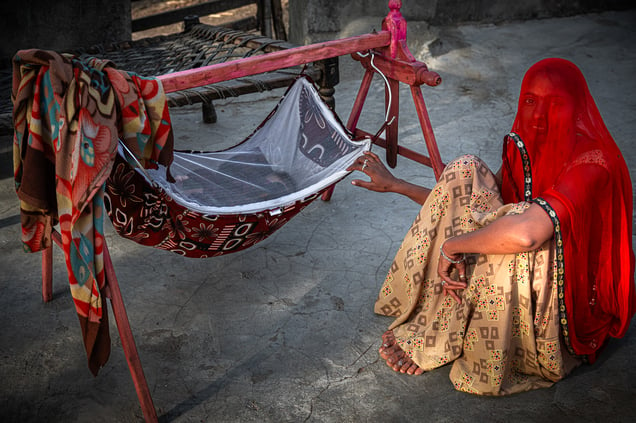
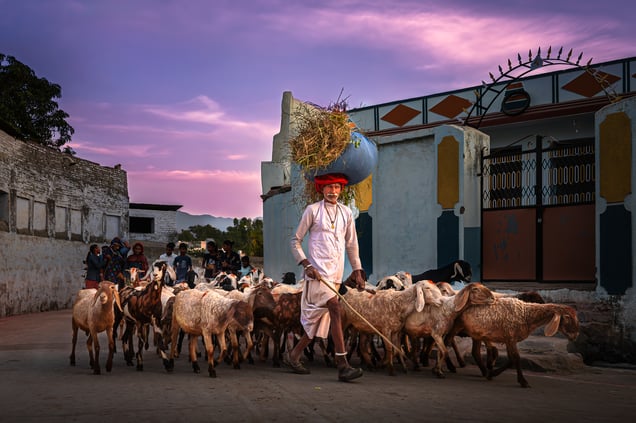
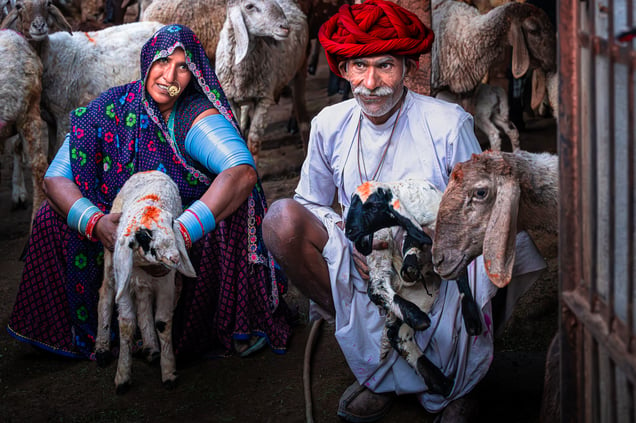
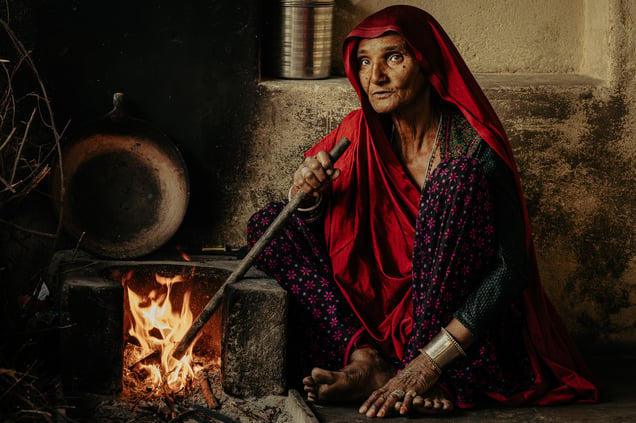
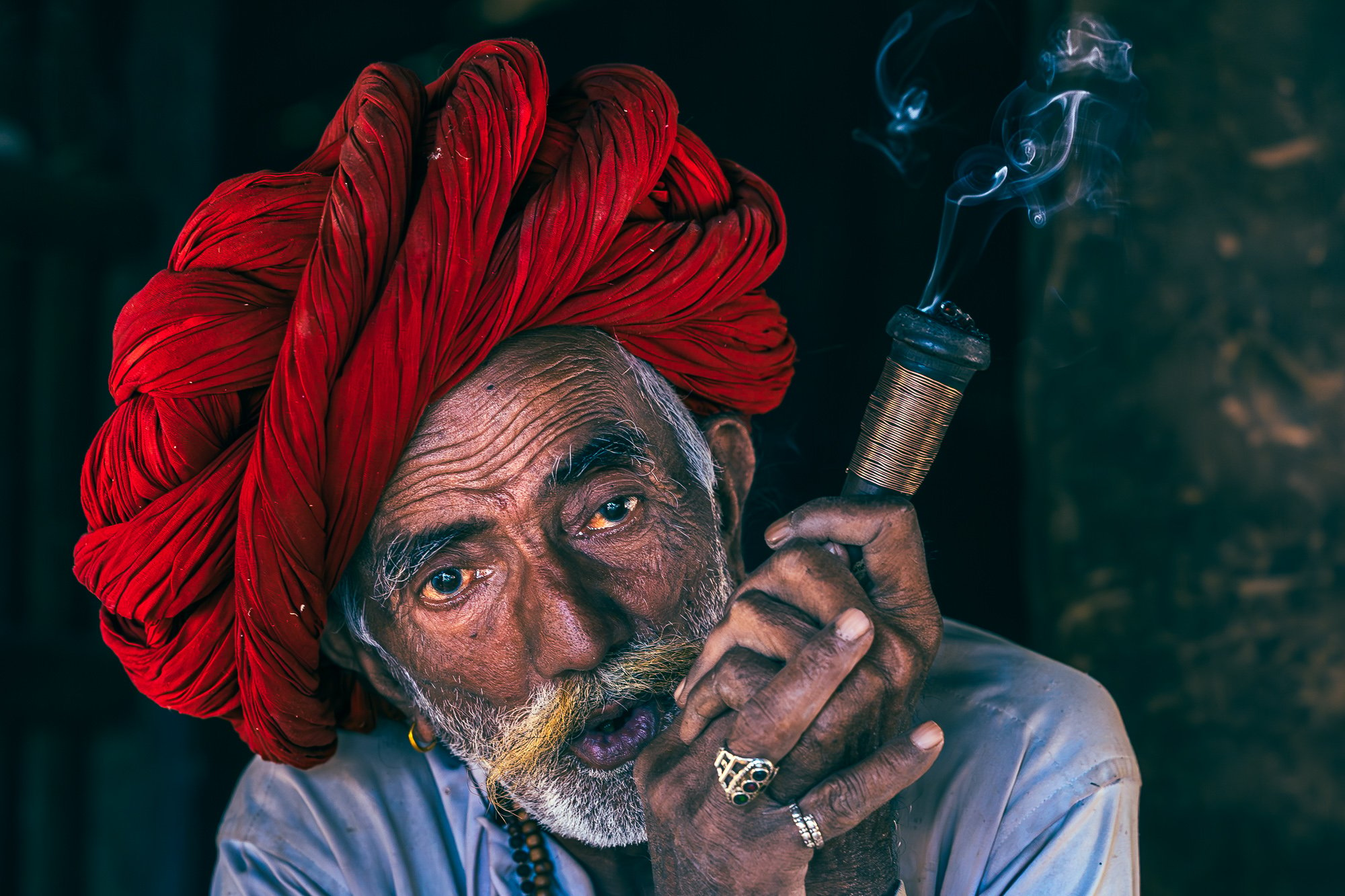
Across the desert and semi-arid landscapes of western India, pastoral communities have long sustained ways of life shaped by mobility, livestock herding, and tightly woven family networks. Among these communities, the Rabari people maintain a distinctive cultural identity expressed through dress, ritual traditions, and social structures rooted in kinship and pastoral livelihood. For generations, Rabari families have adapted to the demands of a challenging environment, developing rhythms of life that balance resilience with deep communal interdependence. “The Shape of Belonging” is a photographic exploration of life within Rabari settlements in the rural landscapes surrounding Ranakpur, in Rajasthan. The series examines how identity is maintained through shared customs, family structures, community bonds and everyday practices that link the present to inherited traditions. At its heart, this project is about relationships that allow a community and a culture to endure. The draw of this series is not the visual spectacle of colour and custom — though both are present in abundance — but something harder to name: the particular coherence of a community that knows, collectively, who it is. That coherence shows itself in small things: women gathering at a water pump, children growing up alongside animals, elders passing knowledge across generations, herders returning home at dusk, and the way a young mother reaches into a cradle, rocking a child who will inherit all of this. The Rabari are not untouched by the world beyond their settlements. Mobile phones press against veiled faces; motorbikes carry men in traditional dress through village lanes; younger hands hold both herd and aspiration. But these are not signs of erosion. They are signs of a community that negotiates change from a position of deep rootedness — absorbing what it chooses, on its own terms, without surrendering the bonds that give life its meaning. At a time when many communities around the world face increasing fragmentation, the Rabari offer a different perspective: one in which belonging is continually renewed through everyday acts of care. The project reflects on what remains when change is inevitable, and on the social bonds that allow people, traditions, and landscapes to remain connected across generations.
No categories selected
Photos (15)