
The Weight of Looking
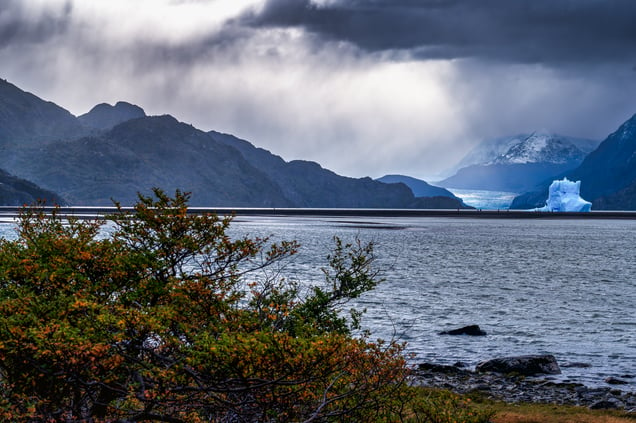
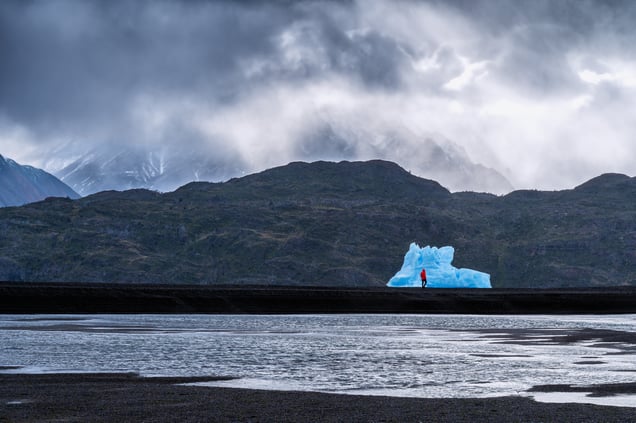
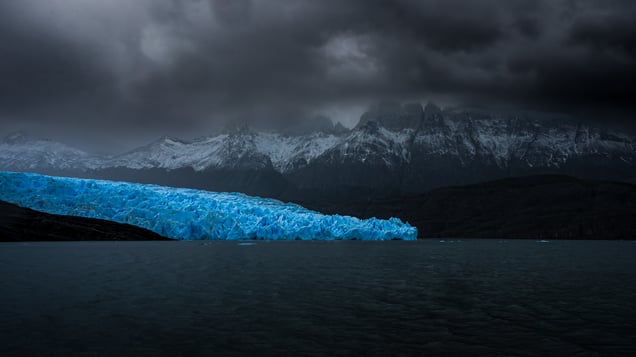
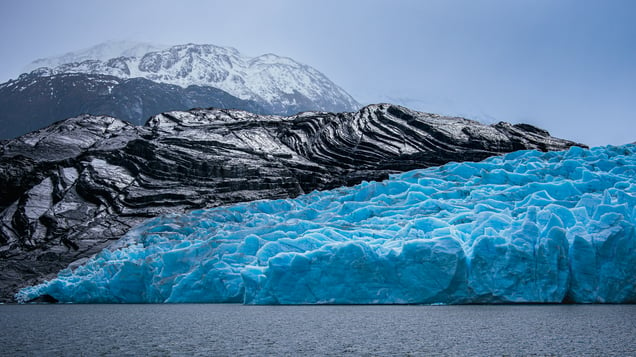
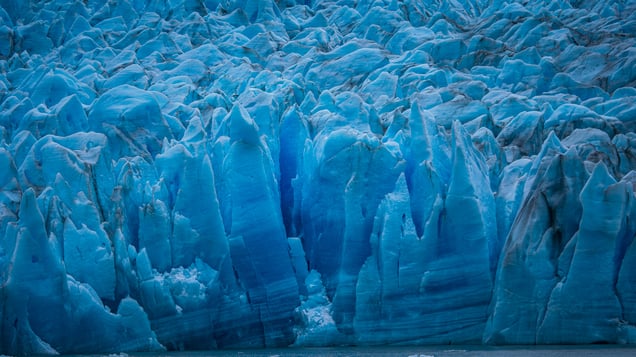
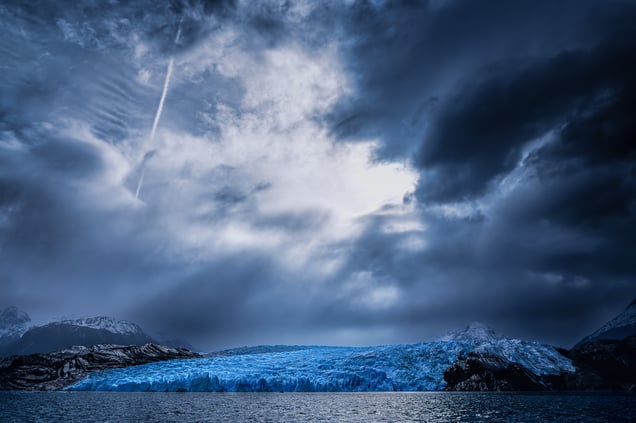
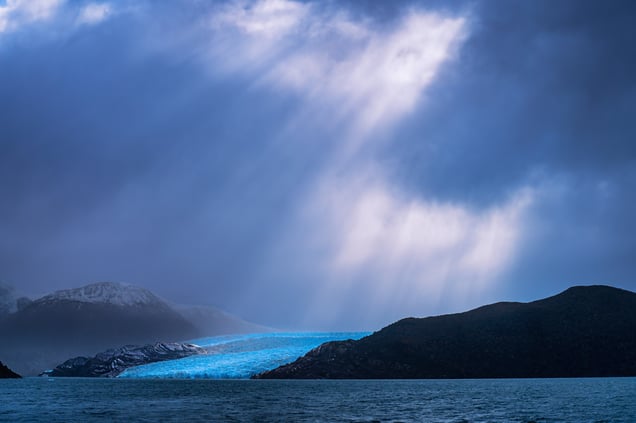
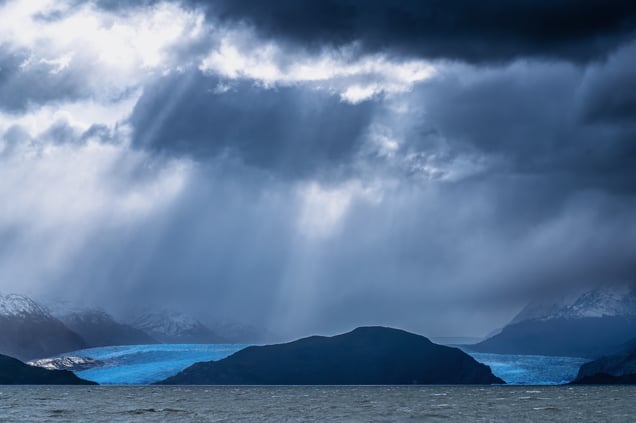
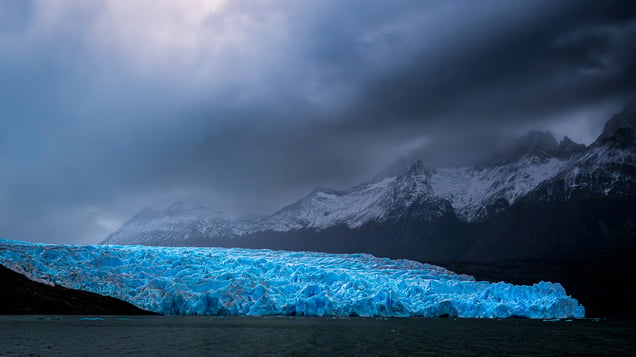
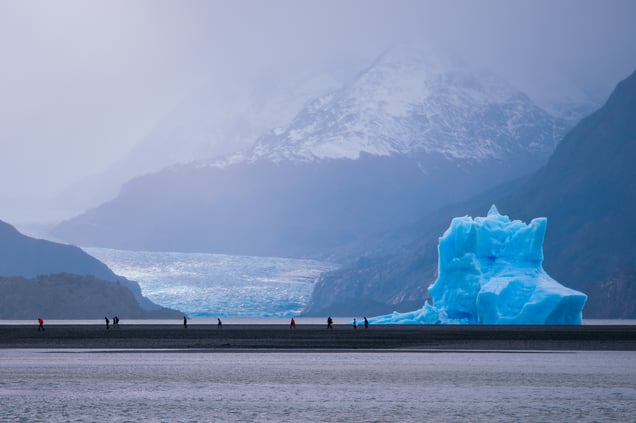
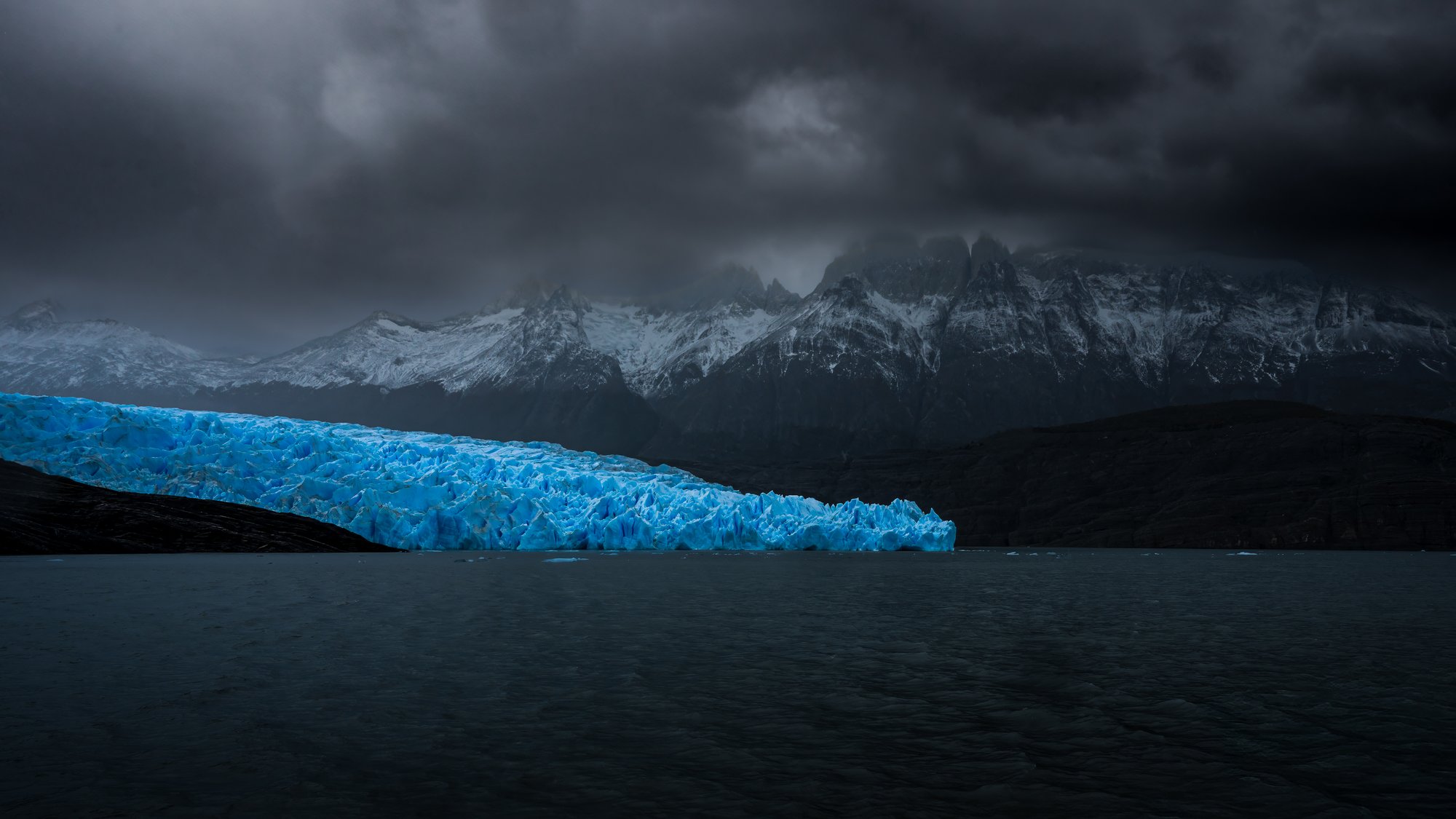
We do not arrive at glaciers empty-handed. We come carrying the full burden of what we already know — or believe we know. We come with climate grief and geological wonder, with the inherited vocabulary of the sublime, with the quiet dread of a world we sense is changing. We arrive at the ice already mid-sentence, already interpreting, already turning what we see into what we feel. The glacier has not yet had a chance to simply be. This series was made at Grey Glacier in Patagonia's Torres del Paine — one of the last great tongues of the Southern Patagonian Ice Field, a body of ice so vast and so indifferent to human presence that it should, by rights, silence us. And yet. Standing before Grey, I found myself reaching — for metaphor, for meaning, for the consolation of narrative. The blue of the ice, so impossibly vivid against the storm-dark sky, seemed to ask for elegy. The calved bergs drifting across the lake seemed to speak of departure. The crevassed face of the glacier, fractured into cathedral spires, seemed to demand reverence. These were not the glacier's meanings. They were mine. What the glacier actually offered was something harder and more honest: sheer presence. Ice compressed over centuries, moving at its own pace, fracturing according to its own internal tensions, wholly unmoved by the human figures standing at its edge. It did not mirror our grief. It did not confirm our awe. It simply continued — ancient, structural, and silent in a way that has nothing to do with quiet. This is the silence that shapes. Not the absence of sound, but the absence of response. A silence that does not bend toward us, does not offer comfort, does not ask to be understood. The glacier existed long before the language we would use to describe it, and will — in some form — persist long after that language is forgotten. It shapes us not by speaking, but precisely by refusing to. The photographs in this series sit inside that refusal. They do not attempt to resolve the tension between observer and observed — because that tension cannot be resolved. Every frame is already a human act: a choice of light, of distance, of what to include and what to leave out. The camera is always an instrument of interpretation. And yet the effort here was to photograph the glacier at the threshold — before the meaning arrives, in the moment when ice is still just ice, when silence is still just silence, when the world has not yet been asked to resemble us. The small human figures that appear in some of these images are not incidental. They are the question the series keeps asking: what does it mean to stand before something that will not look back? What do we project onto a landscape that has no interest in our projections? And if we could somehow subtract ourselves from what we see — the grief, the wonder, the need for narrative — what would remain? Grey Glacier does not answer. That, perhaps, is the point.
No categories selected
Photos (10)