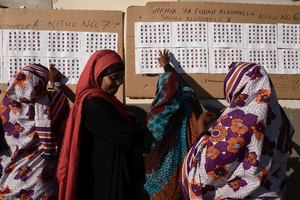
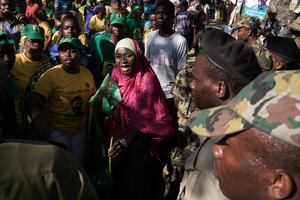
On October 25th 2015, Zanzibaris alongside their Tanzanian fellows from the mainland voted at the general election. Tanzania's new president John Magufuli was promptly announced but in Zanzibar, the semi-autonomous archipelago with its own president, legislature and electoral body, the results have been nullified and new elections were set up for March 20th 2016..
Since the end of the single party thirty-year long rule in the mid-1990s, general elections have pitted the ruling party, Chama Cha Mapinduzi (CCM, or the Party of the Revolution) against a powerful opposition, the Civic United Front (CUF). In 2010, the peaceful and joyful electoral campaign ended up with street festivities bringing together CCM and CUF militants who celebrated the formation of a power-sharing government. For the first time, an opposition party was part of the government; this promised to end tumultuous decades of political tensions and social divisions at all levels of society. The 2015 election had a very different outlook, however. Although the campaign and Election Day went smoothly, the annulment of the elections on 28th October triggered renewed tensions between CUF and CCM and set in an oppressive political atmosphere. Elections constitute a unique moment to grasp a people’s desires. Everyday living conditions are at stake in an archipelago where the majority still live in great poverty without access to basic services like schools and hospitals, and socio-economic inequalities are dramatically increasing. Aspirations for change also concern the body politics that, until today, has been divided along the lines of race and place of origin. As elections resonate with promises for change, they are charged with profound expectations to end vulnerability, uncertainty and fragmentation. Lives, cultures and politics are affected by the colonial past, a revolution to gain independence, and postcolonial autocratic rule; but Zanzibaris also look toward a better future with deep aspirations for change and improved living conditions.