Liceo 7 (Chilean Students Movement)
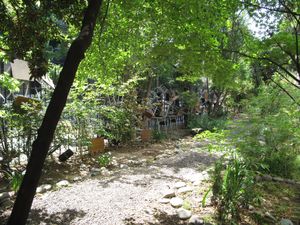
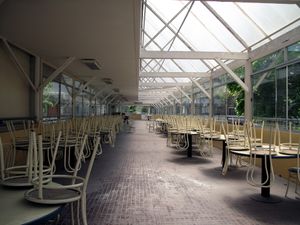
The idea behind this book is to pay homage to Chilean students and to generate a publication that will create a visual account of this phenomenon, considering human absence as a safety warranty for those involved, and also as a sign of their dedication and conviction. Little is known about the Chilean Students Movement that started on August 2011, when crowds of young Chileans gathered in the streets to show their discontent for the cost and bad quality of their education. They were violently repressed by the government and their proposals have yet to receive any solutions. The atmosphere was saturated with unfulfilled promises making this situation a cul-de-sac, where the issue of making profits with education was a problem that involved private interest. Political pressure exerted by these privates made it impossible to create an space for understanding and, even less, to arrive at possible solutions. To live without hope in the future is a terrible thing. Not fighting for your beliefs is even worse. The urgency of having a free and quality education guaranteeing equality of opportunity is vital in a country such as Chile, where enormous social inequalities produced by the distribution of resources divide a country that hasn’t healed the wounds produced by Pinochet’s dictatorship. Social justice, human rights and freedom, are some the issues addressed and questioned in these photography series. Liceo 7 is one of the best educational institutions for girls and is financed, in part, by the government. Its installations gather 1300 students between 6 and 17 years old, studying during the mornings and afternoons. Liceo 7 is the name of an investigation that went on uninterrupted for 9 months, while the school was occupied by the students. While the Liceo was occupied, girls inhabited their school in very hard conditions. They where tense and feared the consequences of the occupation, but they were supported by a majority established through democratic elections. Thirteen girls who represented the entire student body and took decisions in a democratic way to continue facing the government and its apparatus of repression. The girls were constantly harassed by undercover police and police in uniform, their telephones were tapped, they were followed in the streets, etc. There was even a sabotage attempt where unidentified subjects tried to set the school on fire while the girls were sleeping. It was not a singular event; similar cases were recorded in other occupied schools. We made a deal, I wasn’t allowed to touch anything or to take pictures of people. I arrived early in the morning and left at dusk, day after day, recording situations that spoke of the precariousness of a system that doesn’t fulfill its functions and less so, their users expectations. Until this very day protests rage on, as repression does. Education is still a business and future expectations are still a ghost.
No categories selected
Photos (10)