
Noises from the Silent Land
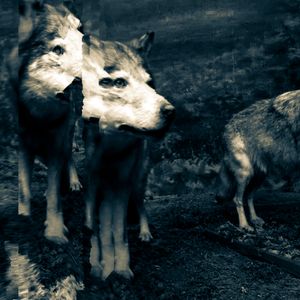
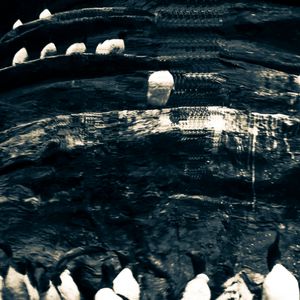
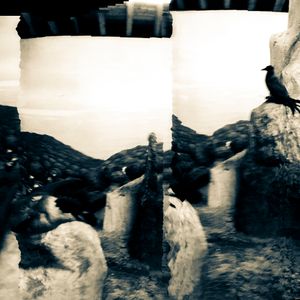
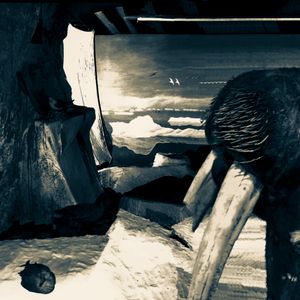
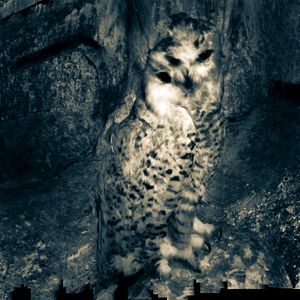
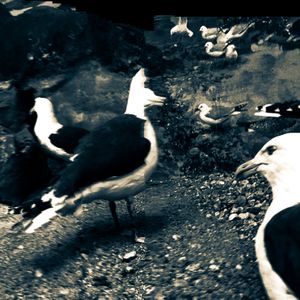
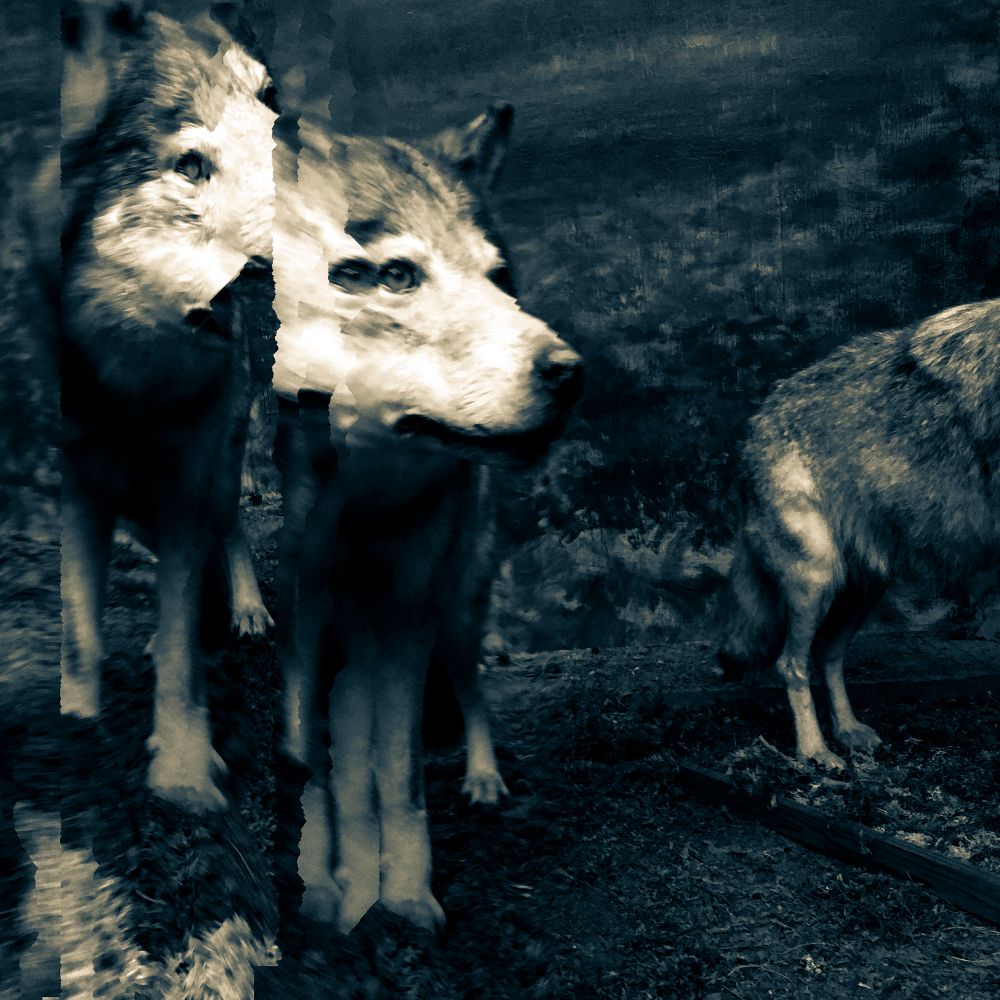
On Serinyà’s Noises from the Silent Land Three eyes stare intently towards something – or someone – just beside me. Three is one too many. Yet all of them belong to the same bird of prey, standing poised in an undefined forest on sharply clawed feet – and the feet are also multiplied. A freak of nature – or, a freak of the technology aimed to capture it? Serinyà’s photographs from the dioramas at the Biological Museum point out how nature and technology overlap – first in the hands of the taxidermist, then the curator, and now the photographer. He captures the overlap by capturing the moment when the image of the overlap breaks apart. The break is forced by moving too fast while photographing with the panorama application of a mobile phone camera. Poorly stitched, the transition between individual images is punctuated with gaps and delays – signs of a glitch. Glitches disrupt the normal functions of machinery such as a computer – inherent within the system, yet uncontrollable like mutations disrupting the development of a species or the order of a biotope. As if the bird really had grown a third eye, the image hints at a world where time and space compress into a liberating warp – inviting the viewer to imagine new forms of life. The error causing the image to look so supposedly unnatural does to the digital processes of the camera what anomalies do to the processes of natural environments. These two systemic structures share a history beyond metaphor – the first technical bug was an insect stuck inside a machine. Close enough to integrate into a material – the physical body of an animal, or of a camera – the glitch comes close enough to act precariously within and upon that material. For this reason, friction is a better word than error to describe what happens: depending on the context, the accident is a happy one. Serinyà’s random act of mistreating an everyday device follows an unexpected leap of nature that eventually ensures the survival skills of species. In these images, the moment of friction – the break – can be found in the details. The subtle yet drastic interference of a vertical line disfiguring a creature by dividing the visual field; the pixelation dotting a usually smooth floor of artificial woodlands; the misplacing of shade and brightness in painted fabrics and sharp sidelights that give contradictory references to weather and hour of the day. These disruptions mirror the unattainable yet forever attractive vision of the museum display: to represent a sustained victorious fate through inevitable failure, to perform a seamless life-world through disparate theatrics and ultimate death. Once you see a glitch, you see it in places far away from its technical origins. Paying attention to all kinds of cracks uncovers the lived experience and narrative of the thing being cracked. At the Biological Museum, the ecological spirit of the Scandinavian comes into focus – with a twist of today’s anthropocene anxieties. At the same time, Serinyà’s mutations of the photographic process – somewhat handicapped images, as he puts it – raise questions about the state of photography as a medium while drawing the viewer into their hypnotic dreamscapes. Another bird appears in a photograph whose glitches yield ragged edges and speed lines that mimic the implied motion of spread wings ready to take flight. Bringing a dynamic to what is clearly stuck – stuffed, glued, sewn, stacked – in the diorama, the sudden threat of a bird of prey is transposed to the sudden noise of a glitch disrupting the silent order of the system: the environment created in nature, in the photograph, or in the museum. The glass eyes keep watching us – a gleam of pulse in a dead creature, still with its intrinsic code to kick-start into life again. It is an inherent threat to the system that the system cannot afford to vanquish. Vendela Grundell is an art historian and a photographer.
No categories selected
Photos (10)