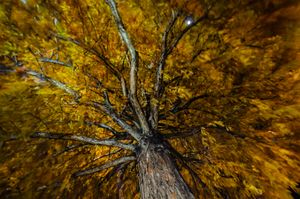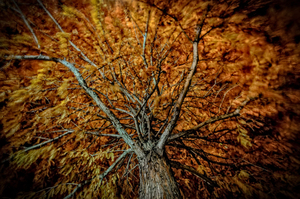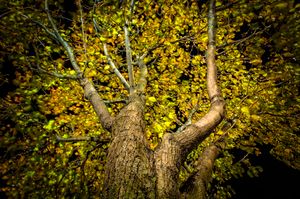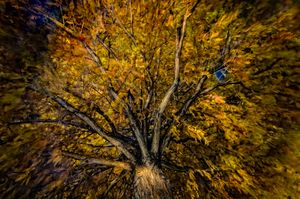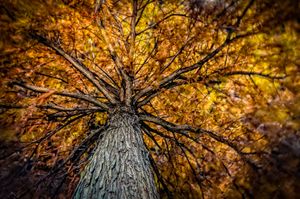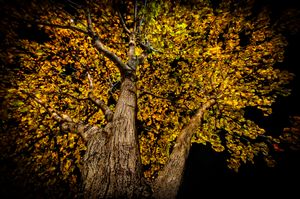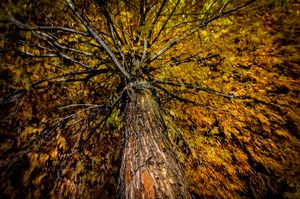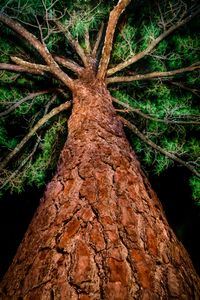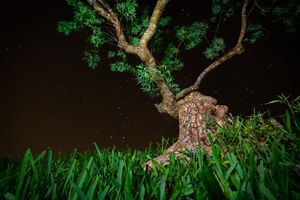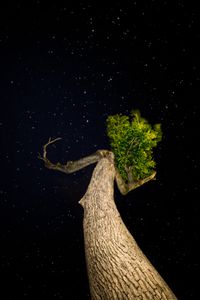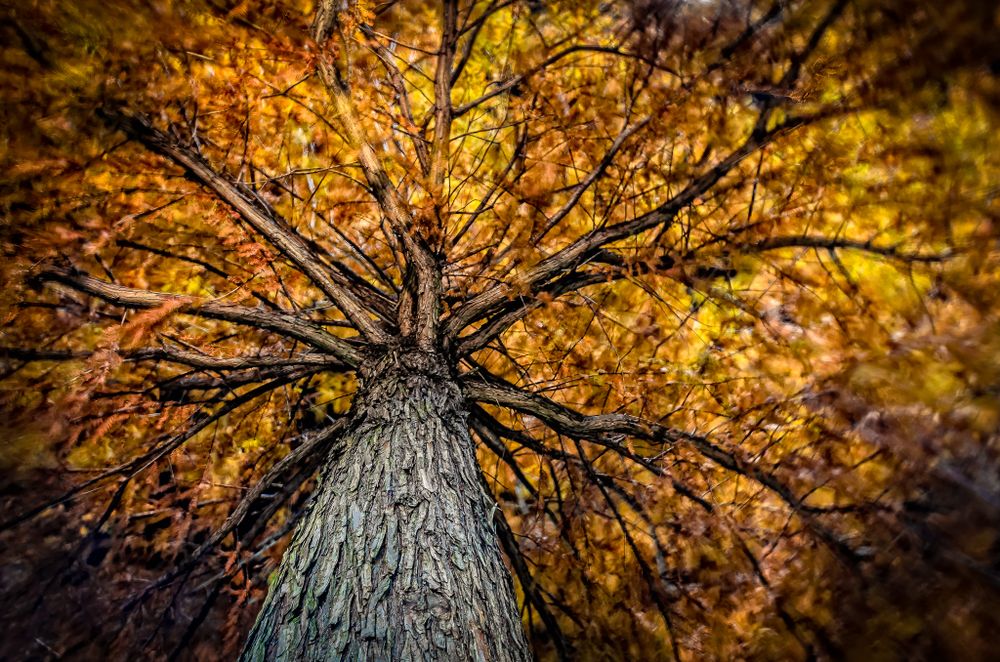

Pareidolia: Alien-Looking Tree Study (from Vibrant Night: Light Painting Landscapes)
[Note: This is a specific study from my ongoing body-of-work/series, "Vibrant Night: Light Painting Landscapes" which focuses on the American Southwest, particularly Texas. (In the spirit of the great Richard Misrach and his Desert Cantos, I consider Vibrant Night to be a lifelong project that includes "subseries" of specific terrains and even more specific "studies" within them.) I also re-purpose some of the photos to tell visual stories OR to lead the viewer on trips ( "a strange, long night’s journey into the day") which explore the variable moods Mother Nature evokes.) My main goal is aesthetic using the perspective that light painting can provide. Usually, I wander the night side of nature and its borders looking for views strange and beautiful.] My current project, Pareidolia: Alien-Looking Trees Study, explores the illusion of how some things (certain trees in this case) lend themselves to be imagined as things they aren't. That's what "pareidolia" means, and we are all familiar with it when, for example, we see figures and faces in clouds, the man-in-the-moon, etc. Although it is amusing -- and there are many examples on the web, some scientists, such as Carl Sagan, have hypothesized that it might have survival value since it's better to misperceive a predator in the bushes than to ignore one that turns out to be real. Drawing on my background in neuroscience and neuropsychology, I can share some of the neurological aspects of pareidolia. For instance, functional imaging studies show that pareidolia instances where faces are "seen" involve a rapid, early stage of visual processing in the same area of the brain (the fusiform gyrus) that handles normal facial recognition. Also, pareidolia is common in dementia and also in visual agnosia (failure to recognize common objects as a result of brain damage.) So, Magritte's famous "pipe" picture inscribed "This is not a pipe," actually may be seen as "not a pipe" but something visually similar such as a hammer in these patients. Pareidolia is their way of dealing with the ambiguity created by brain damage. [Parenthetically, I attained personal insights into these conditions when I helped care for my mom in her last years.] Indeed, even in the unimpaired, we know that related phenomena such as the "completion effect, " where we perceive a whole object when only parts of it are shown, play an important role in visual processing. So, pareidolia may be a normal part of visual functioning involving exaggerated pattern recognition. (Note: This is in distinction to a more generalized phenomenon called apophenia which is interpretation of random patterns as meaningful ideas or signs. To clarify the distinction: Pareidolia is seeing a face in the moon; apophenia, in the extreme, is believing that it is watching you! So, apophenia when exaggerated and not subjected to reality testing, can lead to superstitions or even issues of mental healh. (However, there is nothing unhealthy about artists saying that something metaphorically suggests an idea or meaning: that is part of art.) And speaking of psychology, the well known Rorschach ink blot test uses a forced form of pareidolia where you are instructed to try to see something in the abstract shapes. (This is similar to what I do, except for one crucial distinction: I am purposely looking for something strange and dramatic, since that can make for more riveting fine art -- or maybe that's just my screenwriting background! (For example, one of my shots looked like a "poodle face"; needless to say, that didn't make the cut!) As to art, starting with Leonardo da Vinci's advice to artists to look for and use (in essence) pareidolia in their work, it has played a role to this day. This is a deep topic in itself, well beyond the scope of this statement, but one might consider that pareidolia might be invoked both for the creation of much art as well as its appreciation (especially in surreal, abstract, cubist, and minimalist art.) And some have speculated that artists have a high degree of pareidolia. (There's an interesting discussion among artists on that topic on the WetCanvas blog.) In my encompassing series "Vibrant Night," I actively seek instances of pareidolia, even if it's far-fetched (maybe especially if it's far-fetched since it invites the viewer into my imagination.) Examples are scattered throughout it -- partly because it adds drama and visual interest to the scene; and partly because it metaphorically suggests (to me) a presence of ominous beauty, with everything vibrantly striving to exist, but nothing minding if we destroyed ourselves by our hubris. I came upon most of these trees in the current study as a late fall windstorm was swooping down. Ordinarily, wind is the bane of the light painting photographers, especially if one is trying to capture a blurless scene. But I have had aesthetically pleasing results when I contrasted a steady objects against moving ones. And when there's only a slight breeze, it can create a strange painterly effect on some leaves, which I like. But here, the wind was high. However, their trunks and main branches were still. So, the effect on those shots was a naturally blurred background which neither lenses nor Photoshop could duplicate. So in the end, I was pleased with what Mother Nature had to offer. ---- In case you are interested in my general objectives and techniques, broader selections from my encompassing body-of-work, "Vibrant Night:..." are posted as a project on my LensCulture site. (it gives me better exposure for my portfolios than a personal site: simply googling "Ron S Levy" with spaces brings up my LensCulture site at the top of Google -- no mean feat, since there are, um, a lot of Ron Levy sites on the web! So, I'm very appreciative of LensCulture and the exposure it offers for new artists.
No categories selected
Photos (10)